Key Points
- The services sector could absorb Rs86 billion of the loss.
- Industry could suffer Rs25 billion in daily losses.
- Agriculture could face Rs9 billion in losses.
- Government revenue could decline by Rs17 billion.
- Supply chains already face higher freight and insurance costs.
- IT exports could suffer from internet disruptions.
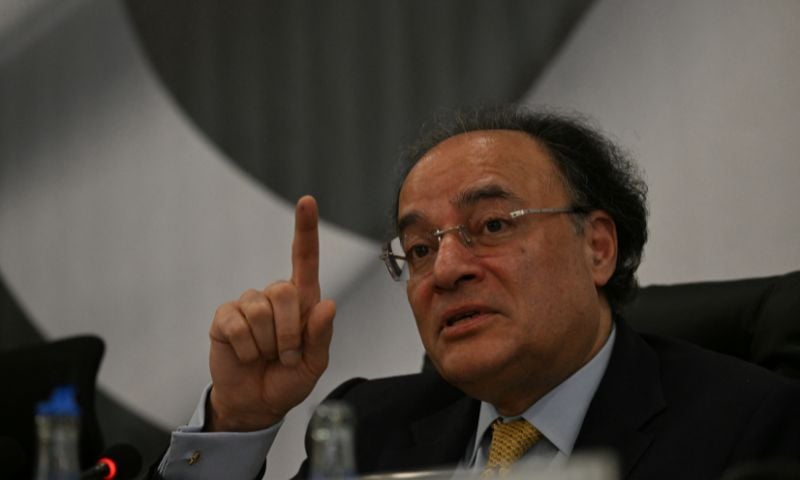
ISLAMABAD: Pakistan’s Federal Minister for Finance Muhammad Aurangzeb has warned that protests, long marches and sit-ins could inflict an estimated Rs120 billion in economic losses every day, with businesses, workers, exports and government revenues bearing the impact.
In a televised recorded message on Sunday, Aurangzeb said the estimate was prepared after consultations with the economic wing of the Planning Commission and took into account the effects of previous disruptions as well as the country’s current economic conditions.
Pakistan’s Journey from Stability to Growth Must Not Be Derailed by Strikes, Sit-ins and Road Blockages: Finance Minister pic.twitter.com/Z6s5whaq4m
— Ministry of Finance, Government of Pakistan (@Financegovpk) September 20, 2026
The warning comes ahead of the Pakistan Tehreek-e-Insaf’s (PTI) planned march towards Islamabad on September 27 and as the Jamaat-i-Islami (JI) begins its own protest march against the petroleum levy.
Aurangzeb described prolonged protests and sit-ins, particularly amid the economic pressures created by tensions in the Middle East, as “self-inflicted pain”.
He said disruptions to economic activity would come at a time when businesses were already facing difficulties caused by supply-chain interruptions, higher freight charges and increased insurance costs.
Services face biggest hit
According to the finance minister, the services sector would suffer the largest share of the projected losses, estimated at Rs86 billion per day.
The estimate covers financial services, communications, retail, transportation, wholesale and hospitality, sectors that depend heavily on the uninterrupted movement of people, goods and commercial activity.
The industrial sector, meanwhile, could sustain losses of around Rs25 billion daily, covering construction, finished goods, raw materials and supply-chain activity.
Agriculture could account for another Rs9bn in daily losses, according to the estimate cited by Aurangzeb.
Beyond the direct loss of economic activity, the finance minister estimated that the government could suffer an additional Rs17bn in revenue losses if disruptions continued.
Aurangzeb also pointed to the costs incurred by the state when large protests require additional security deployments, transport, logistics and fuel.
Exports at risk
The finance minister said the potential disruption was particularly concerning because Pakistan was seeking to move from economic stabilisation towards growth.
He said the government was targeting $35.9 billion in exports during the current fiscal year, with an expected six per cent increase, and maintained that exports had remained on track during the first two months.
But he warned that disruptions to roads, business activity and supply chains could undermine that progress.
Recalling a strike in December 2025 by PTI, Aurangzeb said it took about one-and-a-half months to recover from the resulting economic losses.
He also referred to disruptions in August and warned that further protests could damage the country’s growth trajectory at a time when external pressures were already affecting trade routes around the Gulf, Strait of Hormuz and Bab al-Mandeb.
IT sector vulnerable
Aurangzeb also highlighted the potential impact on Pakistan’s information technology sector.
He said IT exports during July and August had reached $811 million, translating into roughly $13 million a day.
According to the minister, internet connectivity disruptions during previous episodes of protests had affected IT exports by as much as 80 per cent.
He warned that another round of prolonged disruptions could, therefore, affect not only conventional goods and services but also the rapidly growing IT export sector.
Burden on workers
Aurangzeb said the economic consequences would ultimately be felt by ordinary citizens rather than remaining confined to headline economic indicators.
He specifically cited labourers, daily wagers, small traders and ordinary people among those who could bear the burden of prolonged disruption.
The minister argued that interruptions to businesses and transport would affect incomes and commercial activity while also imposing additional costs on the government.
He said Pakistan had reached its current macroeconomic stability after difficult decisions and warned that the transition towards growth could be disrupted if economic activity was repeatedly halted.
Aurangzeb called for outstanding political and other disputes to be addressed through dialogue rather than prolonged disruption.
He said it was his responsibility as finance minister to present the “facts, figures and possible downside” associated with protests and sit-ins.
Economic cost
Aurangzeb’s central argument was that the projected Rs120bn daily loss would extend well beyond businesses directly affected by demonstrations.
The Planning Commission estimate cited by him places the largest impact on services, followed by industry and agriculture, while the government could face further revenue losses and additional expenditure on security and logistics.
Against this backdrop, the finance minister urged political stakeholders to resolve their outstanding issues through negotiations and avoid measures that could interrupt economic activity.
He said Pakistan’s economic stability had been achieved through difficult decisions and that preserving the transition from stabilisation to growth required avoiding further disruptions.
A decade of disruption, billions at risk
The economic cost of PTI-led protest campaigns has been a recurring issue since the party’s 126-day Islamabad sit-in in 2014.
The government at the time reported substantial economic losses and said the political unrest had contributed to the postponement of Chinese President Xi Jinping’s scheduled visit to Pakistan. Major agreements linked to the visit were subsequently signed after it was rescheduled.
The pattern of disruption and official economic warnings has continued during subsequent PTI protest campaigns. During the party’s long march in 2022, market analysts linked political uncertainty to pressure on stocks and the rupee, while the May 2023 protests following Imran Khan’s arrest caused significant damage to public and private property.
The November 2024 PTI protest produced another official estimate of its economic impact, with the Finance Ministry putting daily losses at around Rs190 billion and the Interior Ministry subsequently estimating indirect losses at Rs192 billion a day. The assessments covered broader economic disruption as well as the costs associated with maintaining security and dealing with the consequences of the protests.
Against that record, the latest Planning Commission estimate of Rs120 billon in daily losses represents another official assessment of the economic consequences of large-scale political disruption.
For a country seeking to consolidate economic stability, increase exports and attract investment, the documented costs of repeated disruption — including interruptions to commerce, transport, supply chains and government activity — constitute a significant economic consideration whenever large-scale protests are organised.