“Sport is war minus the shooting” comes from The Sporting Spirit, a 1945 essay by British author George Orwell. This has been the theme of India when it comes to anything related to Pakistan, as they continue to mix politics with sport.
From not playing any bilateral series with Pakistan to a “no handshake” incendiary policy, they have taken it to the extreme by not accepting a trophy from a Pakistani official who was rightly and deservedly ready to hand the silverware to them.
India has been a top team. Their men’s team has won back-to-back Twenty20 World Cup titles. India’s women’s team is also progressing well, clinching the ODI World Cup at home. But the cloak of extremism handed to them by an extremist regime has sunk them low on the points table of fair play.
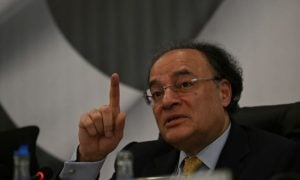
After Harmanpreet Kaur-led Indian women’s team won the Asia Cup, they mirrored the approach of their men’s team when they won the Asia Cup last year — refusing to receive the trophy from Mohsin Naqvi. Naqvi was well within his rights to be the chief guest on the occasion as he is the president of the Asian Cricket Council (ACC).
Interestingly, Naqvi’s second snub in as many years has left Indian media afraid of his presence at future events. Soon after the Asia Cup impasse, Indian media started to find out whether Naqvi will visit Japan for the Asian Games cricket competition. India’s men’s and women’s teams are favourites to clinch the gold medal, and hence their apprehension over Naqvi once again being the chief guest!
Naqvi’s impression has been fast and furious. Ever since taking over as Pakistan Cricket Board head, Naqvi has taken India head-on. He fought tooth and nail in the lead-up to hosting the Champions Trophy in Pakistan last year. While India left no stone unturned in their effort to get the event moved out of Pakistan, Naqvi fought valiantly and staged the event on a hybrid model — the first time Pakistan staged an ICC (International Cricket Council) event in 29 years.
India did not tour Pakistan and played their matches on the neutral venue of Dubai but had to pay a cost. Naqvi ensured that whenever either of the countries host an event, their matches will be played on a neutral venue. Tit for tat, Pakistan did send their teams to India for Women’s ODI World Cup 2025 and men’s Twenty20 World Cup — playing in Sri Lanka on both occasions.
But despite this animosity, India is caught in a ” Hobson’s choice — a situation where you “can’t live with it, can’t live without it.” The commercial value of an Indo-Pak match in a global event is ginormous, as it attracts a worldwide viewing audience in the region of 500 million.
The ICC earns 550 million dollars in a four-year cycle from matches between the arch-rivals. So much so that the ICC has revised the format of the 2027 ODI World Cup, which could include three meetings between India and Pakistan.
India’s dual and hypocritical stance has earned a lot of flak from their own media and sane voices. “In a utopian world, sport and politics should never be mixed, but that is never the case with India and Pakistan, especially in cricket,” writes K.C.
Vijaya Kumar in the most revered Indian newspaper, The Hindu. He went on, “It is war minus the shooting, and yet in turning a cold shoulder to the sport’s niceties, both the men’s and women’s units have been churlish in their behaviour.
“Obviously the BCCI has instructed the players to be aloof with their rivals. And none can overlook the Central Government’s role in this awkward situation. Naqvi the politician may have made negative remarks about India in the past, but to use that as a crutch and refuse to turn up at the post-match presentation reflects poorly on the Indian cricket firmament. You don’t win titles and return empty-handed; Indian cricketers have notoriously made this a fine art.”
Veteran writer Anand Vasu questioned the decision and demanded clarification. “But with a continental sporting event ending in a farcical manner once more, the Indian government owes it to fans who support their team to explain the decision,” writes Vasu. “After all, players are the public face of the Indian team, not the cricket board or its elected functionaries, who had no qualms fraternising with Naqvi at the same event.
“The players may symbolically be used as puppets, and even if they disagree, they may reconcile themselves to this fate. But at the very least, they have a right to know who is pulling the strings.”
Since India is bidding to host the 2036 Olympics, they cannot treat Pakistan as they have done in the past decade. New Delhi has recently revised their policy and has assured that Pakistan teams will be allowed to compete in multi-national events hosted by them. This is in line with the International Olympic Association charter, which demands that all member countries be allowed to compete in an international event.
India’s bid will get weak if they do not issue visas to sportspeople from Pakistan. They have had a taste of IOC power in 2019 when Pakistani shooters were refused entry to compete in an Olympic qualifying event. Irked by the snub, the IOC relocated the event out of India in an admonitory step.
The subcontinent is obsessed with cricket. The game runs in the veins of fans from India and Pakistan. India has been the superpower — both in terms of finances and standard of play. The dominance demands humility and good spirit from them. If cricket organisers leave politics for politicians, then it will be a great service to the game as well as to billions of fans around the world.