KOUROU, French Guiana: The European Space Agency (ESA) has successfully placed two Earth observation satellites into orbit to improve monitoring of extreme weather events and environmental changes linked to climate change.
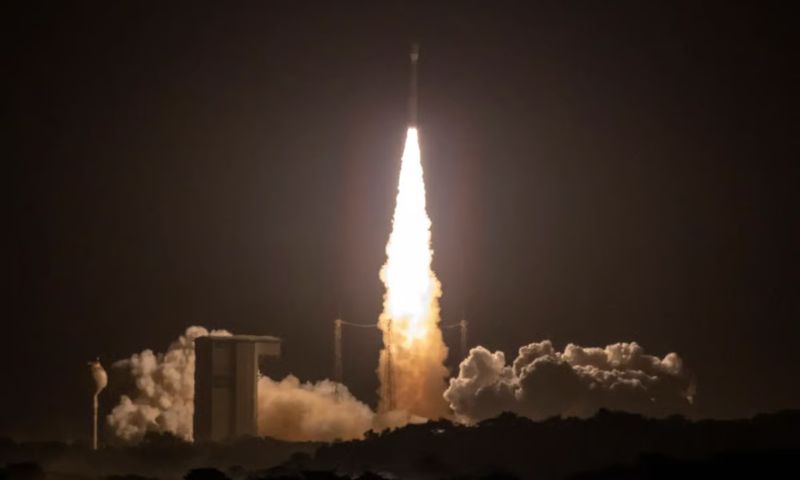
A European Vega-C rocket carrying the Flex and Sentinel-3C satellites lifted off from the Kourou space centre in French Guiana at 10:21pm local time on Monday (0121 GMT Tuesday). The two satellites were deployed into a sun-synchronous orbit nearly two hours after liftoff.
🚀🛰️ What a launch! #CopernicusEU Sentinel-3C is on its way to orbit! The next major milestone: separation of our satellite, followed by ESA’s FLEX.
📸 Check out the launch photo below!
📺 Learn more about the mission & follow the broadcast here: https://t.co/1IbAlAmDRo pic.twitter.com/avPUFta64l— Copernicus EU (@CopernicusEU) September 15, 2026
The Flex (Fluorescence Explorer) satellite will collect data on the effects of heatwaves and other environmental stresses on vegetation. It will monitor the faint red fluorescence emitted by plants during photosynthesis, helping scientists assess the relationship between plant stress and fluorescence and quantify its effects.
READ ALSO: Europe’s New Vega-C Rocket Launch Fails
The Sentinel-3C, part of the European Union’s Copernicus Earth observation programme, will monitor the marine environment, including sea temperatures, wave heights and ocean currents. It will also gather data on land use and land cover.
The information is expected to support efforts to improve agricultural yields and help prevent food crises linked to environmental and climate-related changes. ESA Director of Earth Observation Programmes Simonetta Cheli described such missions as “essential” in helping address the effects of climate change.
The launch marks another step in Europe’s efforts to strengthen its ability to observe and better understand changes taking place across the planet.