RAWALPINDI: Pakistan and Indonesia on Monday reaffirmed their resolve to further strengthen bilateral defence cooperation, particularly in the domains of professional training, defence collaboration and joint military exercises.
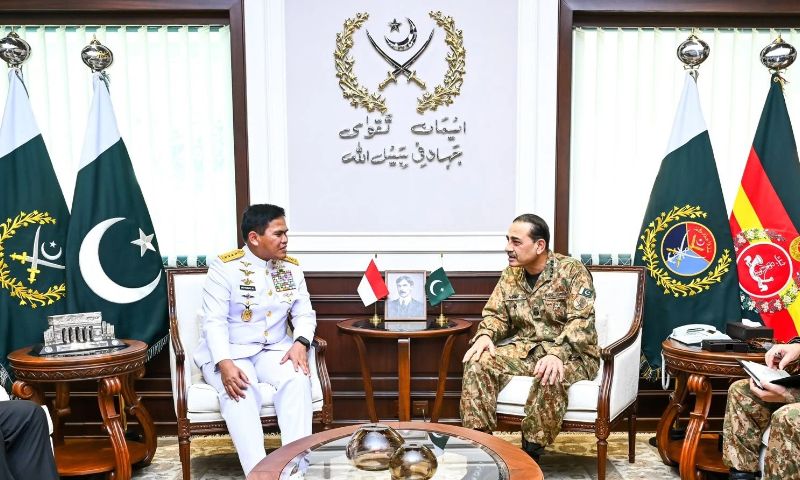
Chief of the Indonesian Navy Admiral Dr Muhammad Ali called on Pakistan’s Chief of Defence Forces and Chief of Army Staff Field Marshal Syed Asim Munir at General Headquarters in Rawalpindi, the military’s media wing, Inter-Services Public Relations (ISPR), said.
During the meeting, matters of mutual interest, regional security and bilateral defence cooperation were discussed, ISPR said.
“The two sides expressed satisfaction over the existing military-to-military relations and reaffirmed their resolve to further strengthen cooperation, particularly in the domains of professional training, defence collaboration and joint exercises,” the military’s media wing stated.
Field Marshal Syed Asim Munir reaffirmed Pakistan’s commitment to further strengthening its longstanding and brotherly relations with Indonesia, significantly in the defence and security domains.
Admiral Dr Muhammad Ali appreciated the professionalism of Pakistan Armed Forces and acknowledged their contributions towards regional peace and stability.
Pakistan and Indonesia have maintained longstanding bilateral ties, with both countries seeking to deepen cooperation across political, economic and security areas.
Indonesian President Prabowo Subianto had paid a state visit to Pakistan in December 2025. During the visit, the two countries reaffirmed commitment to strengthening their bilateral partnership.
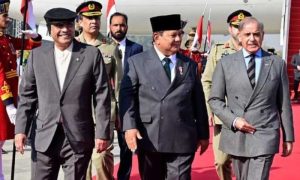
In a joint statement issued at the end of the visit, the leadership of the two countries noted that bilateral ties predate their independence and reaffirmed their resolve to build on this historic foundation by adopting a forward-looking agenda.
Both sides reviewed the full spectrum of relations and agreed to deepen collaboration across political, diplomatic, economic, trade, security, defence, cultural, education, scientific and health sectors.
The leaders reaffirmed commitment to strengthening defence ties through increased high-level military interactions, defence industrial cooperation, joint training programmes and exchanges between military institutions.