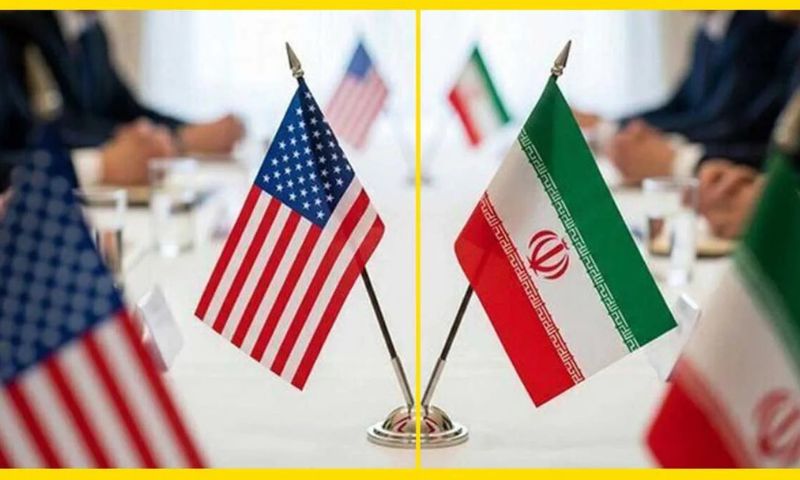
DOHA, Qatar: Mediator Qatar on Tuesday urged the United States and Iran to return to negotiations under the Pakistan-brokered Islamabad Memorandum of Understanding (MoU) framework to permanently end the conflict.
On Sunday, the US carried out strikes on an Iranian island in the Strait of Hormuz, with Tehran retaliating by attacking US military targets in the Middle East.
After six months of war, the US and Iran remain at an impasse, with Iran disrupting traffic in the strategic Strait of Hormuz with its blockade and the US persisting with a counter-blockade of Iranian ports.
“We have said from day one that leaving the issue unresolved and trying to normalise the closure of the Strait would lead to escalation,” Qatari foreign ministry spokesman Majed Al Ansari told a regular press briefing.
“This is precisely what we have witnessed over the past two days,” the spokesman said.
“We urge the parties to exercise wisdom and return to the negotiating path, and we continue to intensify our efforts with our mediation partners to ensure a return to that path.”
Key Highlights from the Weekly Media Briefing by Dr. Majed bin Mohammed Al-Ansari @majedalansari , Advisor to the Prime Minister and Official Spokesperson for the Ministry of Foreign Affairs#MOFAQatar pic.twitter.com/onT6hlz122
— Ministry of Foreign Affairs – Qatar (@MofaQatar_EN) September 1, 2026
Pakistan stresses implementation of Islamabad MoU
Meanwhile, Pakistan’s Deputy Prime Minister and Foreign Minister Ishaq Dar, in an exchange with Iranian Foreign Minister Abbas Araghchi in Bishkek, reaffirmed the importance of continued engagement.
Deputy PM Dar underscored that dialogue and diplomacy remain essential to promoting peace and stability in the region, and that sincere implementation by both parties to the conflict of the Islamabad MoU of June 2026 remains the only way forward.
A warm exchange between Deputy Prime Minister/Foreign Minister Senator Mohammad Ishaq Dar @MIshaqDar50 and Foreign Minister of Iran Seyyed Abbas Araghchi @Araghchi ahead of the SCO Council of Heads of State meeting in Bishkek today.
The two Foreign Ministers exchanged views on… pic.twitter.com/flgYsG0B3l
— Ministry of Foreign Affairs – Pakistan (@ForeignOfficePk) September 1, 2026
While addressing the Shanghai Cooperation Organisation (SCO) summit in Bishkek on Tuesday, Prime Minister Shehbaz Sharif said Pakistan and the international community had “borne a heavy economic cost” as the “closure of critical energy supply routes” disrupted the global economy, referring to the Strait of Hormuz.
“In these challenging times, Pakistan has consistently acted as an honest and sincere mediator and facilitator,” PM Sharif said.
The Prime Minister recalled that Pakistan’s diplomatic efforts culminated in the signing of the Islamabad MoU in June, describing it as a “critical step towards regional de-escalation and the restoration of peace”.
He said peace-building efforts were continuing and thanked countries supporting the process.
“We firmly believe that the Islamabad MoU offers the most viable and enduring pathway to lasting peace in the region.”
Earlier on Tuesday, Iran’s President Masoud Pezeshkian said Tehran would “immediately” reciprocate if the United States returned to the Islamabad MoU signed in June, aimed at ending their war.
“In Qatar, in the region, in the world today, we cannot afford to accept the status quo,” Al Ansari said.
“Discussions with our mediation partners — whether in Pakistan or Oman — are ongoing,” he added.
Last week, Qatar’s Prime Minister Sheikh Mohammed bin Abdulrahman Al Thani travelled to Tehran as part of the mediation efforts, after Iran and Oman, which border the key strait, said they were discussing a temporary shipping corridor and the clearance of mines.
Islamabad MoU framework for peace
Under the Islamabad MoU, the US and Iran committed to halt military operations, reopen the Strait of Hormuz to commercial shipping and negotiate a comprehensive agreement covering Iran’s nuclear programme, US sanctions and a permanent ceasefire within 60 days.
Pakistan and Qatar are mediating between Tehran and Washington under the framework of the Islamabad MoU to permanently end the conflict.
Also Read: Oil Rises 1% as US-Iran Fighting Revives Supply Fears
Pakistan is mediating talks between Iran and the United States after helping secure a ceasefire on April 8 and hosting high-level talks between the two sides in Islamabad on April 12 and 13.
Pakistan and Qatar later co-mediated the first round of high-level talks in Lucerne, Switzerland, on June 21. The meeting was attended by US Vice President JD Vance and Iranian Parliament Speaker Mohammad Bagher Ghalibaf.
Oil prices surge after tit-for-tat US-Iran strikes
Meanwhile, shipping monitor Kpler reported that commercial transit through the Strait of Hormuz halved in 24 hours, going from 10 crossings on August 30 to only five on August 31.
“Four vessels entered the Middle East Gulf and one exited, using a mix of Iranian, Omani and negotiated routes,” the monitor said.
“Bab al-Mandeb activity was comparatively stable, with 35 confirmed crossings, up 2.9 percent day on day. Of these, 19 entered the Red Sea and 16 exited,” Kpler adds. “No dark transits were recorded, while the International Maritime Organisation verified no additional attacks.”
Hormuz crossings fall by half
Strait of Hormuz traffic declined sharply on 31 August, with five confirmed crossings, down 50% from 10 a day earlier. Four vessels entered the Middle East Gulf and one exited, using a mix of Iranian, Omani and negotiated routes. Two crossings… pic.twitter.com/J6kEHMqVSS
— Kpler (@Kpler) September 1, 2026
Oil prices continue to rise after the resumption of fighting in the Middle East.
Brent crude futures are up $1.18, or 1.3 percent, to $91.67 a barrel at 07:39 GMT, while US West Texas Intermediate crude is up $1.27, or 1.48 percent, to $87.03.
“The tit-for-tat missile exchanges between the US and Iran bring validation to those who believe that even if not a ‘forever war’, this conflict will run and run,” says PVM analyst John Evans.