Key Points
- Oil rises after US strike on Iranian island
- Iran retaliates against US bases in Jordan
- Hormuz shipping activity falls amid attack fears
ISLAMABAD: Oil prices jumped more than 2 per cent on Monday after a US strike on an Iranian island in the Strait of Hormuz triggered an Iranian retaliation, reviving fears of a renewed disruption to global crude supplies.
Brent crude futures rose $2.51, or 2.85 per cent, to $90.61 a barrel by 0241 GMT, while US West Texas Intermediate (WTI) crude gained $2.13, or 2.55 per cent, to $85.53.
US forces struck two Iranian launchers on Larak Island in the Strait of Hormuz on Sunday, marking the first known American strikes on the Gulf nation since late July.
Iran subsequently attacked two US air bases in Jordan, Iranian media reported, citing the Islamic Revolutionary Guard Corps.
The renewed military escalation came as negotiations aimed at ending the conflict remained stalled and mediators sought to restore normal shipping through the Strait of Hormuz, a critical global energy corridor.
“Looks like we are in another escalation phase,” said Tony Sycamore, market analyst at IG. “How long that lasts is impossible to determine. Could be days, could be weeks.”
The Strait of Hormuz remains the central risk to the oil market.
About one-fifth of global oil supplies flowed through the waterway before the conflict began in late February. The situation reflects that any sustained restriction on shipping is a major threat to international energy supplies.
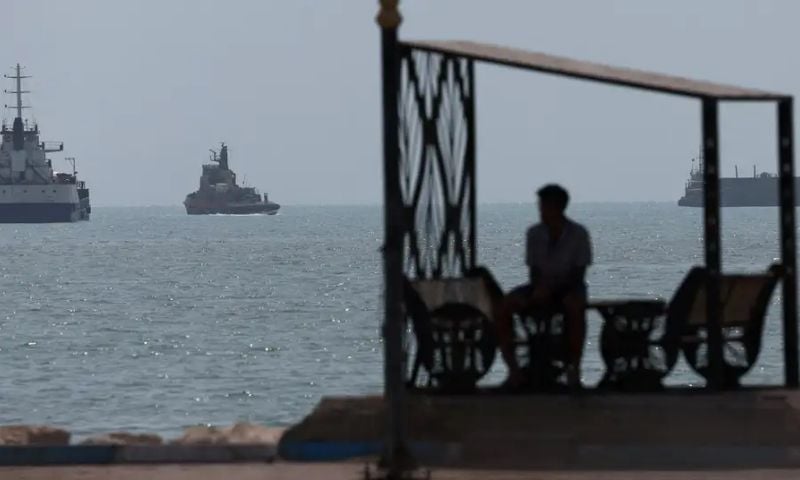
Shipping data showed visible commodity-ship traffic through the strait fell to five vessels a day over the weekend. It indicated growing caution among shipping companies concerned about attacks.
Oil tanker struck
The United Kingdom Maritime Trade Operations said on Sunday that a tanker was struck by a projectile while sailing inbound through the strait on Saturday, adding to concerns over the safety of commercial shipping.
ANZ analysts said rising oil flows through the Strait of Hormuz had helped contain concerns about supply disruption. Still, the latest fall in vessel traffic underscored the fragility of the recovery.
The market is also watching the prospect of further US sanctions on Iran.
READ ALSO: Oil Prices Retreat as Hormuz Flows Recover
According to US Treasury Secretary Scott Bessent, Washington was likely to impose new secondary sanctions on Iran each week.
The stated aim is to cut Tehran off entirely from the dollar-based financial system.
Additional sanctions could place further pressure on Iranian oil exports and tighten the global supply outlook, particularly if they coincide with renewed restrictions on shipping through Hormuz.
Technical indicators also point to the possibility of further gains if prices break key resistance levels.
Sycamore said a move by WTI above $85.80-$85.90 a barrel could open the way towards last week’s $87.69 high and July’s $93.50 peak.
Despite Monday’s sharp rise, Brent and WTI remained on course for small monthly declines in August after both fell more than 4 per cent last week, their first weekly decline in three weeks.
US President Donald Trump also said oil from a recently reached deal with Venezuela would be used to replenish the US Strategic Petroleum Reserve, which has fallen close to its lowest level in 44 years.
For the oil market, the immediate focus remains on whether the latest military escalation translates into a sustained reduction in crude flows through Hormuz.
A temporary rise in prices could reverse if shipping resumes, but prolonged disruption could rapidly shift the market towards a tighter supply outlook.
Oil has swung sharply in recent weeks, falling below $80 a barrel in early August before rebounding above $90 as Hormuz risks returned. Prices then slipped more than 4 per cent last week amid hopes of de-escalation.