Key points
- He calls for Muslim unity and mutual defence
- Khamenei blames US, Israel for regional divisions
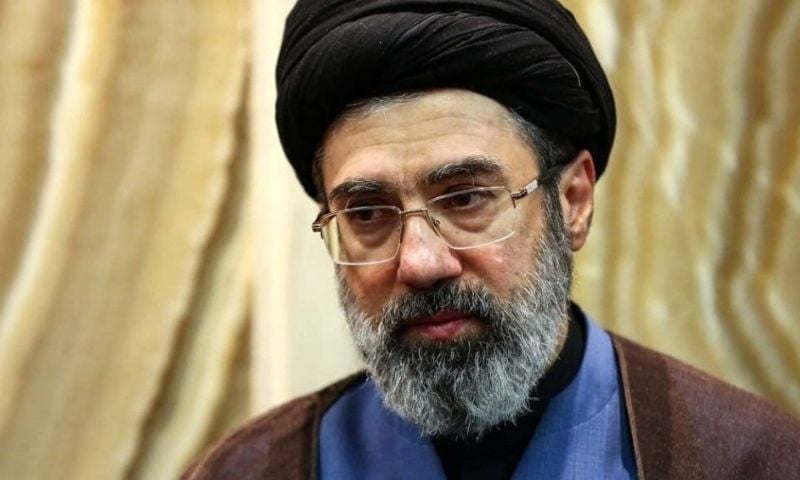
ISLAMABAD: Iran’s Supreme Leader Mojtaba Khamenei has urged Gulf rulers to unite, defend one another and confront what he called their “real enemy”, in a direct appeal amid heightened regional tensions.
Khamenei appealed in a written message issued on Sunday to mark Islamic Unity Week, which coincides with the birth anniversary of Prophet Muhammad (PBUH).
The message was read at the closing ceremony of the 40th International Islamic Unity Conference in Tehran and published on the official Telegram channel.
“My repeated, emphatic recommendation to the rulers of Islamic countries, particularly those in the West Asian region and along the Gulf, is that you must know who your true enemy is, understand their plots, and confront them,” Khamenei said.
He called for Muslim unity, cooperation in various fields and mutual defence, saying divisions among Muslims serve the interests of their adversaries.
Khamenei explicitly identified the United States and Israel as enemies of Muslim unity.
“The criminal rulers of the US and the illegitimate Zionist regime are the sworn enemies of this unity and friendship,” he said, according to the published text.
He said their hostility was not directed only at Iran but at Muslims across West Asia and North Africa.
Khamenei said unity was essential to building what he described as a “New Islamic Civilization”, and called for cooperation in security, science, development and other fields.
READ ALSO: Khamenei Declares Victory, Warns Retaliation Amid Lebanon Escalation
“The important lesson of unity and avoiding discord is the first lesson of the school of Islam,” he said, adding that mutual defence and cooperation were also essential.
Khamenei links Muslim divisions to the Palestinian issue
He linked Muslim divisions to the Palestinian issue, asking whether Palestinians would have been left “so defenseless” if Muslim countries had been united.
Turning specifically to the Gulf, Khamenei asked whether what he called “corrupt, unprincipled scoundrels” would have dared to covet the region’s lands and possessions if its governments and peoples had been united under the “banner of Islam”.
He said divisions could emerge from religious, racial, cultural, social, economic, political and geographical differences, warning that anyone who creates discord among Muslims, knowingly or unknowingly, advances the agenda of Islam’s enemies.
The message comes six months after US-Israeli airstrikes against Iran killed Khamenei’s father and predecessor, Ayatollah Ali Khamenei, and injured Mojtaba Khamenei. The younger Khamenei has not appeared publicly since the strikes, according to Reuters.
Iranian officials say he remains in charge, but his prolonged absence has prompted questions about his health and the functioning of Iran’s leadership during the conflict.
The latest appeal also follows Khamenei’s call for greater social cohesion inside Iran. In a message on August 28, he urged authorities to avoid actions and statements that could damage national unity or weaken public morale.
Iranian Foreign Minister Abbas Araghchi has echoed the call for closer relations among Muslim countries, particularly Iran’s neighbours.
“Strengthening relations among Muslim countries is essential to enhancing the position of the Muslim world globally and improving the situation of Muslims in all parts of the world,” Araghchi said at the Islamic Unity Conference.
Araghchi also questioned the role of foreign military forces in regional security and called for a regional security framework based on trust and cooperation among neighbouring states.
Iranian President Masoud Pezeshkian has similarly called for Muslim solidarity, saying Islamic countries should not allow their territories to be used for attacks against other Muslim states.
The 40th International Islamic Unity Conference brought together Muslim scholars and officials in Tehran to discuss Islamic solidarity and cooperation, with the Palestinian issue and regional tensions featuring prominently.