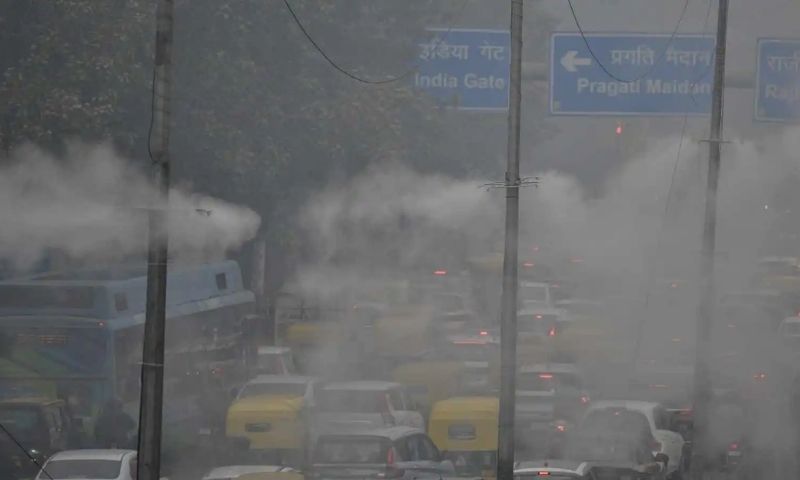
BENGALURU: India’s flagship National Clean Air Programme (NCAP) has largely failed to deliver its targeted improvements, with researchers highlighting serious structural shortcomings despite billions of dollars being committed to tackling worsening air pollution.
Data presented by the Centre for Study of Science, Technology and Policy (CSTEP) at the eighth India Clean Air Summit showed that fewer than 7% of 131 targeted cities achieved NCAP’s goal of reducing pollution by 40% by 2025-26. Meanwhile, 35% recorded increases in coarse particulate matter (PM10).
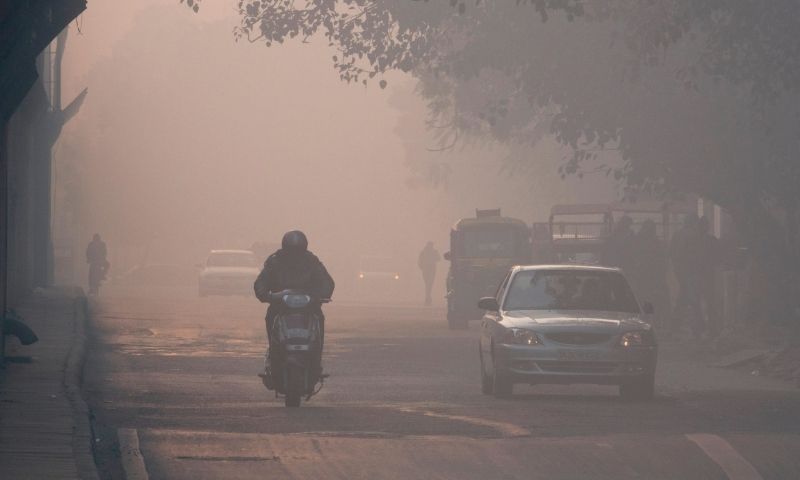
The findings come despite the government releasing more than INR 16,423 crore ($1.5 billion) to support the programme, launched in 2019.
India’s Air Pollution Programme Faces Structural Flaws
Experts said NCAP’s city-centred approach overlooks major pollution sources outside urban areas and concentrates heavily on PM10 and dust rather than the smaller and more dangerous PM2.5 particles.
ALSO READ: US Watchdog Calls For Sanctions Against RSS, Visa Revocation For Chief Bhagwat
According to data from the PAVITRA air-quality management tool, about 70% of India’s PM2.5 emissions originate from non-urban areas, highlighting a major gap in the existing strategy.
Researchers also identified inadequate assessment of interventions, short-term planning and limited technical capacity among urban local authorities as weaknesses.
Northern India Remains Pollution Hotspot
The Indo-Gangetic Plain remains particularly vulnerable. S.D. Attri of the Commission for Air Quality Management said the region covers around 15% of India’s landmass but houses 37% of its population and produces 35% of national emissions.
Average annual PM2.5 concentrations across the northern plains reach around 84 micrograms per cubic metre — more than twice India’s national standard and nearly 17 times the World Health Organisation guideline.
Researchers have recommended stronger action against black carbon, particularly in Uttar Pradesh and Bihar, where household burning of biomass and other polluting fuels remains significant.
Experts at the summit also urged New Delhi to connect clean-air policies with climate action as expectations grow for an NCAP 2.0.
However, the government has yet to announce when the revamped programme will be launched.