
Key Points
- Pakistan warns water deprivation could have profound consequences for regional peace.
- Ishaq Dar says Indus Waters Treaty remains valid, binding and operative.
- Treaty mechanisms remain the legitimate route for resolving Pakistan-India water disputes.
WASHINGTON: Pakistan has warned that any attempt to deprive it of waters allocated under the Indus Waters Treaty could have “profound consequences” for regional peace and security, while calling for the agreement to be respected in full and disputes to be settled through its established mechanisms.
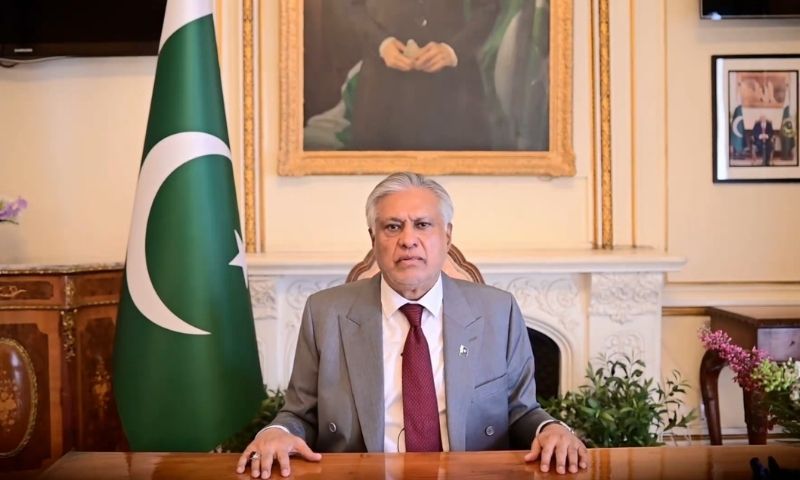
Addressing a seminar in Washington on “The Indus Waters Treaty: South Asian Security at the Crossroads,” Deputy Prime Minister and Foreign Minister Ishaq Dar said Pakistan remained committed to peaceful settlement but would safeguard its legitimate water rights under the treaty and international law.
“Our preference remains clear: law over unilateralism, dialogue over confrontation, and cooperation over coercion,” Dar said.
He said the issue was no longer merely a bilateral dispute between Pakistan and India, arguing that the future of the treaty had implications for the sanctity of international agreements, confidence in international law and stability in regions sharing transboundary water resources.
Treaty remains binding
Dar said India’s unilateral decision in April 2025 to place the Indus Waters Treaty “in abeyance” had no basis in the treaty, which contains no provision allowing either party to unilaterally suspend or place it in abeyance.
Deputy Prime Minister/Foreign Minister Senator Mohammad Ishaq Dar @MIshaqDar50 delivered a keynote address via a recorded video message at the seminar on “The Indus Waters Treaty: South Asian Security at the Crossroads,” organized by the Embassy of Pakistan in Washington… pic.twitter.com/kKP8a4NzY9
— Ministry of Foreign Affairs – Pakistan (@ForeignOfficePk) August 28, 2026
“Nor can either party, through a unilateral political declaration, extinguish obligations solemnly undertaken under international law,” he said.
Pakistan’s position, he added, was “clear and consistent”: the Indus Waters Treaty remains valid, binding and fully operative.
He said recent arbitral proceedings had also reinforced the principle that treaty-based processes could not simply be defeated through non-participation or unilateral assertions.
Water rights at stake
The deputy prime minister said the stakes for Pakistan were particularly high because the Indus Basin was the lifeline of more than 250 million Pakistanis.
Agriculture, food security, energy production, livelihoods and economic development were all deeply dependent on the Indus River system, he said.
“Water security for Pakistan is, therefore, inseparable from economic security, food security and, ultimately, national security,” Dar said.
He warned that interference with the treaty’s water arrangements would therefore have consequences extending beyond individual projects or bilateral disagreements.
“Any attempt to deprive Pakistan of the waters rightfully allocated to it under the Indus Waters Treaty would have profound consequences for regional peace and security,” he said.
Six decades of stability
Dar recalled that Pakistan and India concluded the Indus Waters Treaty in 1960 following years of negotiations facilitated by the World Bank.
The agreement allocated the Eastern Rivers — Ravi, Beas and Sutlej — to India, while the Western Rivers — Indus, Jhelum and Chenab — were allocated to Pakistan, subject to specifically defined uses permitted to India under the treaty.
The treaty also established the Permanent Indus Commission and created mechanisms for addressing questions, differences and disputes through the commission, government-to-government engagement, a Neutral Expert and, where required, a Court of Arbitration.
Dar described this institutional architecture as central to the treaty’s original bargain.
Law over unilateralism
Dar argued that international agreements derive their value from certainty and predictability, warning that allowing treaty obligations to be discarded whenever political relations deteriorate would undermine the very purpose of treaties.
The issue was particularly significant for transboundary rivers, he said, because governments and political relationships could change, but geography could not.
“States cannot alter the direction in which rivers flow,” he said.
He argued that the international community therefore had a legitimate interest in preserving treaty-based water governance in South Asia.
Disputes have legal channels
Dar said the treaty had been specifically designed to withstand disagreements between Pakistan and India.
Its dispute-resolution architecture existed because the treaty’s framers anticipated that differences could arise, he said.
“The answer to disagreement was therefore built into the Treaty itself: dialogue, technical engagement and lawful dispute resolution,” he said.
Pakistan, he added, had consistently sought to resolve differences through diplomacy and the mechanisms established under the treaty.
Invoking the Permanent Indus Commission, a Neutral Expert or a Court of Arbitration should not be viewed as confrontation, he said, but as implementation of the legal framework agreed by both countries.
Three-part way forward
Dar proposed three principles for moving forward.
First, the Indus Waters Treaty must be respected and implemented in letter and spirit.
ALSO READ: Pakistan Warns India: Indus Waters Treaty Suspension Unacceptable
Second, all questions, differences and disputes should be addressed through the mechanisms provided by the treaty.
Third, Pakistan and India should restore and strengthen technical engagement, transparency and data-sharing in accordance with the agreement.
“These are not unreasonable demands,” Dar said. “They are the requirements of an agreement solemnly concluded by two sovereign States and sustained for more than six decades.”
He said Pakistan remained committed to peaceful settlement because lasting peace could only rest on sovereign equality, mutual respect and faithful implementation of international obligations.