Key points
- India’s US favourability rating has fallen sharply
- Half of Americans now view India negatively
- India’s global standing remains deeply divided
WASHINGTON: India’s international image has fallen to one of its weakest points in nearly two decades, with half of Americans now holding an unfavourable view of the country, according to a US-based nonpartisan organisation.
The finding comes from the Pew Research Centre, which is a US-based nonpartisan organisation that conducts public-opinion surveys and research on social, political and demographic issues in the United States and around the world.
Its latest survey, covering 36 countries, found that 50 per cent of Americans viewed India unfavourably, compared with 45 per cent who held a favourable opinion.
The result is among the most negative ratings recorded since Pew began tracking American views of India in 2008.
India’s image in the United States was much stronger only a few years ago.
In 2023, 51 per cent of Americans viewed India favourably. That figure fell to 43 per cent in 2024, recovered to 49 per cent in 2025 and declined again to 45 per cent in the latest survey.
The figures raise a basic question: why has India’s international image weakened despite its growing economic weight?
From rising power to negative image
India has spent the past decade projecting itself as an influential global power.
Its expanding economy, strategic importance in the Indo-Pacific, close ties with the United States and role in major international groupings have raised its diplomatic profile.
Yet economic and strategic power does not automatically produce a favourable public image.
Pew’s survey shows that opinion of India is sharply divided across the countries surveyed.
Overall, 45 per cent of respondents in the 36 countries expressed a favourable view of India, compared with 41 per cent who viewed it unfavourably.
The United States carries particular influence across the globe.
As the world’s leading economic and military power, Washington remains central to global diplomacy, international finance and security arrangements.
A decline in public confidence in India in the United States therefore has implications beyond the bilateral relationship.
Domestic politics shaping India’s image
Religious freedom and the treatment of minorities have become central to criticism of India in the United States.
The US Commission on International Religious Freedom has recommended that the State Department designate India as a Country of Particular Concern, pointing out the government’s allowing systematic and serious violations of religious freedom.
USCIRF is an independent, bipartisan federal body created by Congress to monitor religious freedom abroad and make policy recommendations.
The commission has also called for targeted sanctions against members of the Rashtriya Swayamsevak Sangh (RSS) and Indian officials it says are involved in religious-freedom violations.
It specifically urged Washington to consider revoking the US visa of RSS chief Mohan Bhagwat, who is scheduled to address an event in New York.
Mamdani does not want RSS at Madison Square Garden
The issue of India’s image has now reached New York City politics. Mayor Zohran Mamdani has said he does not support Bhagwat’s planned appearance at Madison Square Garden on August 29. Mamdani has criticised the RSS ideology as exclusionary and said it conflicts with the secular and pluralist India he supports.
READ ALSO: New York Mayor Mamdani Opposes Event Featuring RSS Chief Mohan Bhagwat
Mamdani’s position is notable because he is both New York’s mayor and an Indian American. His comments have placed the debate over India’s domestic politics directly in the American public arena.
What US analyst said
The issue of India’s deteriorating image was also discussed on Mateen Haider’s Insight programme on WE News, where US analyst Faiz Rehman examined the US pressure on the RSS and religious-freedom concerns in India.
The programme was specifically titled “Religious Freedom in India: Is Global Pressure Enough?”
The discussion comes at a time when the RSS has become a focus of criticism in the United States, particularly over its relationship with India’s ruling Bharatiya Janata Party and allegations concerning treatment of religious minorities.
The dispute has nevertheless moved beyond Indian domestic politics. It is now being discussed by US lawmakers, religious-freedom officials, American politicians and the Indian diaspora.
Relations with neighbours
India’s image is also affected by its relations with neighbouring countries.
The latest Pew findings show a sharp regional divide. Sri Lanka recorded a 79 per cent favourable view of India, among the highest in the survey, whereas Pakistan recorded only 7 per cent. Bangladesh’s favourable view of India has also fallen in recent years.
This presents a problem for India’s ambitions to lead South Asia.
A country seeking regional leadership faces a credibility problem at home when public opinion in some neighbouring states remains strongly negative.
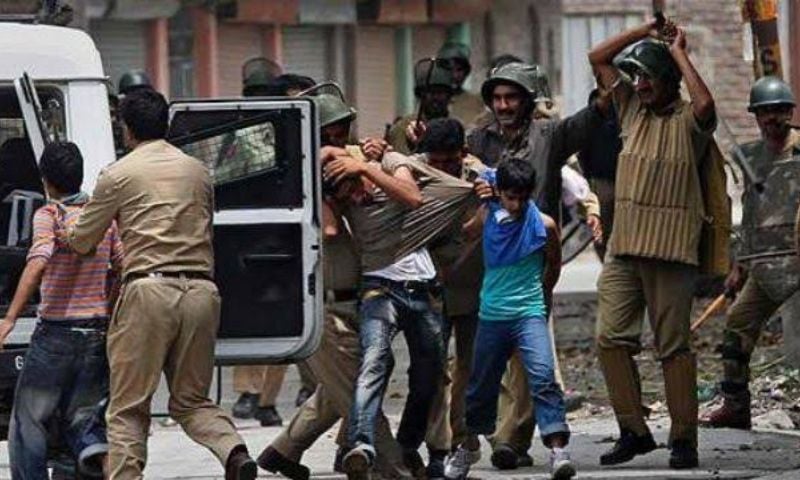
The India-Pakistan relationship is the clearest example. Decades of conflict, the Kashmir dispute, cross-border tensions and competing national narratives have produced deeply negative perceptions on both sides.
A warning for India’s global ambitions
India’s global image is facing increasing scrutiny, with negative perceptions rising in several countries amid geopolitical tensions, concerns over its foreign-policy choices, and criticism of its domestic record.