
ISLAMABAD: Pakistan’s seafood exports to China rose 41 per cent year-on-year to $220 million in the first seven months of 2026, strengthening the country’s position in one of the world’s largest seafood markets.
The substantial increase in exports to China reflected Pakistan’s efforts to diversify exports beyond traditional products.
The increase from $156 million in the same period of 2025, according to the latest data from China’s General Administration of Customs.
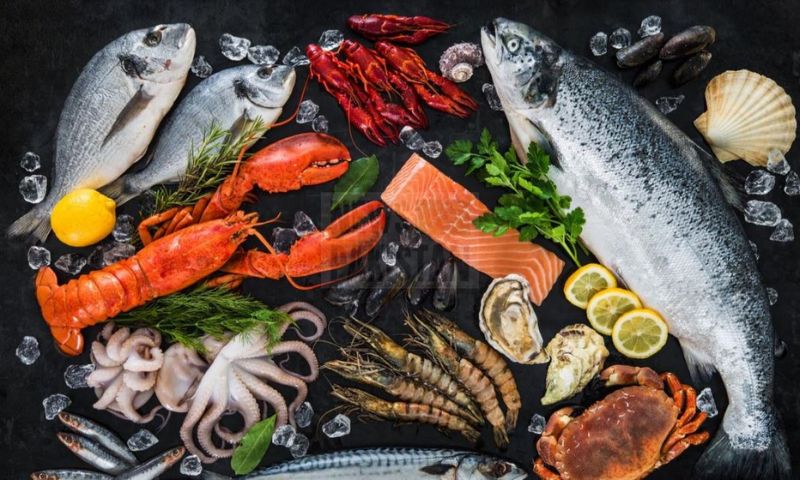
The growth was driven by demand for a wide range of marine products, including frozen fish, cuttlefish, squid, sardines, crabs, octopus and shrimp.
Pakistan’s seafood exports
Frozen whole fish was the largest individual export category, generating $40.04 million from shipments of 19,834 metric tons during January-July.
Frozen cuttlefish and squid followed, with combined exports worth $36.39 million, reflecting strong demand from China’s seafood processing and consumer markets.
Frozen sardines and sprats generated $19.49 million from 22,458 metric tons, while live and chilled mud crabs contributed $18.70 million.
Other significant shipments included frozen octopus worth $9.16 million, fish fillets and meat at $7.71 million, frozen shelled shrimp and prawns at $6.86 million and frozen flatfish at $5.71 million.
China coastal markets
Pakistan’s seafood shipments were concentrated in China’s major coastal provinces, which serve as important centres for seafood processing, consumption and re-export.
Fujian was the largest destination, receiving seafood worth $32.58 million, followed by Guangdong with $27.50 million.
READ ALSO: Pakistan’s Seafood Exports to China Set to Grow
Shandong and Zhejiang imported $22.88 million and $22.04 million respectively, while Shanghai received $13.30 million and Yunnan $11.21 million.
The concentration of imports in coastal provinces highlights the importance of China’s established seafood-processing and distribution networks for Pakistani exporters.
Pakistan exporter base expands
Muhammad Imran, Trade and Investment Counsellor at the Pakistan Consulate in Guangzhou, said around 200 Pakistani seafood exporters and 10 fish-meal producers were now registered with Chinese customs.
The broader registration base enables more Pakistani companies to ship directly to Chinese buyers and has helped expand market access for the country’s fisheries sector.
Pakistan’s seafood industry is also benefiting from preferential market access under the second phase of the China-Pakistan Free Trade Agreement. The agreement provides zero- or reduced-tariff access for an expanded range of seafood species, with Pakistani exporters and Chinese customs authorities continuing discussions on adding further products to the preferential list.
The expanding exporter base and tariff preferences are particularly significant for Pakistan, which is seeking to increase higher-value exports and reduce its reliance on a relatively narrow range of traditional products.
Pakistan fisheries sector
The stronger Chinese demand comes after a record year for Pakistan’s seafood industry.
Pakistan’s exports of fish and fish preparations reached $568 million in fiscal year 2025-26, according to Federal Minister for Maritime Affairs Muhammad Junaid Anwar Chaudhry.
Frozen fish was the largest category at $105.09 million, followed by frozen squid and cuttlefish at $103.71 million and fish meal at $83.12 million.
The minister said Pakistan’s seafood was exported to a range of international markets, including China, Thailand, Malaysia, the United Arab Emirates, Japan, Vietnam, Saudi Arabia, South Korea, Indonesia and the United States.
The latest China figures therefore point to the growing importance of the Chinese market within Pakistan’s broader fisheries export strategy.
For Pakistan, expanding seafood exports also offers an opportunity to make greater use of its extensive coastline and fisheries resources, improve processing and value addition, and build a larger presence in international food markets.
The rapid increase in shipments to China suggests that seafood is emerging as one of the faster-growing components of Pakistan-China trade outside traditional exports such as textiles, cotton yarn and agricultural commodities.
The sector’s future growth, however, will depend on maintaining food-safety standards, consistent quality, reliable cold-chain logistics and access to a wider range of Chinese tariff categories.
With around 200 exporters already registered with Chinese customs and further seafood products being considered for preferential treatment, Pakistan has scope to deepen its presence in China’s large consumer and seafood-processing market.