Key Points
- Pakistan plans to raise $1bn-$2bn through Eurobonds.
- Government is prioritising exports over consumption-led economic growth.
- US institutions could finance aircraft and refinery investments.
- Islamabad aims to achieve B+ rating within 12 months.
ISLAMABAD: Pakistan is seeking greater access to US financing and preparing to raise up to $2 billion from international capital markets as the government seeks to boost investor confidence and shift the economy towards export and investment-led growth.
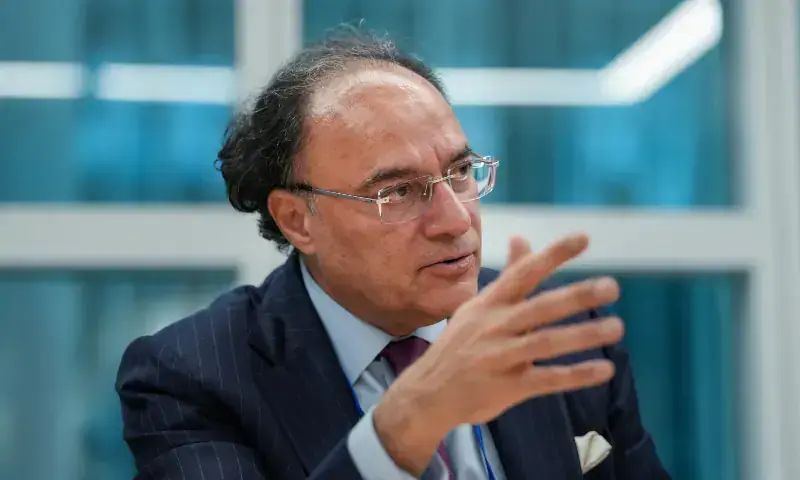
In an interview with the Financial Times, Finance Minister Muhammad Aurangzeb said Pakistan’s request for a $10 billion currency swap arrangement with the United States is primarily intended to provide a confidence signal to international investors as Islamabad prepares for a broader return to global borrowing.
“Pakistan had received constructive engagement from Washington over the proposed swap line and expected an answer within the next couple of months,” the report quotes Aurangzeb as saying.
He also highlighted the potential role of the US Export-Import Bank (ExIm Bank) and the US International Development Finance Corporation (DFC) in supporting trade and investment flows into Pakistan.
Return to global markets
Pakistan has begun preparations for a renewed presence in international debt markets, with the government appointing banking consortia to arrange Eurobonds, Islamic sukuk and rupee-denominated, dollar-settled bonds.
“Pakistan is looking at raising $1 billion to $2 billion through Eurobonds during the current fiscal year, although the timing would depend on market pricing, maturity and overall conditions,” Aurangzeb said.
The planned borrowing represents an important step for Pakistan as it seeks to regain regular access to international capital markets following years of external financing pressures.
The government is also working to improve the country’s sovereign credit rating, with Aurangzeb saying Islamabad hopes to secure a B+ rating within the next 12 months and eventually move towards the BB category.
S&P Global Ratings recently upgraded Pakistan to B, while Fitch Ratings maintains a B rating with a stable outlook.
Export-led growth
The renewed push for international financing comes as Pakistan seeks to address persistent external-sector vulnerabilities.
Aurangzeb said the government wanted to pursue export-led growth rather than repeat previous cycles of consumption-driven expansion.
He said earlier efforts to stimulate the economy through increased liquidity and domestic consumption had quickly created external pressures because Pakistan remained heavily dependent on imports.
The government is therefore seeking to increase exports and attract investment while maintaining macroeconomic stability.
US investment opportunities
The finance minister identified several potential areas for greater US economic engagement.
He said ExIm Bank could potentially finance the sale of Boeing aircraft to Pakistan International Airlines, following the airline’s privatisation.
The US institution could also support American companies seeking to upgrade Pakistan’s oil-refining infrastructure, while DFC could potentially take equity positions in Pakistani conglomerates.
Aurangzeb said Pakistan wanted to shift its economic model “from aid to trade and investment”, with stronger commercial ties and investment flows supporting long-term growth.
IMF-backed stabilisation
Pakistan’s renewed efforts to access international capital markets follow a period of macroeconomic stabilisation under a $7 billion, three-year IMF programme approved in 2024.
The government has reduced fiscal deficits, brought inflation down and rebuilt foreign exchange reserves.
However, economic growth remains relatively weak. Pakistan estimates that GDP expanded by 3.7% during the 2025-26 fiscal year, a rate that remains insufficient to meet the needs of its rapidly growing population.
Poverty levels have also increased, adding pressure on the government to translate macroeconomic stabilisation into broader economic growth.
The challenge for Islamabad now is to sustain economic stability while generating sufficient growth without triggering another balance-of-payments crisis.
The government’s strategy is consequently focused on increasing exports, attracting foreign investment and rebuilding Pakistan’s ability to raise financing from international markets.