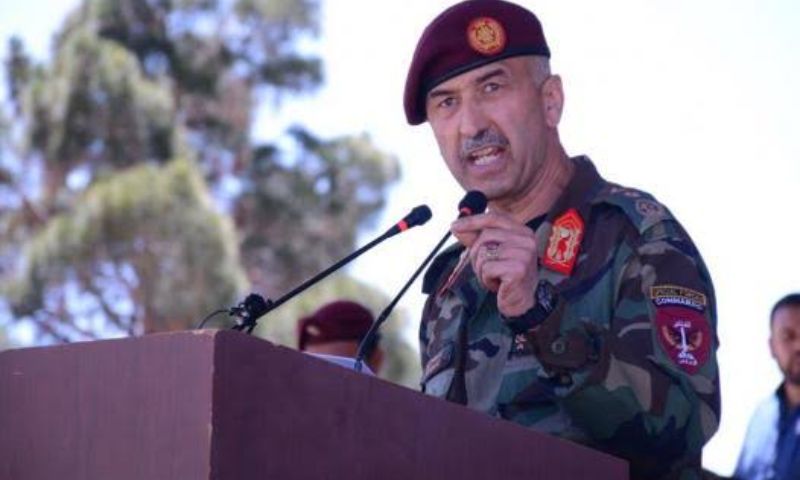
ISLAMABAD: Former Afghan Special Forces commander General Farid Ahmadi has said the liberation of Badakhshan from Taliban control could create conditions for the formation of an Afghan government in exile, as growing resistance activity in the province increasingly poses both a military and political challenge to the Taliban regime.
Badakhshan, once viewed primarily as a remote security theatre, has assumed wider significance amid clashes involving the Afghanistan Freedom Front (AFF), National Resistance Front (NRF), local resistance groups and other anti-Taliban elements.
According to Gen Ahmadi, a sustained resistance breakthrough in the province could provide opposition forces with the territorial and organisational space needed to build an alternative political structure.
The development would carry implications well beyond the battlefield. A significant loss of territory in Badakhshan could challenge the Taliban’s claim that it exercises uncontested authority across Afghanistan and expose the limitations of relying on military force to maintain control.
Since returning to power, the Taliban leadership has faced criticism over its restrictive and exclusionary approach to governance. Political opponents, former security personnel, independent voices and sections of Afghan society have found limited opportunities for meaningful participation in the country’s political affairs.
Power has remained concentrated within a relatively narrow leadership structure, while competing political forces have largely been excluded from decision-making. The continuing political restrictions have fuelled discontent and, according to Afghan opposition figures, created greater space for resistance movements to organise and expand.
Badakhshan pressure point
Badakhshan has consequently emerged as one of the most important pressure points for the Taliban. Continued operations by several resistance groups, recurring clashes and Taliban efforts to retain or restore control through military operations indicate that the regime’s authority remains contested in parts of the province.
For the resistance, however, the significance of Badakhshan extends beyond the immediate military contest. Establishing sustained control over territory could allow disparate anti-Taliban groups to improve coordination, develop administrative structures and establish a stronger political presence.
Possibility of a government in exile
Such a development could also give Afghan political forces outside the Taliban system a geographical base from which to organise. If resistance groups were able to consolidate their position and attract broader domestic and international support, the possibility of establishing a government in exile could become a more tangible political proposition.
READ ALSO: Why Is Armed Resistance Growing Against The Taliban In Afghanistan?
A government in exile would provide excluded Afghan political groups with a platform from which to present an alternative to Taliban rule and challenge the regime’s claim to represent the Afghan state and people.
Political implications
The emergence of an alternative political centre would, however, depend on several factors, including the ability of resistance groups to maintain territorial control, overcome internal divisions, coordinate politically and secure wider support.
For now, Badakhshan remains a contested province, highlighting the Taliban regime’s inability to establish undisputed control over the region. Nevertheless, growing resistance activity has increasingly exposed the limits of Taliban authority and elevated Badakhshan’s importance in the broader struggle over Afghanistan’s political future.
A major territorial breakthrough could have a symbolic impact far beyond the province itself. It could demonstrate that control secured through military force does not necessarily translate into nationwide political acceptance or legitimacy.
Badakhshan could therefore evolve from a security flashpoint into a potential launchpad for a broader Afghan resistance movement, particularly if opposition forces succeed in translating military gains into political organisation and wider public support.
Such a shift could reopen debate over representative governance, the rule of law and greater political participation in Afghanistan, while placing additional pressure on the Taliban regime to address demands for a more inclusive political order.