Rome’s grain dole offers a striking lesson in how a welfare measure can gradually become a political institution.
The system did not emerge overnight. Roman politicians repeatedly competed for popular support by proposing cheaper or free grain. In 73 BC, the Senate itself supported legislation providing subsidised grain to citizens. In 58 BC, the Tribune Publius Clodius made the distribution free. As political competition intensified, the rolls expanded.
By the time Julius Caesar reviewed the system in 46 BC, about 320,000 people were receiving grain at public expense. Caesar ordered a verification of eligibility and reduced the number to 150,000.
Ancient sources record that people had moved to Rome partly to obtain access to the distributions. Caesar subsequently imposed a ceiling, with vacancies filled from eligible citizens. After his death, however, the restrictions weakened. Augustus later reported distributions to as many as 320,000 people and eventually reduced the regular grain rolls to about 200,000.
The important lesson is political rather than historical.
Roman politicians learned that expanding benefits could win popular support. Once people received a benefit, taking it away became politically dangerous. Administrators acquired responsibilities, suppliers gained contracts and politicians gained a ready constituency. What began as subsidised food gradually became an established expectation.
The same political mechanism can be seen in modern states.
Pakistan’s social welfare programme
Pakistan’s Benazir Income Support Programme began in 2008 with around 1.76 million beneficiary families. It has since grown into the country’s principal social-safety programme, now reaching roughly 10 million families. The FY2025-26 federal allocation for BISP was Rs716 billion, including Rs570 billion for Benazir Kafaalat’s unconditional cash transfers.
There is a strong humanitarian case for such assistance. Poor families facing inflation, unemployment or economic shocks need protection. BISP has also provided millions of women with direct access to cash, strengthening their role in household financial decisions.
But the political economy deserves equal attention.
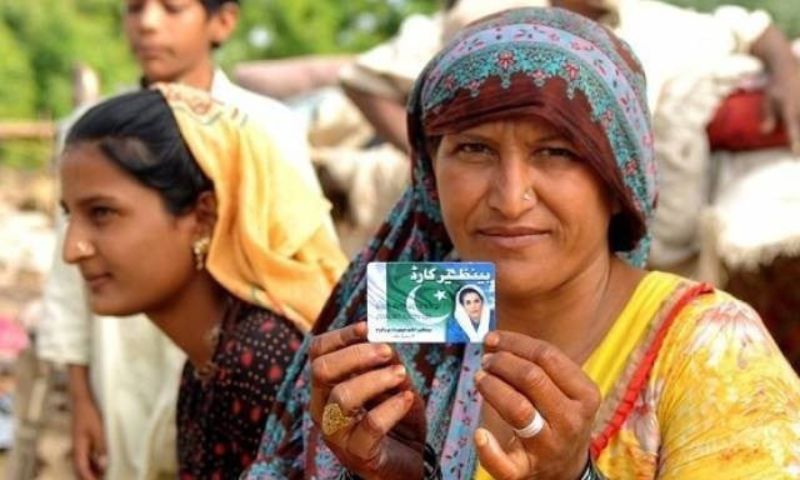
Pakistan’s political parties have increasingly competed over expanding or enhancing welfare benefits. In election-driven environments, increasing the size of a stipend or adding another category of beneficiaries can be politically easier than explaining why the state should instead spend the same money on infrastructure, skills or productive investment whose benefits may take years to appear.
This is precisely how entitlement politics develops. One government introduces a benefit. Another increases its amount. A third expands eligibility. Eventually, every political party has an incentive to promise more, but very few have an incentive to discuss an exit strategy.
India’s welfare competition
India’s experience is important for Pakistan because it shows how quickly welfare competition can become part of electoral politics. Once voters begin to regard a payment as an entitlement, a politician proposing to reduce it faces an obvious electoral disadvantage. The next politician can simply promise more.
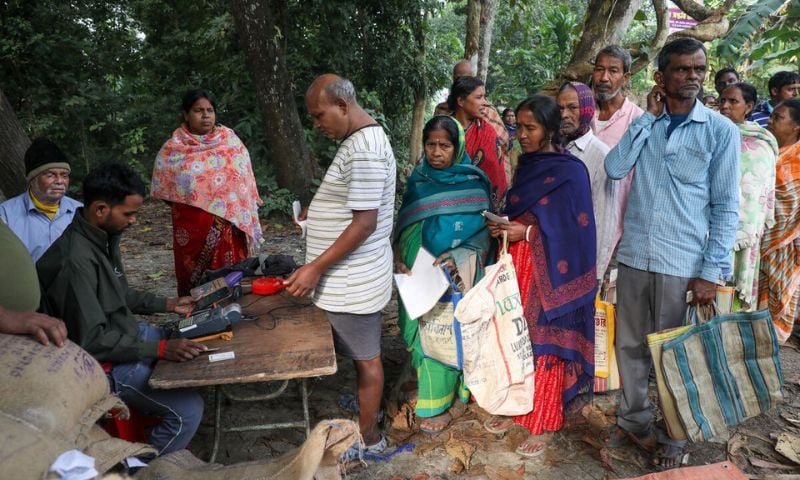
The problem is not welfare itself. The problem begins when relief becomes a substitute for economic opportunity.
Pakistan cannot permanently transfer its way out of poverty. A country with limited fiscal space cannot solve structural unemployment by continuously increasing cash payments. Nor can it expect poverty to disappear merely because the size of its safety net grows.
The objective must therefore be to make social protection a bridge to economic independence.
BISP has already begun moving in that direction through programmes such as Benazir Hunarmand, which seeks to connect beneficiaries with vocational training, financial literacy and employment or entrepreneurship opportunities. That approach deserves far greater emphasis.
Every major welfare programme should ask a simple question: how will today’s beneficiary become tomorrow’s earner?
That requires skills training linked to actual market demand, reliable electricity, better roads, easier business registration, access to affordable credit, quality education and an environment in which small businesses can survive and expand.
Also Read: Pakistan Launches 10 Million Digital Wallets for Social Welfare Programme Beneficiaries
Women need more than a cash payment. They need safe transport, childcare, market access, digital and financial skills, and employment opportunities.
For farmers: they also need more than an annual transfer. They need productive modern irrigation, better markets, storage, technology and access to finance.
For young people, they need jobs rather than another subsidy.
Rome’s grain dole did not destroy the Roman Empire, and it would be simplistic to blame welfare for Rome’s eventual decline. But its history illustrates a powerful political truth: once a government creates a large constituency around a benefit, reform becomes much harder.
A safety net should catch people when they fall. It should not become the place where they are expected to remain.
Pakistan’s poor deserve assistance when they need it. But they deserve something more valuable than a permanent government payment: the opportunity to earn, build businesses, acquire skills and create independent livelihoods.
The best welfare policy is therefore not the one that creates the largest number of permanent recipients.
It is the one that eventually creates the fewest people who need it.