ISLAMABAD: The US and Iran are moving toward a new and potentially far-reaching economic confrontation, as Washington schedules a new Iran sanctions announcement.
In a tit-for-tat statement, Tehran threatened to stop oil exports from the Arabian Gulf if Washington goes ahead with planned sanctions to build economic pressure.
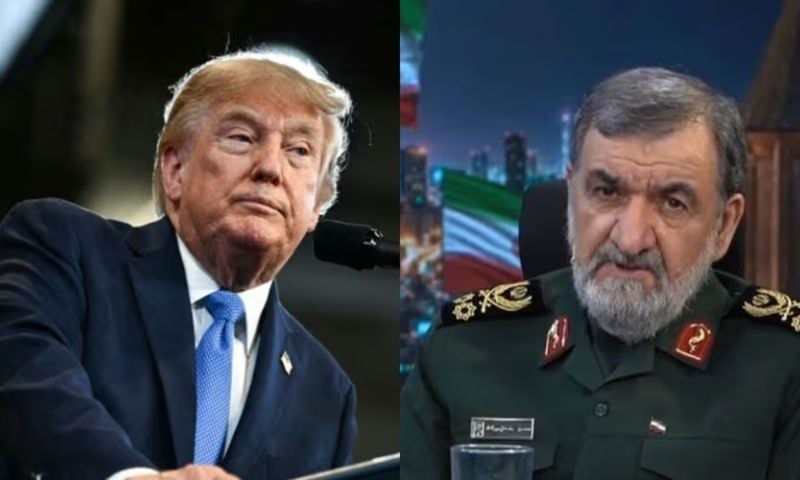
US Treasury Secretary Scott Bessent has described the planned measures as an “economic D-Day” and the “greatest financial offensive ever marshalled.”
The US move intends to move beyond sanctions on individual Iranian entities and target the network of countries, companies and financial institutions that continue to trade with Tehran.
Iran, however, has responded with a threat that could have consequences far beyond its own economy.
Mohsen Rezaei, secretary of Iran’s Supreme National Security Council, warned that if the US “economic war” continues, “not a single drop” of oil would be exported through the Strait of Hormuz or elsewhere from the Arabian Gulf.
He also warned that countries supporting or participating in the US campaign could be regarded as enemies committing an act of war.
The confrontation therefore risks transforming an already damaging military conflict into an economic war, with oil, shipping, banking and international trade becoming the principal pressure points.
US sanctions offensive
Washington’s immediate objective is to deprive Iran of the financial channels that have allowed its economy to continue operating despite years of sanctions and massive war destruction.
Bessent said the new campaign would target Iran’s remaining economic lifelines, including petroleum sales, banking transactions and transportation networks.
President Donald Trump has also warned countries doing business with Iran that they could face severe economic consequences.
The measures are expected to focus particularly on Iran’s trading partners and intermediaries involved in oil exports.
Washington has already targeted Chinese entities involved in purchases of Iranian crude and has warned Chinese financial institutions that they could face secondary sanctions if they facilitate Iranian oil transactions.
The United States is also seeking cooperation from China, Iran’s most important economic partner and principal buyer of its oil.
Chinese purchases have accounted for the overwhelming majority of Iran’s exported crude, making Beijing central to any US attempt to choke off Tehran’s oil revenues.
Iran’s economic vulnerability
Iran enters the confrontation under considerable economic strain.
The country’s currency has fallen to a record low against the US dollar, with the free-market rate reaching around 2 million rials to the dollar, adding to inflationary pressure on households.
Reports from Iran have also described rising unemployment and growing difficulty for families in affording basic goods.
Iran has nevertheless developed extensive mechanisms to circumvent sanctions, including intermediaries, front companies, alternative shipping arrangements and transactions denominated in currencies other than the US dollar.
Reuters reported last week that Iranian oil offers to Chinese buyers had already declined as the US blockade and the prospect of tougher sanctions began affecting shipments.
The danger for global oil markets
The most consequential element of the confrontation is Iran’s threat to disrupt oil exports from the Arabian Gulf.
The Strait of Hormuz is one of the world’s most important energy chokepoints, connecting the Arabian Gulf with the Gulf of Oman and the global oil market.
The threat comes after months of disruption to shipping through the strait during the Iran war. Tankers and container vessels have remained at or near a standstill in parts of the waterway, increasing concerns over insurance, freight costs and the availability of crude.
A complete halt to Gulf oil exports would represent a substantially larger shock than sanctions aimed only at Iranian crude.
That is why Tehran’s threat is viewed not simply as an economic countermeasure but as a potential escalation with consequences for the entire global energy system.
China caught in the middle.
China is likely to become one of the principal pressure points in the new confrontation.
Beijing is Iran’s largest trading partner and its most important oil customer, but China has rejected the broader US approach of using sanctions and economic pressure to resolve the conflict.
Washington’s strategy therefore carries a significant risk of turning the Iran confrontation into a wider dispute with China.
Pakistan-led diplomacy active again
The economic escalation is taking place as diplomatic efforts are gaining momentum again after remaining stalled for weeks.
A 60-day US waiver that had allowed Iranian crude, petrochemical and petroleum-product transactions expired on August 21, removing an important temporary channel for Tehran’s oil trade.
READ ALSO: Field Marshal Munir Departs for Iran to Advance Middle East Peace Efforts
Pakistan is also stepping up efforts to reduce tensions. Field Marshal Syed Asim Munir, Pakistan’s chief of defence forces and army chief, is visiting Tehran on Monday for talks focused on peace and regional security, according to Iranian officials and Pakistani media reports.
China has likewise continued to advocate a diplomatic solution rather than additional sanctions.
The immediate test will come with Washington’s new sanctions announcement and Tehran’s response.
If the measures remain confined to financial and commercial restrictions, the confrontation could develop into a prolonged sanctions battle.
But if Iran acts on its threat to disrupt Gulf oil exports, the economic war could quickly become a global energy crisis, pushing oil prices higher and increasing inflationary pressures across importing economies.