Key points
- Initial transaction envisages up to $100 million
- Programme seeks to broaden external financing sources
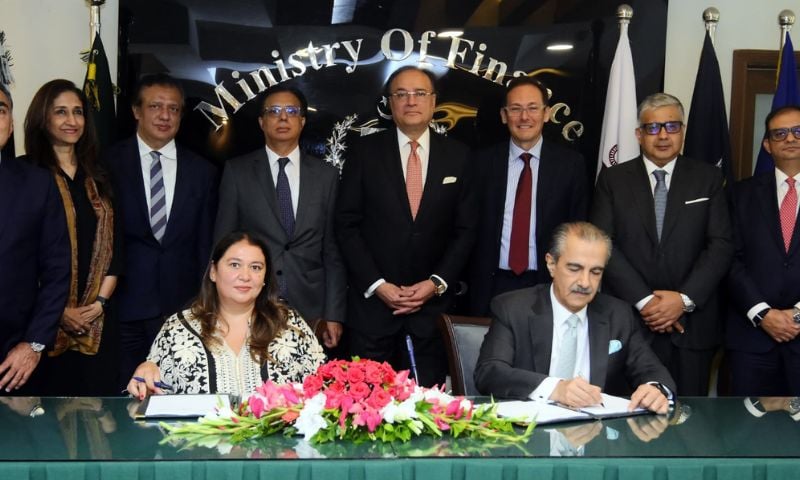
ISLAMABAD: Pakistan has taken a step towards diversifying its foreign-currency financing after the International Finance Corporation (IFC) and Bank Alfalah Limited signed an agreement for the country’s first Diversified Payment Rights (DPR) programme.
The project agreement, signed at the Finance Division in Islamabad on Thursday in the presence of Finance Minister Muhammad Aurangzeb, envisages an initial transaction of up to $100 million.
Under the programme, financing will be raised against eligible future foreign-currency payment flows, giving Bank Alfalah a mechanism to access longer-term funding from international capital markets.
The structure differs from conventional sovereign borrowing as it is linked to identified payment flows.
It could also broaden access to international institutional and private investors and create an additional channel for foreign-currency financing.
The Finance Division said the programme was being pursued under the direction of Prime Minister Shehbaz Sharif and involved coordination among the government, the State Bank of Pakistan (SBP), IFC and Bank Alfalah.
Pakistan eyes market-based financing structure
Aurangzeb said diversifying sources of foreign-currency financing was important for Pakistan and described the transaction as a first step towards developing similar market-based financing structures.
He also stressed the importance of effectively using the financing channel and developing a pipeline of eligible projects requiring foreign-currency funding.
READ ALSO: IFC Pledges $2.7bn Investment Boost for Pakistan’s Private Sector
IFC representatives welcomed the support provided by the government and the SBP and said the structure could open an additional avenue for long-term international financing and contribute to the development of Pakistan’s capital markets.
Bank Alfalah said it was the first Pakistani bank to undertake a DPR transaction and would use the structure to support eligible foreign-currency requirements and productive investment.
The initial $100 million is not an immediate disbursement. Further financing under the programme will depend on market conditions and the performance of the initial transaction.
The initiative could establish a precedent for other Pakistani banks to pursue similar transactions, subject to market conditions and the performance of the initial programme.
For Pakistan, which has faced recurring external financing and foreign-exchange pressures, the programme represents an effort to develop financing channels beyond conventional sovereign borrowing and deposits.