
Key Points
- Tarbela, Kalabagh, Chashma, Taunsa and Guddu reported low flood.
- Eighteen monitored river sites remained at normal levels.
- Kabul River at Nowshera recorded normal inflow and outflow.
- Jhelum and Chenab stations remained within normal limits.
- Ravi and Sutlej rivers also showed normal conditions.
- Tarbela reservoir stood marginally above maximum conservation level.
- Mangla reservoir remained substantially below its maximum conservation level.
- Monsoon activity could rapidly change river flow conditions.
ISLAMABAD: Five monitoring stations along Pakistan’s Indus River were at low flood level on Wednesday evening, while river flows remained normal at monitored locations on the Kabul, Jhelum, Chenab, Ravi and Sutlej rivers, according to the latest Flood Hydrological Situation Report issued by the Pakistan Meteorological Department’s Flood Forecasting Division (FFD), Lahore.
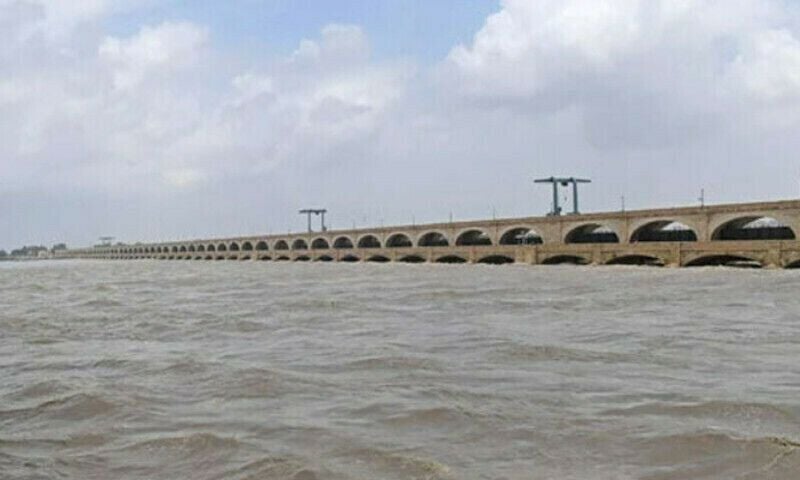
The report, recorded at 6:00 pm on August 19, 2026, showed 18 river sites at normal levels and five at low flood level. The five low-level sites were Tarbela, Kalabagh, Chashma, Taunsa and Guddu, all located along the Indus River.
At Tarbela, the Indus was carrying an inflow of 248,000 cusecs, against an outflow of 251,700 cusecs. At Kalabagh, inflow stood at 350,851 cusecs, while outflow was 342,551 cusecs.
The Indus at Chashma recorded an inflow of 316,070 cusecs and an outflow of 307,170 cusecs, while Taunsa received 336,496 cusecs and released 315,896 cusecs.
Further downstream, Guddu recorded an inflow of 321,582 cusecs and an outflow of 282,759 cusecs.
Despite these low-flood readings on the Indus, the situation remained normal at Sukkur and Kotri, where inflows were recorded at 233,275 cusecs and 130,894 cusecs, respectively. Their outflows stood at 179,050 cusecs and 88,029 cusecs.
Kabul Basin remains stable
The Kabul River at Nowshera was reported at a normal level, with both inflow and outflow recorded at 30,800 cusecs.
This is significant for downstream areas of Khyber Pakhtunkhwa because the Kabul River is one of the major tributaries feeding the Indus system. The latest FFD bulletin has also been monitoring the Kabul basin separately from the low-flood conditions recorded at several Indus stations.
Jhelum, Chenab within limits
The Jhelum River was also reported within normal limits at all three monitored locations.
At Mangla, inflow was 30,000 cusecs and outflow 7,000 cusecs, while Rasul recorded an inflow of 8,056 cusecs with no reported outflow. At Marala, inflow stood at 99,526 cusecs and outflow at 74,276 cusecs.
All monitored stations on the Chenab River were likewise classified as normal. Khanki recorded 56,694 cusecs of inflow and 49,136 cusecs of outflow; Qadirabad 54,705 and 35,180 cusecs; Chiniot 11,449 and 11,449 cusecs; Trimmu 31,212 and 19,212 cusecs; and Panjnad 45,537 and 30,887 cusecs.
Ravi, Sutlej flow normal
The report showed no low-flood conditions on the Ravi River.
At Jassar, inflow and outflow were both 18,800 cusecs, while Shahdara recorded 17,392 cusecs for both inflow and outflow.
Balloki had an inflow of 42,435 cusecs and an outflow of 16,385 cusecs, while Sidhnai recorded 22,118 cusecs of inflow and 6,818 cusecs of outflow.
All three monitored stations on the Sutlej River were also normal. Gand Singh Wala recorded 1,310 cusecs for both inflow and outflow; Sulemanki received 17,399 cusecs and released 4,044 cusecs; while Islam recorded an inflow of 3,439 cusecs and an outflow of 1,516 cusecs.
Tarbela hits full capacity
The report also highlighted the reservoir position at the two major dams.
The Tarbela reservoir stood at 1,550.07 feet, marginally above its listed maximum conservation level of 1,550 feet. Its dead storage level was listed at 1,402 feet.
The Mangla reservoir stood at 1,213.45 feet, compared with a maximum conservation level of 1,242 feet and a dead storage level of 1,050 feet.
The latest FFD bulletin has similarly reported Tarbela at its maximum conservation level and full capacity, while Mangla was reported substantially below its maximum level.
The full Tarbela reservoir is an important factor in monitoring the downstream Indus because the reservoir is used for water storage, irrigation and flood management.
Indus under continued watch
The latest figures indicate that the current hydrological pressure is concentrated primarily along the Indus River, rather than being widespread across all major river systems.
The sequence of low-flood readings from Tarbela to Guddu also shows that elevated flows are extending downstream along the Indus. However, the majority of monitored sites on the Kabul, Jhelum, Chenab, Ravi and Sutlej rivers remain classified as normal in the report.
The situation nevertheless warrants continued monitoring as monsoon rainfall and upstream flows can rapidly alter river conditions. The FFD has recently warned of increased flows in major rivers and associated tributaries amid ongoing monsoon activity. Its recent forecasts have included rainfall over upper catchments and the possibility of low to medium flood conditions in parts of the Ravi and Chenab systems.
For now, the latest hydrological assessment presents a mixed river picture: low flood conditions at five Indus monitoring points, normal flows elsewhere, and Tarbela reservoir at its maximum conservation level.