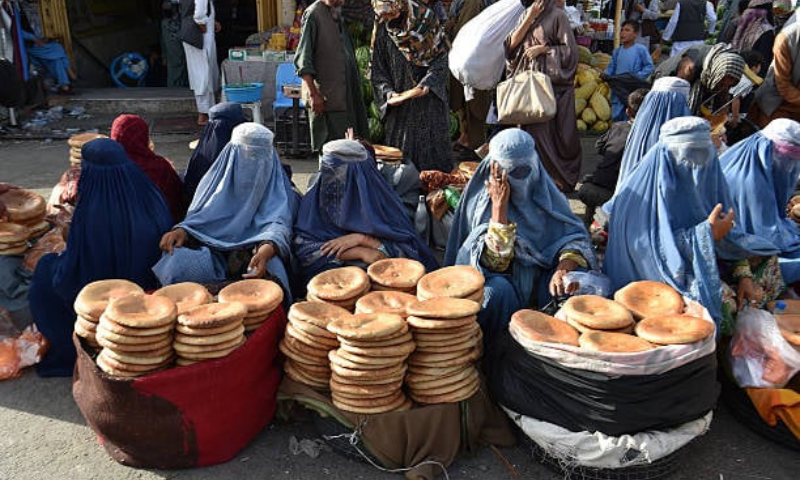
KABUL: Women’s participation in Afghanistan’s labour force has fallen to just 5.1 percent under Taliban rule, placing the country among those with the lowest rates of female economic participation worldwide, according to the International Labour Organisation (ILO).
The ILO said women’s employment had declined “dramatically” since the Taliban returned to power in 2021, creating profound structural changes in Afghanistan’s labour market and increasing its reliance on male workers.
Female labour force participation stood at 18.3 percent in 2019 under the former government. It fell sharply after the Taliban takeover and by 2022 had dropped to less than one-third of its 2020 level.
ALSO READ: India Deepens Taliban Engagement with Official Presence at ‘Victory’ Event
The ILO estimates Afghanistan now has the second-lowest female labour force participation rate globally, reflecting what it called the “exceptional scale of women’s exclusion” from economic activity.
Gender gap widens
The decline contrasts sharply with trends among male workers. Male employment in 2026 is estimated to be around 22 percent higher than its 2020 level.
However, overall job creation has failed to keep pace with Afghanistan’s population growth. The employment-to-population ratio is estimated at 32.5 percent, more than four percentage points below the 2020 level.
Ramin Behzad, head of the ILO office in Afghanistan, warned that the country could not develop a resilient labour market while excluding a large proportion of its population from economic activity.
He said improving women’s access to productive employment, alongside creating opportunities for young people, returnees and other vulnerable workers, was essential for strengthening livelihoods and supporting inclusive economic development.
The ILO urged the Taliban administration to make productive employment a policy priority while supporting private-sector development, small businesses and labour-intensive industries.
Women have faced extensive restrictions on employment, education and public life since the Taliban returned to power, limiting their ability to participate in Afghanistan’s formal economy.