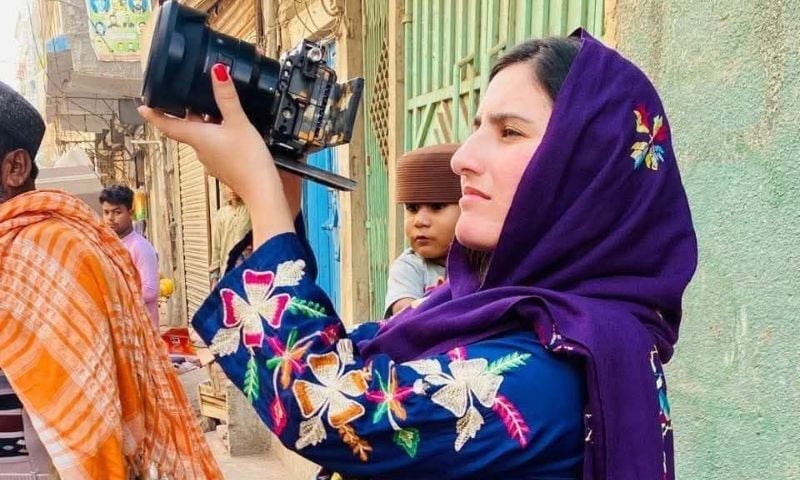
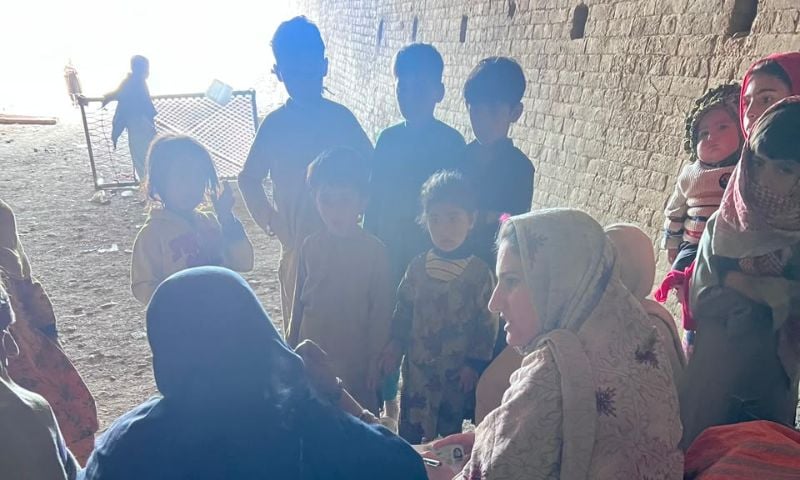
PESHAWAR, Pakistan: Jamaima Afridi, a 25-five-year-old freelance journalist from the Zakhakhel clan of the Afridi tribe — living just a stone’s throw from the Pakistan-Afghanistan border at Torkham — was intercepted by an unidentified man on her way home, shortly after reporting on the murder of a woman in the Khyber district.
“Behave yourself, otherwise I’ll fix you,” he told her.
To make matters worse, for Afridi, the words carried a meaning far heavier than an ordinary threat. “This was no longer normal. It was an open threat.”
Afridi reported the incident to police, but no FIR has yet been registered.
She has since sought psychological counselling and the experience has left her at times unable to work, her mind consumed by questions about who might be threatening her and what could happen next.
Yet, against all odds, Jamaima has not abandoned her reporting.
Targeting women beyond screens
For women journalists in Pakistan, the threat does not always begin on the street — and increasingly, it does not stay there. In this digital pressure cooker, what starts as an online insult can quickly snowball into sexual abuse, rape and death threats. Meanwhile, advances in artificial intelligence (AI) have opened an even more invasive front: fabricated intimate images, manipulated videos, fake statements and coordinated campaigns designed to destroy reputations at a moment’s notice.
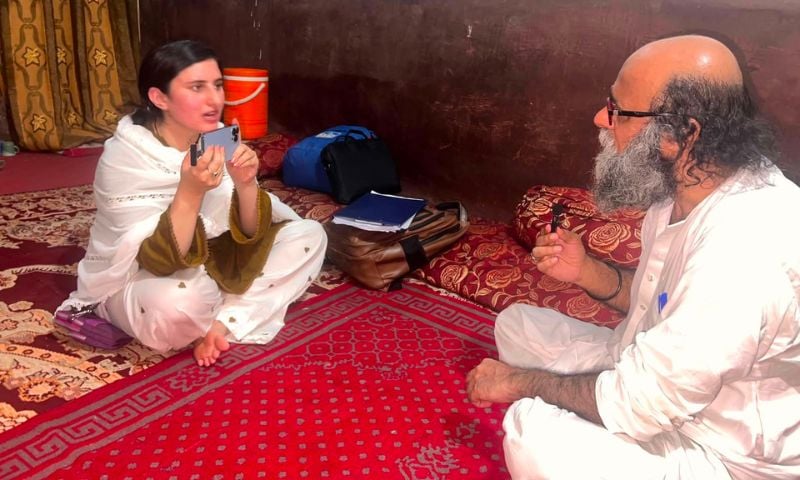
For Pakistani television journalist Ghareeda Farooqi, this is not a hypothetical risk — it has been her reality since 2011.
“I was one of the first women journalists in Pakistan to face organised online violence. It starts with abusive language, but it rarely ends there,” she says.
Her experience, alongside Afridi’s, illustrates how violence against women journalists can move across the digital and physical worlds, with the same ultimate objective: to intimidate, silence and push women out of public life.
“They create obscene images and fake videos. They attribute statements to us that we never made. They publish fabricated posts and spread them like wildfire. The objective is simple: to destroy credibility,” Farooqi says.
Diminishing female media voices
According to Freedom Network, women journalists in Pakistan regularly face character assassination, organised trolling campaigns, sexually explicit abuse, threats, AI-generated deepfake content, misinformation and coordinated attempts to damage their reputations.
Yet even these documented incidents represent only the tip of the iceberg.
Faiza Hassan, Programme Coordinator at Freedom Network, remarks that there is no comprehensive national database documenting online harassment against women journalists because many incidents are swept under the rug and never formally reported.
“The available figures should not be considered representative of the country’s whole situation. Many women simply never report what happens to them,” she explains.
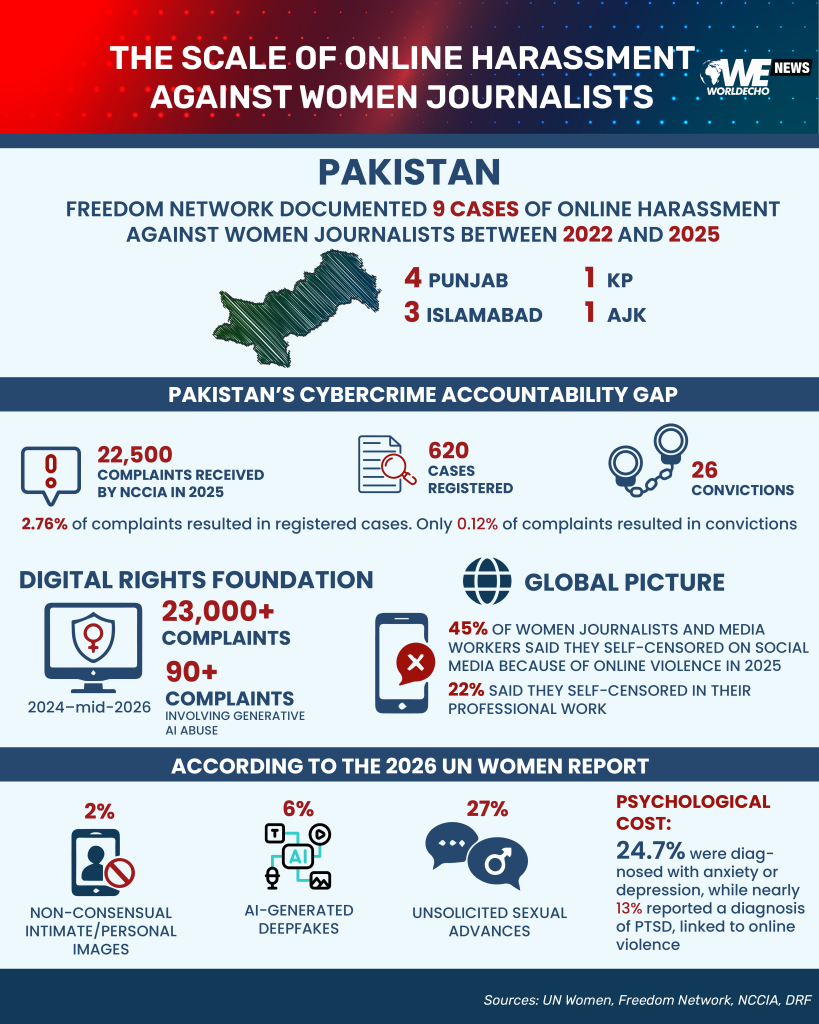
Freedom Network has documented nine cases of online harassment against women journalists between 2022 and 2025, four in 2022, one in 2023, three in 2024 and one in 2025 — four in Punjab, three in Islamabad, one each in Khyber Pakhtunkhwa and Azad Jammu Kashmir. However, the organisation emphasises that underreporting remains one of the greatest obstacles to understanding the true scale of the crisis.
Compounding the problem, the data from the Institute for Research, Advocacy, and Development (IRADA) cites fewer than 700 women work as journalists in Pakistan — under 5 per cent of the country’s media workforce — with most working in digital media.
Data from the Lahore-based Digital Rights Foundation (DRF) reinforces this reality: its Digital Security Helpline has handled over 23,000 cases since inception, with women making up 58 per cent of callers in 2025. Between 2024 and mid-2026, DRF received over 90 complaints involving generative AI abuse.
The data further reveals that generative AI is increasingly taking centre stage in cases reported to the Helpline, particularly in cases involving blackmail, sextortion, and non-consensual intimate imagery.
A worldwide digital threat
A 2026 UN Women report surveying women across 119 countries reveals that deepfakes, manipulated sexual imagery, and other forms of image-based abuse are amplifying existing patterns of online harassment while actively driving women out of journalism, activism, and public discourse.
The report also highlights severe psychological consequences — elevated rates of anxiety, depression, and post-traumatic stress disorder (PTSD) — forcing many women to self-censor both online and in their professional work to avoid further targeting.
Among women journalists, nearly 45 per cent reported self-censoring on social media in 2025 — a 50 per cent increase since 2020 — while 22 per cent censor their professional reporting.
The report further found that 12 per cent of women public communicators had experienced the non-consensual sharing of personal or intimate images, while 6 per cent had become victims of AI-generated deepfakes.
Perhaps most concerning, almost a quarter of women journalists surveyed said they had been diagnosed with anxiety or depression linked directly to online abuse, while nearly 13 per cent reported being diagnosed with PTSD.
Bullets versus character attacks
Speaking to WE News English, Ghareeda Farooqi says that silence is precisely what perpetrators hope to achieve. She compares online abuse to physical attacks on journalists, arguing that although the methods have evolved, the purpose remains the same.
“I often say that a bullet and an abusive campaign are two different weapons with the same objective. Perhaps bullets against journalists have become less common in Pakistan, but abuse has become far more common, especially against women journalists.”
Fear, delay and stigma
On the legal front, Ubaid Momand, who practices law in Peshawar, says the problem extends beyond technology itself. Cybercrime, he explains, now includes offences ranging from online fraud and hacking to blackmail, identity theft and online threats.
“Almost everyone has social media access, but the vast majority of people still do not understand how these platforms work or the risks they carry.”
Pakistan introduced the Prevention of Electronic Crimes Act (PECA) in 2016, while amendments in 2025 strengthened penalties.
According to Momand, serious offences such as blackmail and criminal intimidation can carry prison sentences of up to seven years. Some forms of cyber terrorism may also fall simultaneously under the jurisdiction of both the National Cyber Crime Investigation Agency (NCCIA) and counterterrorism authorities.
Highlighting this enforcement gap, the Director General of the National Cyber Crime Investigation Agency (NCCIA) told a meeting of the Special Parliamentary Gender Mainstreaming Committee, chaired by Nafisa Shah on December 23, 2025, that the agency received 22,500 complaints in 2025, of which 620 cases were registered and only 26 resulted in convictions.
Yet stronger laws alone are not solving the problem. One of the biggest weaknesses, Momand says, is the failure to preserve evidence.
“Victims often save only screenshots while overlooking critical digital evidence such as account links, complete screen recordings and metadata. Since usernames and profiles can later be altered or deleted, preserving comprehensive evidence is essential for successful investigations.”
Equally damaging is delayed reporting. The longer victims wait without reasonable justification, the harder it becomes to secure a conviction.
Momand also points to a deeper social problem. Many women hesitate to report cybercrime because they fear judgment from family members or wider society. Others remain in the dark about whether they should approach local police, the NCCIA or another institution altogether.
Farooqi shares many of those frustrations.
Over the years she has filed more than two dozen cybercrime complaints. Only a few, she says, resulted in identifiable action against perpetrators.
Although the legal process remains an uphill battle, she refuses to regard those efforts as failures. “What matters to me is that I fought back.”
For her, legal complaints are not merely attempts to punish offenders. They are acts of resistance. “They should know that women journalists will not simply fade into the woodwork because they are being harassed.”
For Afridi, Farooqi and countless other women journalists, the real test is no longer whether they can withstand the next attack. It is whether institutions and society will finally make it harder for the attackers to silence them.