Key points
- Brent crude holds near $89 a barrel
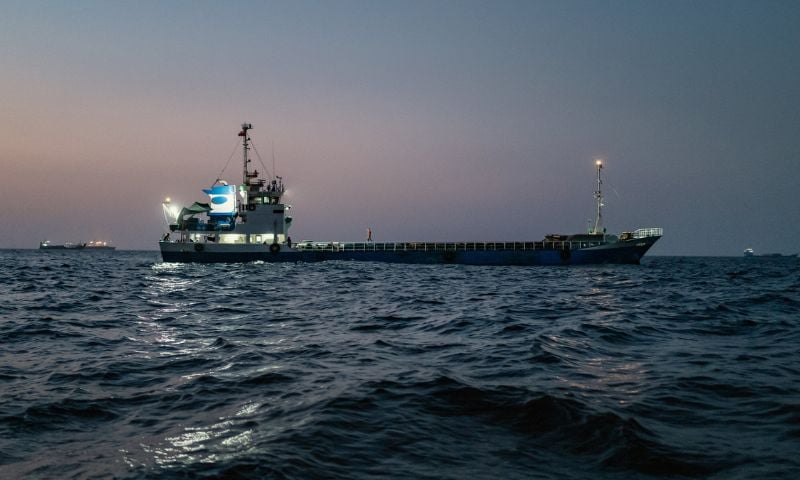
- Hormuz shipping has nearly ground to a halt
- Iran-US talks remain deadlocked over reopening the strait
ISLAMABAD: Oil prices remained elevated on Monday as stalled Iran-US talks dimmed hopes of a quick reopening of the Strait of Hormuz, where tanker traffic has fallen sharply after attacks on commercial ships.
Brent crude futures rose as much as 1 per cent to $89.40 a barrel before easing to around $89.20. Likewise, US West Texas Intermediate (WTI) crude reached $82.83.
Both benchmarks had gained more than 5 per cent last week as attacks on energy-related shipping and infrastructure continued unabatted.
The latest price movement reflects a market increasingly focused on the risk that disruption to Gulf energy flows could persist.
Iranian Foreign Minister Abbas Araqchi said over the weekend that Tehran had not decided to resume negotiations with Washington. The latest overture from Tehran indicated that efforts to reach an agreement on the conflict and the reopening of Hormuz remain deadlocked.
The shipping situation has deteriorated significantly. Kpler tracking data showed that only five commodity container ships transited the Strait of Hormuz on Saturday, with none recorded on Sunday. The situation is compared with 31 vessels during the previous weekend.
Before the current crisis, more than 130 vessels a day typically passed through the strait.
Oil through the Strait of Hormuz
The Strait of Hormuz is one of the world’s most important energy chokepoints, carrying roughly a fifth of global oil and liquefied natural gas shipments.
A prolonged reduction in traffic therefore poses a direct risk to supplies reaching international markets, particularly in Asia, which depends heavily on Gulf producers.
ALSO READ: Oil Prices Climb Amid Tanker Attacks, US-Iran Tensions
The shipping disruption follows attacks on vessels linked to Abu Dhabi National Oil Company (ADNOC).
The United Arab Emirates has accused Iran of attacking two ADNOC tankers in the strait on August 13, after an earlier tanker incident.
The attacks caused no reported casualties but added to concerns over the safety of commercial navigation.
The consequences are extending beyond the immediate oil market. When vessels avoid or are unable to transit Hormuz, shipping companies face longer voyages, higher insurance costs and increased tanker rates.
Energy traders also have to factor in the possibility that physical supply disruptions could worsen even if sufficient crude remains available elsewhere.
The regional shipping environment is also under pressure. Traffic through the Bab el-Mandeb Strait, another strategic passage linking the Arabian Gulf and Asian markets with the Red Sea, has been affected by security threats, further limiting alternatives for some energy shipments.
For oil markets, the central question is now whether diplomacy can restore confidence in safe passage through Hormuz.
A credible agreement between Washington and Tehran could quickly reduce the geopolitical risk premium in crude prices and encourage shipowners to return to the waterway.
A further deterioration in relations, however, could push oil prices higher, particularly if attacks continue or damage to energy infrastructure begins to affect actual production and exports.
For now, the combination of stalled diplomacy, sharply reduced shipping and continuing attacks is keeping the world’s energy markets on edge.
Oil swings
Oil prices have swung sharply over the past seven months, driven largely by the Iran war, shifting ceasefire expectations and disruptions to Middle Eastern shipping.
Brent began 2026 near $70 a barrel before surging to about $126 in March after the conflict erupted and Hormuz flows were disrupted.
Prices subsequently eased as supply concerns receded, falling to around $70 in early July.
Renewed fighting and attacks on energy and shipping infrastructure then pushed Brent back above $100 in late July before it settled near $89 in August amid stalled US-Iran talks.