KABUL, Afghanistan: Amnesty International has accused the Taliban regime of presiding over a “catastrophic” human rights crisis in Afghanistan, saying that five years after returning to power, the group continues to impose severe restrictions on women and girls without accountability.
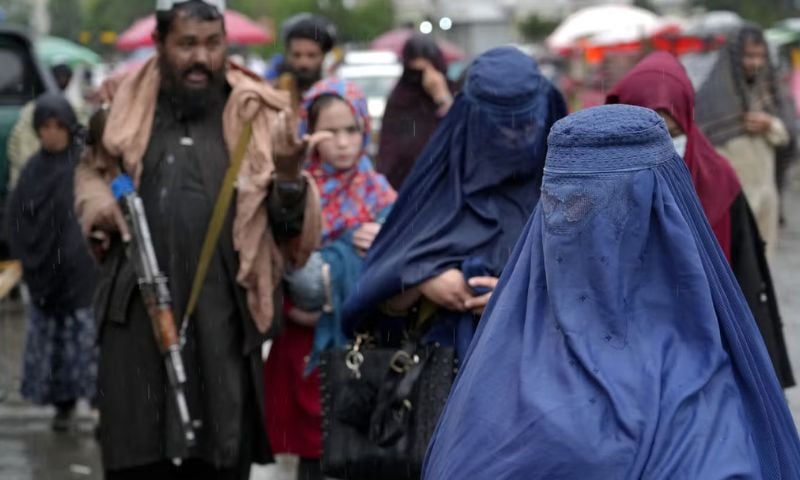
The rights group said the Taliban regime had created a system of discrimination based on gender that controls many aspects of women’s lives. It said women and girls were barred from employment and education beyond grade six, while restrictions on their participation in public life had intensified.
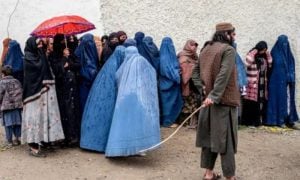
Amnesty said 21.7 million women and girls were affected by the Taliban regime’s restrictions.
The organisation called on the United States and the international community to take stronger action to protect Afghan women and girls and hold the Taliban regime accountable.
Amnesty said some governments had opened diplomatic and economic channels with the Taliban regime, which it warned could risk normalising the group’s repression.
AFGHANISTAN: Five years of the Taliban’s rule in Afghanistan has resulted in a catastrophic human rights crisis.
📢Join our global movement to demand the international community to take unified and stronger action to hold the Taliban accountable ➡️ https://t.co/CSkwdtvjaT… pic.twitter.com/qfo1enmlkP
— Amnesty International South Asia, Regional Office (@amnestysasia) August 15, 2026
It cited a recent invitation by the European Commission for Taliban regime representatives to Brussels for discussions on the deportation of Afghan refugees and asylum seekers.
Such engagement should be based on human rights principles and should not legitimise or tolerate abuses under international law, Amnesty said.
The organisation also warned that forced returns of Afghans could violate the principle of non-refoulement, which prohibits returning people to places where they face persecution or serious harm.
“The Taliban is the de facto authority in Afghanistan and carries obligations under international human rights law,” Amnesty said.
It called for any engagement with the Taliban regime to be rights-based and aimed at ending human rights violations.
Exclusion of Afghan women
Meanwhile, UN Women says the exclusion of Afghan women and girls from education, employment, public life, justice and healthcare has intensified over the past year.
The UN agency described Afghanistan’s situation as the “world’s most severe women’s rights crisis”.
“The results are devastating,” UN Women said, pointing to shorter life expectancy, increased risks of maternal death, child marriage and gender-based violence.
Only once or twice a month.
For half of Afghan women, that's how often they leave their homes.
Excluding women and girls in #Afghanistan from public life must NEVER be normalized.
🔗 Five years since the Taliban takeover, learn their realities: https://t.co/Rd4EWdxErY pic.twitter.com/OcMrTIG6wm
— UN Women (@UN_Women) August 15, 2026
According to new UN Women data, decrees imposed over the past five years have institutionalised discrimination and stripped women and girls of fundamental rights.
Half of Afghan women interviewed by UN Women said they leave their homes only once or twice a month because of restrictions on movement and access to public spaces.
More women also reported feeling unsafe leaving home without a male guardian.
“This unparalleled crisis of women’s and girls’ rights is at risk of being forgotten by the world,” UN Women said.
Millions of girls excluded from education
An estimated 2.4 million girls remain excluded from secondary education in Afghanistan as of 2026, according to the UN figures cited in the statement.
UNESCO said Afghanistan was the only country in the world to formally prohibit girls and women from accessing education beyond the primary level.
“The continued exclusion of girls and women from education constitutes a grave violation of their fundamental human right to learn,” UNESCO said.
It warned that the restrictions risk deepening poverty and causing long-term damage to the country’s development.
Also Read: Five Years Under Taliban: A Generation Growing Up Behind Closed Doors
Women are also barred from secondary schools and universities and excluded from most paid employment, while facing legal barriers to protection against violence, UNESCO said.
“Women have been erased from public life,” the UN agency said, warning that a generation of girls was growing up without access to education.
UNESCO called for the full restoration of education rights for Afghan girls and women.