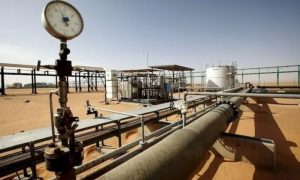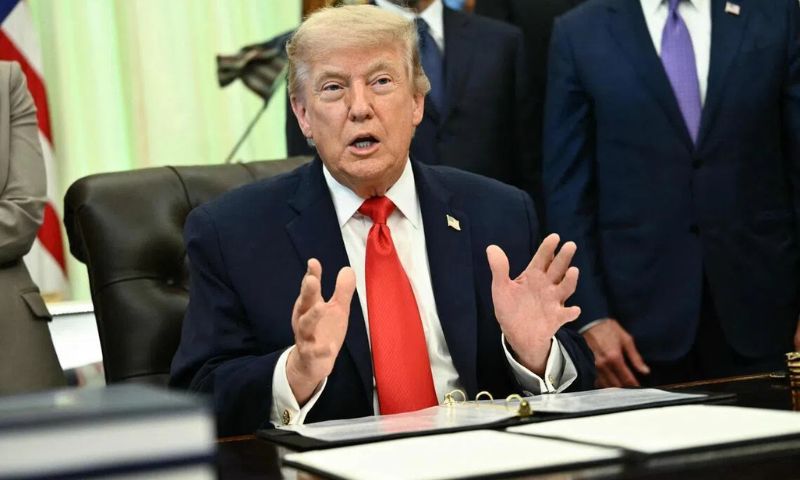
WASHINGTON: US President Donald Trump said on Wednesday that the United States has “total control” of the strategic Strait of Hormuz and would maintain its grip over the key waterway, as the conflict between the US and Iran continued to unsettle global energy markets.
“The U.S.A. has total control over the Strait of Hormuz. I THINK WE WILL KEEP IT!” Trump wrote on his Truth Social platform. He described the US naval blockade as a “wall of steel” and said there was “nothing Iran can do about it”.
— Rapid Response 47 (@RapidResponse47) August 12, 2026
Trump has repeatedly claimed that US forces control the strait, which is vital to global energy and commodity shipments. Iran, however, says it effectively controls much of the waterway and intends to impose a toll system in response to the US and Israel war launched on February 28.
Tensions over Strait of Hormuz
Trump told reporters late on Tuesday that the United States had “total control” of the strait and that Iran did not control it.
The comments came as the conflict between Washington and Tehran continued to disrupt shipping through one of the world’s most important energy corridors.
The conflict started on February 28, when the US and Israel launched attacks on Iran. Trump had said that the military campaign aimed to force Iran to abandon its nuclear programme.

Iran has responded with missile attacks on Israel and various Gulf countries, which were not part of the conflict. Iran also launched attacks on shipping in the Strait of Hormuz, disrupting trade through the waterway and increasing pressure on the global economy.
Trump has said the United States is prepared to focus on blockading Iranian ports as a strategy of “low-keying”.
“We are only semi-negotiating with them. We are just watching Iran with its huge inflation and the fact they have no money,” Trump told Axios on Sunday.
Global oil prices climb
Global oil prices rose again on Wednesday after attacks on two ships heightened fears of further disruption to Middle East supplies, Reuters reported.
Brent crude futures were up 35 cents, or 0.4 percent, at $89.26 a barrel by 1219 GMT, putting the international benchmark on course for a sixth consecutive day of gains.
US West Texas Intermediate crude rose 57 cents, or 0.7 percent, to $83.77 a barrel. It was heading for a fifth straight daily gain.
The International Energy Agency has sharply cut its forecast for global oil demand this year as supplies remain constrained by the closure of the Strait of Hormuz and high prices discourage consumption, Reuters reported.
Also Read: Oil Prices Keep Rising with Fading US-Iran Deal Hopes
The IEA now expects demand to fall by 1.6 million barrels per day, compared with its previous forecast of a one-million-barrel-per-day decline in its July report.
Crude prices have remained well above levels recorded before US and Israeli attacks on Iran in late February.
Iran warns of wider risks
Iranian armed forces have warned that a renewed US attack could put energy and other critical infrastructure at risk.
A spokesperson for Iran’s armed forces said that energy transmission lines, power plants, American and non-American systems, and even global internet-connected infrastructure could be targeted if the United States resumed attacks.
“In the event of renewed U.S. aggression against Iran, energy transmission lines, power plants, all American and non-American systems, and even global internet-connected infrastructure are at risk,” the Iranian armed forces spokesperson was quoted as saying by IRIB.
Spokesperson for the Iranian Armed Forces: "In the event of renewed U.S. aggression against Iran, energy transmission lines, power plants, all American and non-American systems, and even global internet-connected infrastructure are at risk."
— IRIB (Islamic Republic of Iran Broadcasting) (@iribnews_irib) August 12, 2026
The official said Tehran’s position was that the ceasefire agreement had no defined start date and therefore there was nothing to extend.
Anadolu Agency, citing a source, reported that the United States and Iran had agreed to extend the ceasefire ahead of the 60-day deadline under the Islamabad Memorandum of Understanding.
#BREAKING US and Iran have 'agreed' to extend ceasefire as 60-day deadline under Islamabad MoU set to expire next week, Pakistani government sources tell Anadolu pic.twitter.com/5ex1a0WH3I
— Anadolu English (@anadoluagency) August 12, 2026
Pakistan intensifies diplomatic efforts
Meanwhile, Pakistan has intensified diplomatic efforts to end the US and Iran conflict through negotiations.
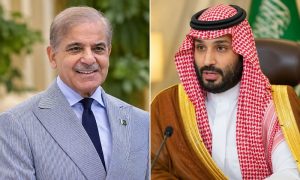
Pakistan’s Interior Minister Mohsin Naqvi travelled to Tehran and conveyed a “special and important” message from Prime Minister Shehbaz Sharif and Chief of Defence Forces and Chief of Army Staff Field Marshal Syed Asim Munir to Iranian officials, according to Pakistan’s Interior Ministry.
Naqvi also met Iranian President Masoud Pezeshkian and Foreign Minister Abbas Araghchi, with discussions focusing on regional security, stability and bilateral relations.
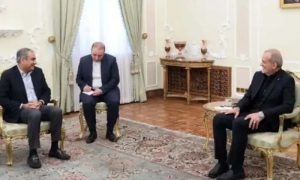
Foreign Office said the visit was aimed at promoting “peace, stability and constructive engagement”.
The interior minister also briefed Iranian officials on the recently concluded defence pact between Pakistan, Saudi Arabia and Türkiye and took Tehran into confidence over the agreement, the Interior Ministry said.
Pakistan remains engaged to resolve conflict
Pakistan’s Foreign Office Spokesperson said on Wednesday that Islamabad remains engaged alongside its brotherly states in sincere efforts to resolve the ongoing crisis in the Middle East and the Gulf.
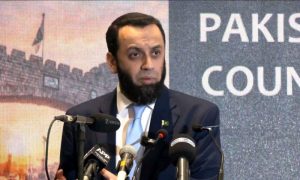
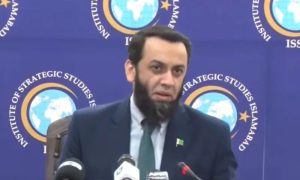
Foreign Office spokesperson Tahir Andrabi said Islamabad was making “all-out efforts” to bring the parties concerned to the negotiating table and promote a peaceful resolution to outstanding issues.
Andrabi said Pakistan remained engaged in sincere diplomatic efforts aimed at restoring peace and stability in the region.
He said Pakistan would continue to use both direct and indirect channels to address attempts to undermine the dialogue process and facilitate constructive engagement among the parties.
The spokesperson said Naqvi’s visit to Iran was aimed at discussing bilateral relations, security-related matters and regional developments, with particular emphasis on peace and stability.
Andrabi said the visit provided Pakistan and Iran with an opportunity to discuss bilateral relations, security concerns and developments in the region, as well as ways of encouraging peace, stability and constructive engagement.
Pakistan and Qatar intensify mediation
Pakistan has emerged as a key mediator to end the conflict between Iran and the United States.
Pakistan has sought to facilitate dialogue between Iran and the United States after helping secure a ceasefire on April 8 and hosting high-level talks between the two sides in Islamabad on April 12 and 13.
Under the Islamabad memorandum of understanding, Iran and the United States committed to halt military operations, reopen the Strait of Hormuz to commercial shipping and negotiate a comprehensive agreement covering Iran’s nuclear programme, US sanctions and a permanent ceasefire within 60 days.
Pakistan and Qatar later co-mediated the first round of high-level talks in Lucerne, Switzerland, on June 21. The meeting was attended by US Vice President JD Vance and Iranian Parliament Speaker Mohammad Bagher Ghalibaf.
Following the meeting, Pakistan and Qatar said significant progress had been made in diplomatic efforts between Washington and Tehran.