UNITED NATIONS: Terrorism emanating from Afghanistan remains a serious threat to regional and international security, with multiple terrorist groups continuing to maintain operational space, weapons, training networks and links to foreign fighters, the UN Security Council’s 38th Monitoring Team report has warned.
The UN Security Council report stated that the terrorism threat emanating from Afghanistan continued to pose a constant threat to neighbouring countries and Central Asia.
The report also highlights intensified attacks by the banned Tehrik-i-Taliban Pakistan (TTP) terrorist group in Pakistan and links the group to Afghanistan, including evidence related to the February 16 Bajaur attack.
The UN Security Council’s monitoring team report stated that cross-border attacks between Pakistan and Afghanistan continue to fuel regional tensions, while conflict risks creating new opportunities for terrorist groups.
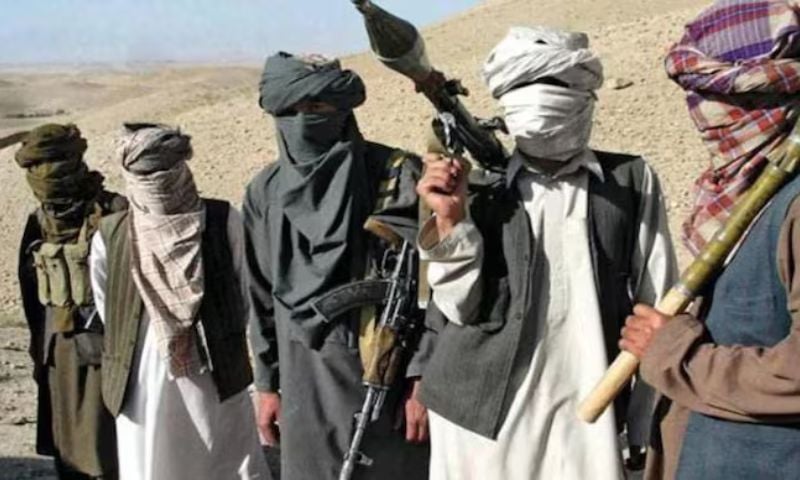
The report stated that the Taliban regime continues supporting TTP, which has intensified terrorist attacks against Pakistan. TTP also called for terrorist attacks against Pakistani security forces and civilians under Operation Khyber.
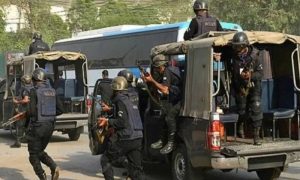
According to the UN report, a 16 February vehicle-borne improvised explosive device (VBIED) attack in Bajaur martyred 11 security personnel and one child, with clear links to TTP’s Afghanistan-based terrorist network.
The report claimed that the Taliban regime has also transferred modern weapons to the banned Tehrik-i-Taliban Pakistan, while large quantities of advanced weapons remain in Afghanistan five years after the Taliban takeover.
The banned TTP terrorist group announced a new organisational structure on 25 December 2025. The restructuring included a new division described as the TTP Air Force, including a so-called TTP Air Force, according to the UN report.
Al-Qaida has further strengthened its relationship with the banned TTP terrorist group. On 28 April, Al-Qaida publicly supported TTP alongside the Taliban regime in its campaign against Pakistan for the first time, the report stated.
Al-Qaida provides TTP ideological guidance, training and operational support. Al-Qaida leadership remains present in Kabul and has reportedly received identity documents facilitating movement. Al-Qaida is also becoming increasingly organised as a regional terrorist network.
East Turkistan Islamic Movement (ETIM) has reorganised in Badakhshan and established new strongholds in Kunduz province of Afghanistan. The group’s military preparedness, drone capabilities and training activity in Nuristan province have increased.
Afghanistan is also attracting foreign terrorist fighters, according to the UN report. Terrorist groups are encouraging members in Syria to relocate to Afghanistan, with Saifuddin Tajibaev, Gulmurod Khalimov and Abu Bakr Badakhshani among those reported to have reached the country.
Several al-Shabaab fighters from Somalia have also reportedly arrived, further demonstrating Afghanistan’s appeal as a sanctuary for international terrorist elements.
The Islamic State of Iraq and the Levant – Khorasan (ISIL-K) remains a major regional threat, according to the UN report. The terrorist group claimed responsibility for the 19 January suicide attack at a Chinese restaurant in Kabul. The 10 April attack on a Shia shrine in Herat further highlighted the threat to Afghanistan’s Shia and Hazara communities. In Pakistan, ISIL was responsible for the 6 February Islamabad Mosque attack and the 5 May martyrdom of Sheikh Muhammad Idrees.
ISIL-K possesses drones, night-vision equipment and thermal imagers, increasing its operational lethality. Advanced weapons, particularly night-vision systems, are strengthening terrorist groups’ battlefield capabilities.
The threat extends beyond conventional terrorism. Al-Qaida and ISIL continue efforts to develop chemical and biological weapons capabilities, the UN report claims. Their propaganda and that of affiliated groups are disseminated in multiple languages, while ISIL-K has begun using artificial intelligence to accelerate propaganda production and distribution. ISIL networks also provide logistical facilitation to Fitna al-Hindustan, whose terrorists receive training from Al-Qaida in Afghanistan.
Online radicalisation is increasingly targeting vulnerable youth. ISIL-linked content exploits social isolation, desire for recognition and limited awareness of consequences, according to the UN report.
Gaming platforms and other online spaces are increasingly being used by the terrorist group to target young people. The UN report highlights that 80 percent of individuals involved in attack plots in France since 2023 were below 25 years of age, while several violent-extremism cases in Turkiye involved suspects below 18.
The UN report presents Afghanistan as an expanding ecosystem for terrorism, where TTP, Al-Qaida, ISIL-K, ETIM/TIP and other terrorist groups retain operational space, weapons, training networks, foreign fighters and advanced technological capabilities.
Taliban regime’s continued failure to dismantle these networks has allowed Afghanistan to remain a persistent source of terrorism threatening Pakistan, neighbouring states, Central Asia and wider international security.