
Key Points
- Brent crude approaches $90 a barrel
- WTI rises above $83 a barrel
- Hormuz shipping disruption keeps supply concerns elevated
ISLAMABAD: Oil prices rose on Wednesday as fading hopes of a US-Iran peace deal and renewed concerns over shipping through Middle Eastern waterways heightened fears of prolonged supply disruptions.
Brent crude, the international benchmark, rose 72 cents to $89.63 a barrel, while US West Texas Intermediate (WTI) crude gained 71 cents to $83.91 a barrel, according to Reuters.
Brent was trading around $90 a barrel in later market activity.
The latest gains extended a rally that has pushed oil prices to around one-week highs as uncertainty over US-Iran negotiations has returned to the market.
Iran has indicated that the Strait of Hormuz will remain closed unless Washington accepts its conditions. The statement added to concerns over the movement of oil tankers through one of the world’s most important energy corridors.
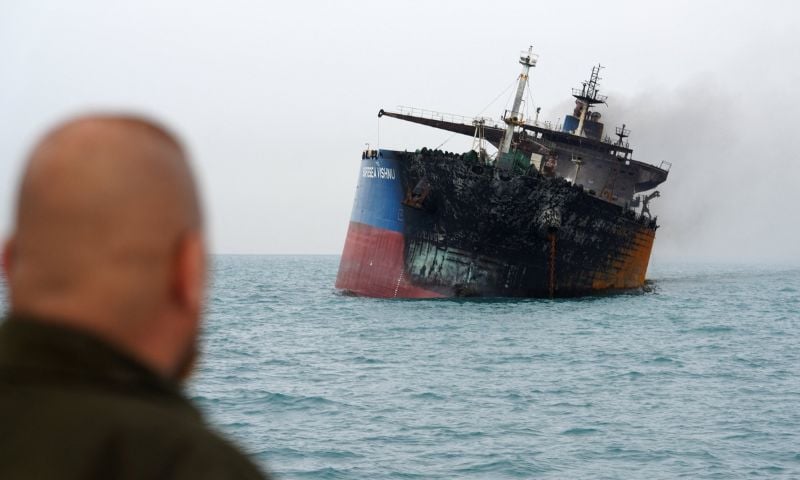
Reports of attacks on vessels in the Strait of Hormuz and the Bab el-Mandeb have further increased the risk premium in crude prices.
ALSO READ: Oil Prices Soar as Hormuz Uncertainty Persists
The Strait of Hormuz is particularly important for global energy markets because a large share of Middle Eastern oil exports normally passes through the waterway.
Bab el Mandeb is an equally important waterway for the petroleum supply from the Middle East to the rest of the world.
Disruptions in these two critical waterways therefore have an immediate effect on crude prices, shipping costs, and insurance premiums.
US to increase oil inventories
The latest price rise comes despite a potentially bearish development in the United States.
American Petroleum Institute data showed an unexpected 9.1 million-barrel increase in US crude inventories, although gasoline and distillate stocks declined.
A confirmed inventory build in official Energy Information Administration data could put downward pressure on prices by indicating ample supply in the world’s largest oil-consuming country.
However, geopolitical risks are currently outweighing inventory concerns.
The US Energy Information Administration has forecast that Middle East supply disruptions could persist at around 600,000 barrels per day through 2027. It foresaw that the market may remain sensitive to developments around the region.
Oil prices have been particularly volatile this year as the conflict and subsequent diplomatic efforts have repeatedly shifted expectations for the reopening of the Strait of Hormuz.
Brent had risen above $100 a barrel earlier in the year before retreating sharply on hopes of de-escalation.
For oil-importing economies such as Pakistan, sustained prices near or above $90 a barrel could increase the cost of petroleum imports and put renewed pressure on the country’s external account, exchange rate, and domestic fuel prices.
Over the past six months, global oil prices have undergone an extraordinary swing, driven primarily by the US-Israel war with Iran, disruptions around the Strait of Hormuz, and shifting expectations of a diplomatic settlement.
Brent crude began 2026 near $62 a barrel and climbed steadily to around $70 by the end of January, before settling around $71 in late February.
The market changed dramatically after the conflict erupted on February 28. Brent surged above $85 in early March, crossed $100 within days, and reached about $126 a barrel in late March.
It briefly touched nearly $138 in early April in the futures market, its highest level of the year, as the closure of the Strait of Hormuz threatened a major disruption to global oil supplies.
Prices subsequently retreated as fears of a prolonged supply shock eased. Brent fell back towards $100 in May and dropped below $90 in June. By late June, it was around $74, before briefly touching roughly $70 in early July.
Oil then rebounded in July, with Brent climbing into the mid-$80s, before falling sharply again in early August as hopes grew that arrangements could restore shipping through Hormuz.
Brent had averaged about $101 during the main phase of the conflict, despite earlier projections that crude could reach $150 or even $200.