
Key Points
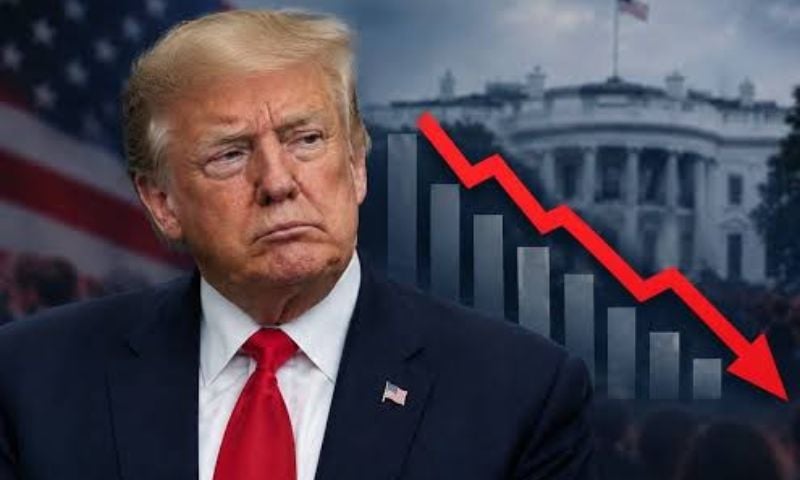
- Trump approval falls to 32 per cent, matching September’s career low
- Hispanic approval of Trump drops to 24 per cent
- Democrats lead Republicans 52-26 per cent among Hispanic voters
WASHINGTON: President Donald Trump’s approval rating fell to a career low of 32 per cent, while support among Hispanic voters has fallen further ahead of the November 3 US midterm elections, according to a Reuters/Ipsos poll completed Monday.
The six-day nationwide poll found that only 24 per cent of Hispanic Americans approved of Trump’s performance, the lowest level recorded during either of his two presidential terms.
Hispanic voters were an important part of Trump’s 2024 election victory, when he won nearly half of their vote, compared with roughly one-third in 2020.
The latest figures point to a significant political reversal less than a month before voters elect members of the House of Representatives and Senate.
Among Hispanic registered voters, 52 per cent said they planned to vote for Democratic candidates, compared with only 26 per cent for Republicans.
The 26-point Democratic advantage is the largest recorded in such polls since Trump returned to the White House.
The poll also showed Democrats leading Republicans nationally among registered voters, 44 per cent to 37 per cent. Independents favoured Democrats by 37 per cent to 21 per cent, although 28 per cent were undecided.
The findings suggest that Trump’s political problems extend beyond Hispanic voters. Republicans have also lost much of their traditional advantage among older Americans, a group that typically turns out heavily in midterm elections.
Voters aged 50 and above preferred Republicans by only 44 per cent to 42 per cent, compared with an eight-point Republican advantage in December.
Voters under 50 gave democrats an 18-point lead in the survey.
Rising cost of living bites Trump
Cost of living has emerged as the dominant concern for voters as inflation remains high and household expenses, particularly fuel and groceries, weigh on public sentiment.
A separate AP-NORC poll found that only 17 per cent of Americans approved of Trump’s handling of the cost of living, while 26 per cent approved of his overall economic management.
Economic pressure has become politically significant as the administration confronts the effects of tariffs and the continuing war with Iran. Rising energy costs have added to concerns about household finances, making the economy and prices central issues in the midterm campaign.
READ ALSO: Trump Says ‘Threat’ Led US To Pull Bombers From UK Airbase
Trump retains stronger support on immigration and border security, but his overall standing has deteriorated as voters increasingly judge his administration on economic conditions.
The Reuters/Ipsos poll surveyed 4,506 US adults nationwide and had a margin of error of about two percentage points. The results come as Republicans intensify campaigning ahead of the midterms, with control of both chambers of Congress at stake during the final two years of Trump’s current term.
The Hispanic shift could prove particularly important in closely contested states including Arizona, Florida and Texas, where Latino voters form a significant part of the electorate.
Recent NBC News/Telemundo polling has also found a substantial Democratic advantage among Hispanic voters, suggesting that Republicans may not have sustained the gains they made among Latino voters in 2024.
Trump’s return to the White House in January 2025 followed a historic campaign in which Republicans made significant gains among Hispanic voters, particularly working-class men.
The shift helped Trump improve on his 2020 performance among Latino voters and contributed to his victory in several key battleground states.
Republicans had hoped those gains would mark a durable realignment, but the latest polling suggests economic concerns are now weakening that support.