TEHRAN: Iran has said it will not reopen the Strait of Hormuz until the United States meets a series of demands, including compensation for wartime damage, as President Donald Trump signalled that Washington was prepared to wait for economic pressure to weaken Tehran.
Iran’s Revolutionary Guards said at the weekend that the blockade of the strategically vital waterway would remain in place until the US accepted all of Tehran’s conditions.
“The strait is now actually a theatre of war for us and not just a waterway,” the Guards said, according to Iranian media.
The comments come as the effective closure of Hormuz continues to disrupt global energy shipments, unsettle financial markets and push up prices.
Iran Lists Conditions For Reopening
Iran’s Supreme National Security Council set out its conditions, including an end to the war on all fronts, the lifting of the US counterblockade of Iranian ports, the removal of sanctions, the release of frozen Iranian assets and compensation for wartime damage.
The conditions echo provisions contained in a June memorandum that outlined a possible path towards peace talks and included plans for a $300bn reconstruction fund for Iran.
Tehran has also insisted that it retain a role in controlling the waterway after the war and has raised the possibility of charging tolls for passage.
The June memorandum said Iran and Oman would discuss future arrangements for managing the strait with other Gulf states and in accordance with international law.
Oman’s foreign ministry has warned against actions that could undermine those discussions.
Iranian Foreign Minister Abbas Araghchi said on Sunday that talks with Oman over the management of the waterway were “approaching the final stages”.
Trump Says US Is ‘Low-Keying’ Response
The crisis has created growing economic and political pressure on the United States, with disruptions to Hormuz contributing to higher energy prices as the US midterm elections approach.
But President Trump said he was taking a measured approach to Tehran.
“We are low-keying it,” he told Axios in an interview on Sunday.
“We are only semi-negotiating with them,” he was quoted as saying, adding that the US was watching Iran’s inflation and financial difficulties.
“It will work out,” Mr Trump said. “It’s like a chess game.”
Mr Araghchi said Tehran was not engaged in direct negotiations with Washington but was “exchanging messages” through intermediaries.
Shipping Disrupted By Attacks
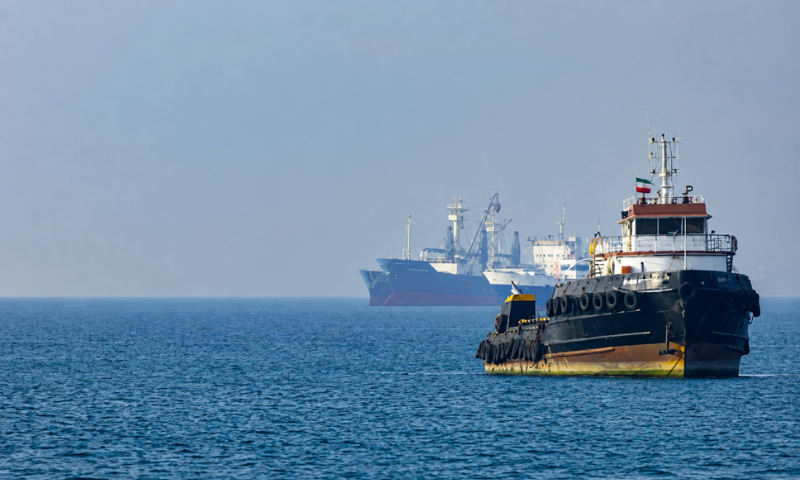
Commercial traffic through the Strait of Hormuz has fallen sharply amid repeated attacks.
At least one tanker was struck on Saturday, according to the United Arab Emirates, while Oman condemned the continuing attacks without directly naming Iran.
The waterway is one of the world’s most important energy corridors, making the disruption a major concern for oil-importing countries and global markets.
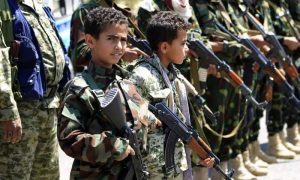
The confrontation has also spread to the Red Sea, where Iran-aligned Houthi forces in Yemen have announced a parallel maritime blockade.
The Houthis said on Sunday that they had attacked an oil facility on the Red Sea coast.
In Yemen, a medical source in the government-held city of Mokha said three civilians and eight military personnel were killed and 32 others wounded on Sunday.
The source said the civilian casualties resulted from Houthi strikes on the city’s port.
Regional Security Ties
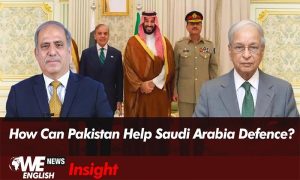
On Friday, Saudi Arabia, Turkey and Pakistan signed a joint defence agreement that includes a provision treating an attack on one member as an attack on all.
Turkish Foreign Minister Hakan Fidan said on Saturday that he expected Egypt to join the agreement, describing Cairo as a “natural partner on all issues”.
Fidan said the pact was not directed against any particular country, while Pakistan’s foreign ministry said it was intended to “strengthen collective deterrence”.