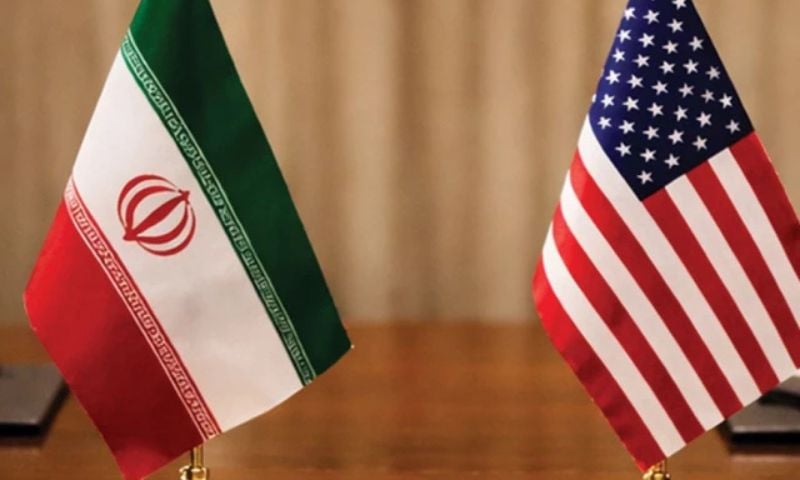
WASHINGTON/TEHRAN: US Vice President JD Vance said on Saturday that negotiations between the United States and Iran have progressed this week, while Iranian President Masoud Pezeshkian said that now is the “best time” to reach an agreement.
The comments came as Iran and Oman reported progress towards an arrangement to restore shipping through the Strait of Hormuz, a vital global energy waterway whose disruption has pushed up oil prices and fuelled inflation.
Vance said the conflict was not over, but Washington was using diplomatic, economic and military tools to secure what it considered the best outcome for the United States.
“I try to remind people we’re really in the middle of the game here. This thing is not over,” Vance said in an interview with Fox News.
“I feel quite confident we will get there, and some progress has been made in Iran talks over the last few days,” he added.
US seeks oil flows through Hormuz
Vance said the current negotiations were focused in part on conditions that would allow the United States to “maximise oil and gas” flows through the Strait of Hormuz. He said Washington wanted Americans to benefit from lower fuel and energy prices.
“We don’t trust, we verify,” Vance said, adding that Washington expected oil and gas flows through the Gulf to return to levels seen before the geopolitical tensions.
Vance said Iran had indicated that it was prepared to allow such flows.
He rejected suggestions that Tehran was seeking to tighten its grip on the strait during the negotiations. He said active discussions were under way, including with other Gulf states, on ensuring the safe movement of shipping through the strategic waterway.
Vance also said the United States had destroyed Iran’s military and “asymmetric” capabilities as well as its nuclear programme. Washington was now seeking to determine whether Tehran was prepared to make the long-term changes needed for a better relationship with the United States.
“If not, that’s fine too; we’re just going to keep on applying the pressure that we can apply,” he said.
.@VP: We’re talking to the Iranians, of course. We’re trying to maximize the amount of oil and gas that is coming out of the Strait of Hormuz. We’re just trying to make sure that we get what we need out of this particular conflict. We’ve destroyed their nuclear program, we’ve… pic.twitter.com/Nqc6KHLL93
— Rapid Response 47 (@RapidResponse47) August 8, 2026
Oman urges caution
Oman’s Foreign Ministry on Saturday stressed the importance of avoiding actions that could affect the ongoing negotiations over navigation through the Strait of Hormuz.
The ministry condemned “repeated attacks” on ships passing through the strait.
Oman urged all sides to avoid actions that could undermine the talks and the progress already achieved, saying the negotiations were proceeding in a “positive and constructive atmosphere”.
The statement followed the United Arab Emirates’ accusation that Iran had targeted a ship used by the Abu Dhabi National Oil Company.
Iran and Oman close to Hormuz deal
Iranian Foreign Minister Abbas Araghchi said Iran and Oman were “very close” to reaching an agreement on a new shipping route through the Strait of Hormuz.
Araghchi said the two countries were discussing a temporary route while technical and legal issues relating to a permanent arrangement were resolved.
“The negotiations are ongoing, and given the technical complexities, a temporary route is currently being worked out,” Araghchi said. “In my view, we are very close to reaching a final agreement.”
Also Read: Iran, Oman ‘Very Close’ to Agreement on Hormuz Shipping Route: Tehran
Meanwhile, Hassan Ghashghavi, the spokesman of Iranian parliament’s national security commission, said the “general framework” of the agreement between Iran and Oman has been finalised, IRNA news agency reported.
“The final text and details will be announced soon,” Ghashghavi said.
However, he added that implementation of the agreement is “subject to final approval at the highest decision-making levels.”
A US official, cited by Reuters, said on Friday that Washington expected Iran and Oman to reach an agreement soon that could allow normal commercial shipping and oil traffic through the strait to resume.
The official said progress between the two countries was crucial to a wider peace agreement.
“There is progress between Oman and Iran on the strait, and we expect a deal soon,” the official told Reuters.
The US official said the United States would lift its blockade of Iranian ports once commercial shipping was restored without impediments.
US actions would remain “performance-based” and linked to Iran’s implementation of its commitments, the official added.
Before the United States and Israel launched their war on Iran on February 28, roughly one in every five barrels of oil consumed worldwide passed through the Strait of Hormuz.
The disruption to shipments has contributed to higher energy prices and inflation.
Pezeshkian calls for dialogue
Meanwhile, President Masoud Pezeshkian said on Saturday that the current circumstances offered the “best time” for Iran and the United States to reach an agreement.
“When people talk about reaching an agreement, I believe now is the best time,” Pezeshkian said at his second news conference since taking office.
He said Iran had cohesion, strength and unity and had emerged from the recent conflict strong.
Pezeshkian said outstanding issues could be addressed through dialogue and that Iran sought nothing beyond what he described as the rights of the country and its people.
According to the semi-official ISNA news agency, he said Tehran could pursue its rights through negotiations.
Tehran backs Islamabad MoU
Pezeshkian reaffirmed his government’s commitment to pursuing peace under the Islamabad memorandum of understanding signed with the United States in June.
“The issues cannot be resolved through war alone,” he said. “We are trying to move toward peace based on the provisions of the memorandum.”
He said Tehran was prepared to use the memorandum as the basis for its approach, provided Washington abandoned what he described as an atmosphere of distrust and confidence could be rebuilt.
Pezeshkian said the United States remained “untrustworthy” in Tehran’s view.
In remarks carried by the official IRNA news agency, he said dialogue had not altered Iran’s long-standing position towards Washington.
“The US is colonialist, the US is criminal, and the Islamic Republic remains the Islamic Republic,” he said.
But Pezeshkian also argued that diplomacy had forced Washington to negotiate with Tehran.
“The very fact that we held talks and pursued diplomacy forced the US to come to the table and reach an agreement and understanding with Iran,” he said.
Pezeshkian rejected criticism of the memorandum, saying it contained no provision requiring Iran to give up its interests or positions.
“You will not find a single clause in the memorandum in which we gave anything away,” he said, adding that Tehran “stands firmly” behind what it signed.
Pezeshkian said disputes over alleged violations should be addressed through mechanisms established under the memorandum.
He expressed hope that the implementation process would continue “with dignity and honour” for Iran.