
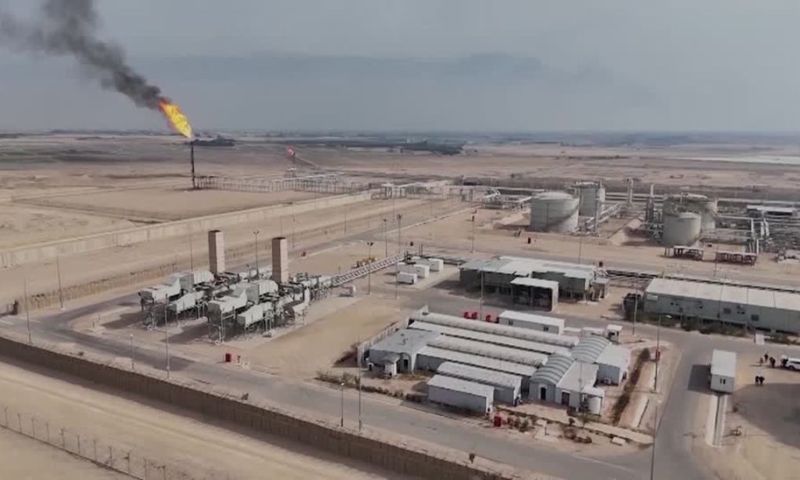
Key points:
- Brent falls below $79 on diplomatic hopes
- WTI drops below $75 in early trading
- Iran disputes US claims of negotiations
ISLAMABAD: Oil prices extended their sharp decline on Wednesday, hitting three-week lows as hopes for a US-Iran deal raised expectations that a de-escalation could ease disruption to regional oil supplies and shipping.
Brent crude futures fell 92 cents, or 1.2 per cent, to $78.44 a barrel, while US West Texas Intermediate (WTI) crude dropped $1.07, or 1.4 per cent, to $74.70, according to Reuters. Brent was down more than 12 per cent for the week and WTI over 11 per cent.
Oil fell 7% to its lowest level in three weeks after the US paused military strikes on Iran and said that negotiations were underway.#Forbes
For more details: https://t.co/q5YQ0Cuv0F pic.twitter.com/SxfkZ799TS
— Forbes Middle East (@Forbes_MENA_) August 3, 2026
The latest losses followed a steep sell-off earlier in the week after US President Donald Trump said Washington was moving towards an agreement with Iran. Secretary of State Marco Rubio followed in his president’s footsteps late on Tuesday saying that the US-Iran talks were progressing well.
ALSO READ: Oil Prices Tumble, Stocks Rise on Hopes of Deal to End Mideast War
These overtures raised expectations that diplomatic progress could reduce the risk premium that has lifted oil prices since the conflict began.
Mediation progress snubs oil prices
Qatar said mediators had made progress towards ending the conflict, adding to market expectations that the Strait of Hormuz could eventually reopen to more normal commercial traffic. The waterway is a crucial route for global energy shipments.
However, Tehran has disputed Washington’s account of negotiations, leaving uncertainty over whether a diplomatic breakthrough is imminent.
The conflicting statements have made oil markets highly sensitive to further developments from both sides.
The decline in prices reflects expectations of reduced geopolitical risk rather than an immediate restoration of disrupted supplies.
Crude production and exports in the region remain affected, and tanker traffic through the Strait of Hormuz has stayed well below normal levels.
The prices had surged earlier in the conflict as fears grew that prolonged disruption around Hormuz could threaten global energy supplies.
The market has since swung sharply in response to signs of military escalation or diplomatic progress.
For markets, the key test will be whether US-Iran diplomacy produces a durable agreement and allows shipping through Hormuz to return to normal. A collapse in talks or renewed military action could quickly push prices higher again.
Oil prices have undergone a dramatic six-month cycle since the US-Israeli war with Iran began on February 28. The prices remained, repeatedly swinging between fears of supply disruption and hopes of de-escalation.
Brent initially surged, eventually reaching about $126 a barrel, as the conflict sharply curtailed shipments through the Strait of Hormuz. Between the start of the war and mid-June, Brent averaged about $101, according to Reuters.
Prices then retreated sharply as concerns over prolonged disruption eased, falling to around $70 in early July.
The Pakistan mediated Islamabad Memorandum of Understadning between Iran and the US, higher US production, weaker Chinese oil demand, releases from strategic reserves and alternative export routes helped prevent the supply shock from pushing prices even higher.
The market reversed course in July as attacks on shipping routes intensified and traffic through the Strait of Hormuz and Bab el-Mandeb came under renewed pressure.
Brent surged above $100 on July 23, reaching $100.69, its highest close since May, before ending the month at $90.12. Brent gained 24 per cent in July, its strongest monthly rise since March.
The rally has since sharply unwound as Washington signalled hopes for a deal with Tehran.
By Wednesday, Brent had fallen to $78.44 and WTI to $74.70, leaving both benchmarks down more than 11 per cent on the week.
The latest decline shows how quickly oil markets are reversing the war premium as traders price in the possibility of restored shipping through Hormuz.