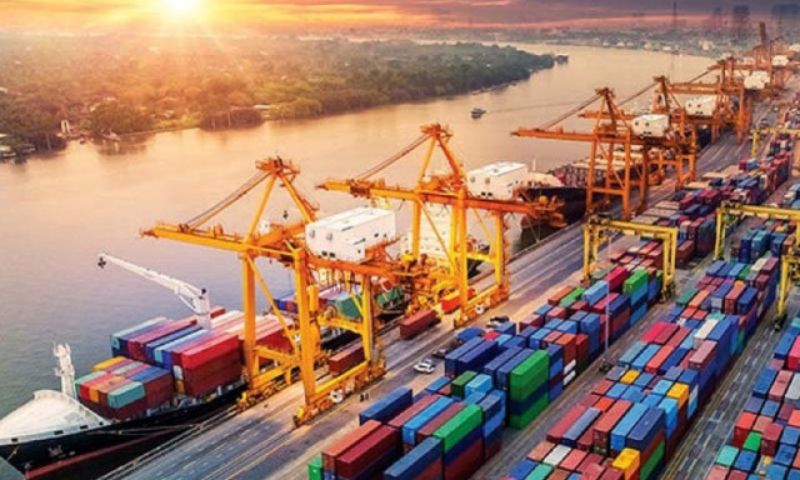
ISLAMABAD: In a sweeping declaration of economic ambition, Pakistan’s Planning Minister has drawn a clear line in the sand: the country’s 40-year-old export model is dead, and a bold new strategy of product and market diversification is the only way to achieve the sustainable 6 per cent economic growth that will secure Pakistan’s long-term independence from foreign bailouts.
پاکستان کی معیشت استحکام کے مرحلے میں داخل ہو چکی ہے، اب ہدف پائیدار ترقی، برآمدات میں اضافہ اور نوجوانوں کو مستقبل کی معیشت کے لیے تیار کرنا ہے۔
وفاقی وزیر پروفیسر احسن اقبال نے جولائی 2026: ماہانہ ترقیاتی پیش رفت پر میڈیا بریفنگ میں پاکستان کی معاشی صورتحال، عالمی توانائی… pic.twitter.com/LXSYB7oyCa
— M/o Planning, Development and Special Initiatives (@PlanComPakistan) July 30, 2026
Federal Minister for Planning, Development and Special Initiatives Professor Ahsan Iqbal delivered the stark assessment during a media briefing on the Monthly Development Report Thursday, revealing that the government is targeting a staggering $100 billion in annual exports by 2035, a figure that would require nothing short of an industrial revolution in a country that has historically relied on a narrow basket of textiles and agricultural commodities.
“Our destination is not only stabilisation but sustainable growth of at least six per cent,” Ahsan declared. “That growth has to be export-led; otherwise it will become another economic bubble that bursts within a few years.”
The minister’s remarks come as Pakistan emerges from a bruising economic stabilisation phase, with the government now shifting its focus squarely to expansion.
The strategy, developed in close collaboration with industry leaders and the State Bank of Pakistan, aims to transform the nation’s top 20 export clusters into globally competitive powerhouses while aggressively promoting non-traditional sectors including engineering, light engineering, chemicals, and advanced manufacturing.
Out with the old, in with the new
Ahsan did not mince words about the shortcomings of Pakistan’s current export structure, pointing out that the country is still shipping many of the same products to the same destinations as it did four decades ago, a model he dismissed as “no longer sufficient for a competitive global economy.”
“We have to diversify both our product portfolio and our export markets,” he insisted, emphasising that the government is offering targeted incentives to broaden the export base and reduce reliance on a handful of traditional sectors.
Read Also: Pakistan Focuses on Economic Growth Through Investment, Departmental Reforms: PM Shehbaz
The timing of the announcement is significant. Despite facing severe headwinds, including devastating floods, disruptions in regional shipping routes, higher insurance costs, and logistical challenges arising from the Iran-US conflict, Pakistan’s merchandise exports still recorded overall growth during the last fiscal year.
Workers’ remittances surged to a record $41.6 billion, up 8.6 per cent over the previous year, providing a critical buffer against geopolitical uncertainties in the Gulf region.
#Islamabad: Minister for Planning and Development Ahsan Iqbal addressing a ceremony@PlanComPakistan @betterpakistan #RadioPakistan #Newshttps://t.co/JSupTo2wm1
— Radio Pakistan (@RadioPakistan) July 30, 2026
International recognition fuels optimism
The minister’s confidence in Pakistan’s economic trajectory appears well-founded, with international rating agencies taking notice. Standard & Poor’s recent upgrade of Pakistan’s sovereign credit rating from B- to B follows similar moves by Moody’s and Fitch – a string of endorsements that Ahsan says reflect “growing confidence in Pakistan’s economic direction under Prime Minister Shehbaz Sharif’s leadership.”
“These international endorsements should be projected confidently to strengthen investor confidence,” he said, signaling the government’s intent to leverage improved ratings to attract foreign investment.
Macroeconomic stability bears fruit
Despite the external shocks that battered the economy, Pakistan achieved GDP growth of 3.7 per cent during the last fiscal year, with agriculture growing by 2.9 per cent, services by 4.1 per cent, and industry by 3.5 per cent.
Read Also: Pakistan Eyes 4% Economic Growth This Fiscal Year: Finance Minister
The minister noted that the economy could have expanded beyond four per cent in the absence of those disruptions, a sign of underlying resilience that has not gone unnoticed by global markets.
The Planning Ministry is simultaneously pursuing structural reforms that extend far beyond trade policy. A new governance model for Islamabad is in the works, alongside higher education reforms designed to align university curricula with the demands of the Fourth and Fifth Industrial Revolutions and the emerging artificial intelligence-driven economy.