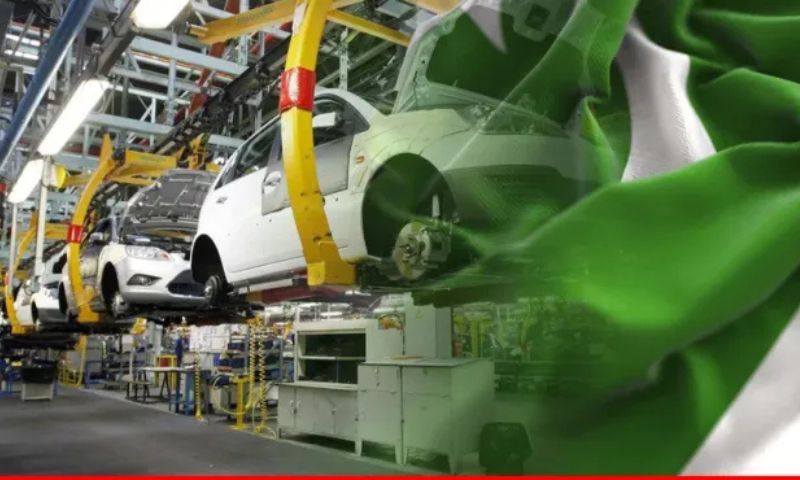
ISLAMABAD: In a historic breakthrough for Pakistan’s automotive sector, the country has secured its first major vehicle export deal to Bangladesh, signaling a potential turning point for an industry long confined to domestic consumption and signaling Prime Minister Shehbaz Sharif’s ambitious vision of transforming Pakistan into a regional manufacturing powerhouse.
Special Assistant to the Prime Minister (SAPM) on Industries and Production, Haroon Akhtar Khan, witnessed the signing of a Memorandum of Understanding (MoU) between MG JW Automobile Pakistan and Bangladesh’s RANCON Group in Islamabad on Thursday, a deal that will see 100 locally assembled vehicles shipped to the neighbouring country this year alone, with exports projected to soar to 5,800 units over the next four years.
@MGPakistan signed an MoU with RANCOR Bangladeshi Auto Company to #Export 5K electric motors till 2029. pic.twitter.com/fK0aeTIM26
— Waqas Azeem (@Waqas_Azeem) July 30, 2026
The agreement represents more than just a commercial transaction; it is a resounding vote of confidence in Pakistan’s manufacturing capabilities at a time when the country is desperately seeking to diversify its export base beyond traditional textiles and agricultural products.
For an automotive industry that has long struggled with low volumes, high costs, and import dependency, this deal opens a promising new chapter.
Government’s export-led vision takes shape
Addressing the media after the ceremony, SAPM Haroon Akhtar Khan hailed the agreement as a game-changer for Pakistan’s economy, emphasising that it would generate millions of dollars in much-needed foreign exchange and create new opportunities for local suppliers and workers.
“This agreement is another important step towards achieving the Government’s export-led industrial growth agenda,” Khan stated, adding that under Prime Minister Shehbaz Sharif’s leadership, Pakistan is pursuing policies that promote exports, strengthen local manufacturing, attract investment, and create a business-friendly environment for industries.
The SAPM revealed that the government is finalising a comprehensive Auto Policy aimed at increasing vehicle exports, enhancing localisation, and strengthening the country’s automotive manufacturing base. He noted that Pakistan’s automotive sector has made remarkable progress in quality, localisation, and production capacity, enabling locally manufactured vehicles to compete successfully in international markets.
Read Also: Pakistan Unveils New Tariff Cuts, Removes Age Limit on Used Vehicle Imports
Bangladeshi partner hails Pakistani quality
Muhammad Mostafizur Rashid Bhuiyan, Executive Director of RANCON Group, expressed optimism about the partnership, saying the agreement would introduce healthy competition in Bangladesh’s automobile market while providing consumers with high-quality vehicles coming from Pakistan.
“Pakistan’s automotive industry has achieved international manufacturing standards and possesses significant export potential,” Bhuiyan said, acknowledging the progress made by Pakistani manufacturers in recent years.
Chief Executive Officer of MG JW Automobile Pakistan, Jianqiang Shao, welcomed the partnership and reaffirmed the company’s commitment to expanding Pakistan’s automotive exports to regional and international markets, signaling long-term ambitions beyond the current deal.
A new dawn for Pakistan’s auto industry
The ceremony, attended by Amir Nazir, Chief Operating Officer of MG JW Automobile Pakistan, senior government officials, representatives of both companies, and members of the business community, underscored the growing international interest in Pakistan’s manufacturing sector.
Read Also: Pakistan Targets $1 Billion Auto Exports, 500,000 Vehicle Production in 5 Years
For an industry that has historically focused on serving a protected domestic market, the Bangladesh deal represents a significant pivot towards exports, a shift that aligns with the government’s broader economic strategy. With the upcoming Auto Policy expected to provide further incentives for localisation and export-oriented production, industry observers believe this could be the first of many such agreements.
The Government of Pakistan remains committed to promoting industrial development, increasing exports, and positioning Pakistan as a regional manufacturing hub in line with the Prime Minister’s vision of sustainable economic growth. With this deal, the automotive sector has taken a decisive first step toward realising that vision.