


ISLAMABAD: Pakistan on Wednesday unveiled its first-ever four-year Hajj Policy for 2027–2030, introducing sweeping reforms aimed at modernising Hajj management through digitalisation, long-term planning, greater transparency and improved services for pilgrims.
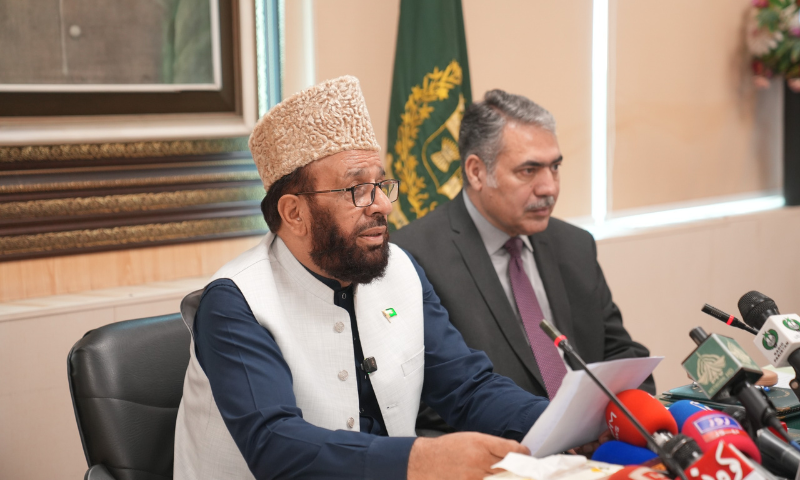
Announcing the policy at a press conference, Federal Minister for Religious Affairs Sardar Muhammad Yousaf said the new framework marked a major shift in the country’s Hajj administration and was designed to provide pilgrims with greater convenience, transparency, trust and quality services.
He said the policy had been prepared under the guidance of Prime Minister Shehbaz Sharif, who had directed the government to modernise the Hajj system, make greater use of technology and ensure transparency at every stage of the pilgrimage process.
The minister also acknowledged the Ministry of Information Technology and the National Information Technology Board (NITB) for developing a comprehensive digital system covering Hajj registration, monitoring, complaint resolution and post-Hajj evaluation.
Four-Year Registration System Introduced
For the first time, Pakistan will introduce a four-year Hajj registration and digital waiting list system, allowing intending pilgrims to register in advance and choose their preferred year for performing Hajj.
Applicants will be required to deposit an estimated 10 percent of the Hajj cost at the time of registration, while pilgrim selection will be carried out through a transparent digital waiting list based on a “first-come, first-served” principle.
The government said the new system would enable better planning and provide greater certainty for intending pilgrims.
Long-Term Contracts to Reduce Costs
Under the new policy, multi-year contracts of up to four years will be signed for accommodation, transportation, catering, air travel and baggage handling.
Officials said the long-term arrangements would improve service quality while helping reduce operational costs.
The government also announced that the quota distribution between the government and private Hajj schemes would remain at 60 percent and 40 percent, respectively, from 2027 to 2030 unless revised by the federal cabinet.
Greater Role for Private Sector
The policy envisages a gradual transition in which the government will move away from directly managing Hajj operations and instead focus on regulation, oversight and quality assurance, while expanding the role of the private sector.
Private Hajj operators will be evaluated based on service quality, performance and compliance with prescribed standards rather than quota allocations alone.
The use of the Private Hajj Management Portal (PHMP) will be mandatory for all private Hajj companies, with bookings, payments, monitoring and audits to be conducted entirely through the digital platform.
Fully Digital Hajj Management
The government said every stage of the Hajj process—from registration to complaint resolution and post-Hajj assessments—would be managed through a fully digital system.
All Hajj-related payments will be made only through government-designated banking channels to ensure financial transparency and security.
A modern digital complaint management system, supported by monitoring and appeals mechanisms, will also be introduced to facilitate the prompt resolution of pilgrims’ grievances.
Improved Training and Emergency Response
The policy includes enhanced training programmes for pilgrims covering Hajj rituals, mobile applications, health guidance, emergency response procedures and Saudi regulations.
The existing Hujjaj Protection Scheme will continue, providing financial assistance in cases of death, accidents or emergency evacuation during Hajj.
An Emergency Management System and a dedicated Emergency Response Team will also be established to respond to unforeseen situations during the pilgrimage.
Independent Oversight
The government announced that both public and private Hajj operations would undergo independent third-party evaluations after each Hajj season to improve service quality and accountability.
If any funds remain unspent after the completion of Hajj operations, the surplus will be refunded to pilgrims.
The selection criteria for Hajj assistants will also be revised under a merit-based framework to be approved by a cabinet committee.
Aligned with Saudi Vision 2030
The minister said the new Hajj policy had been aligned with Saudi Vision 2030 and international best practices to strengthen transparency, digital governance, accountability and service delivery.
He expressed confidence that the reforms would usher in a new era of Hajj management in Pakistan, improve long-term planning and strengthen the confidence of millions of intending pilgrims.
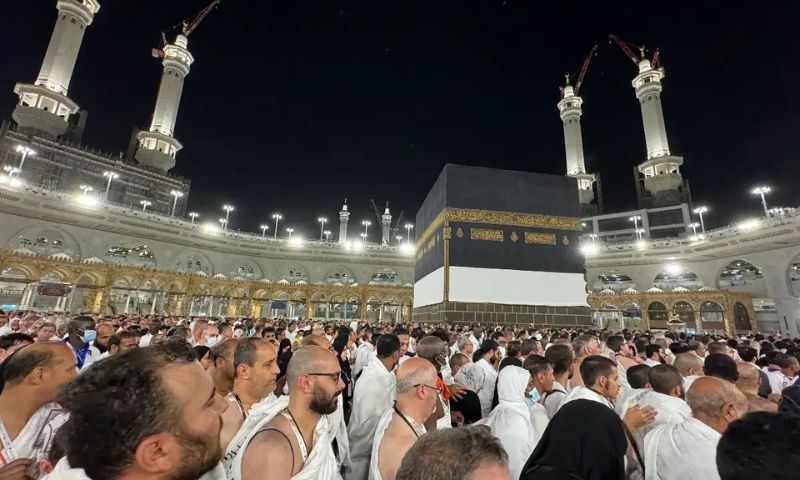
Pakistan is one of the world’s largest contributors of Hajj pilgrims each year. For the 2026 Hajj season, the country was allocated a quota of 179,210 pilgrims, including 119,210 under the government scheme and 60,000 through private operators.
Under the new policy, intending pilgrims will no longer have to wait for annual registration exercises. Instead, they will be able to register at any time for any Hajj season between 2027 and 2030 by depositing 10 percent of the estimated Hajj cost and selecting their preferred year of travel. Where applications exceed the available quota, pilgrims will be selected through a transparent digital waiting list based on a first-come, first-served principle.