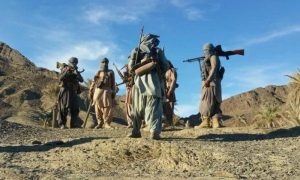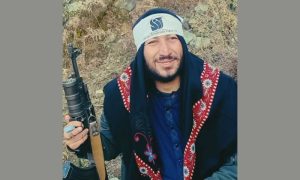
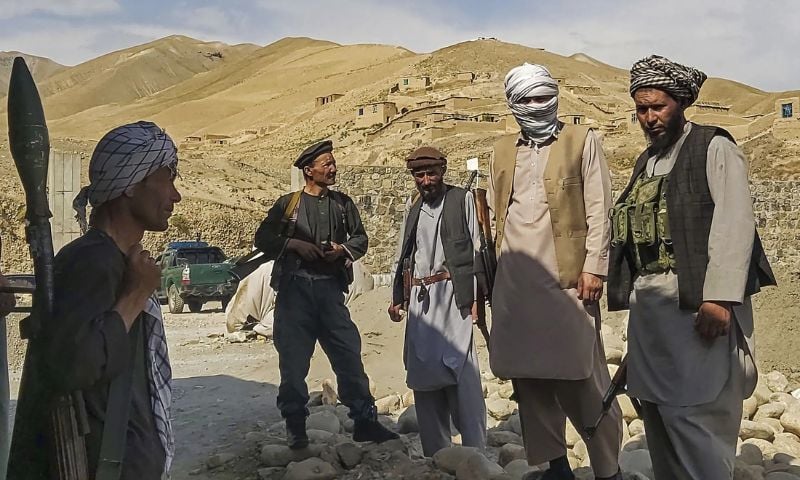



ISLAMABAD: Reports from multiple Afghan provinces suggest that anti-Taliban resistance activity is increasing, with armed groups claiming a growing number of operations across northern and northeastern parts of the country.
A newly released Telegram video by the Freedom and Justice Movement claims its fighters, under the command of Hamed Saifi, established checkpoints in Kohistan District, Kapisa Province, on 20 July, asserting control over movement on several key roads.
Following the resistance operation in Yaftal, Badakhshan, local sources are now reporting another coordinated anti-Taliban attack in Zebak District.
Clashes underway around Taliban checkpoints
Heavy clashes are reportedly underway around Taliban checkpoints in the Top Khana area, although casualty figures remain unconfirmed. Some reports indicate that the fighting could spread to neighboring areas if additional forces become involved.
Earlier, the Sepahiyan-e Mihan (Homeland Soldiers’ Front) claimed to have seized the district headquarters, police headquarters, and intelligence offices in Yaftal.
A newly released Telegram video by the Freedom and Justice Movement claims that resistance against the Taliban is gaining momentum in Afghanistan.
The group says its fighters, under the command of Hamed Saifi, established a checkpoint in Kohistan District, Kapisa Province, at… pic.twitter.com/H4YrXwnTps
— South Asia Times (@_southasiatimes) July 24, 2026
According to the group and local reporting, resistance fighters lowered the Taliban flag and captured weapons, vehicles, and other military equipment before Taliban reinforcements reportedly regained control of the area.
Badakhshan emerging as significant area of resistance activity
The latest reports from Zebak suggest that Badakhshan is emerging as a significant area of resistance activity. Repeated attacks against Taliban positions indicate persistent security challenges for the Taliban in the province and may reflect increasing pressure on its ability to maintain control in parts of the region.
As with earlier claims, independent verification of the reported operations and their outcomes remains limited.
Resistance activity is no longer confined to Panjshir and Andarab. Anti-Taliban groups have increasingly claimed operations in Kabul, Baghlan, Takhar, Kunduz, Kapisa, Balkh, Herat and Badakhshan, indicating an expanding geographical footprint of armed opposition.
Increasing frequency of coordinated operations by multiple resistance groups points to persistent opposition to Taliban rule, growing local resistance networks and continuing challenges to regime’s efforts to consolidate nationwide control.
Taliban regime orders armed groups to surrender their
Fearing armed resistance the Taliban regime has ordered armed supporters of dissident local commander Juma Khan Fateh to surrender their weapons, marking the latest move by the group’s leadership to tighten control following weeks of internal tension.
Also Read: Taliban Fear Armed Resistance in Badakhshan
According to local sources in Badakhshan, the directive targets fighters loyal to Fateh in the districts of Shekay and Nusay, both located in the Darwaz region, where the commander is believed to wield significant influence.
The disarmament order comes after a prolonged dispute between Fateh and senior Taliban authorities. During the standoff, Fateh reportedly claimed to command thousands of armed men. Individuals close to the commander said he had around 3,500 fighters in Nusay alone, alongside a substantial force in neighbouring Shekay.
Security sources familiar with the situation estimate that more than 5,000 weapons could be recovered if the disarmament campaign is fully implemented, underlining the scale of the challenge facing the Taliban in the strategically important border province.
Taliban regime deploys special forces in Badakhshan
To reinforce the operation, the Taliban has reportedly deployed special forces and intelligence personnel to Badakhshan in recent weeks. Local reports indicate that an intelligence convoy comprising around 100 vehicles has been involved in the operation, reflecting the seriousness with which the leadership is treating the unrest.
Some sources believe part of the deployment may have been intended to detain Fateh, although there has been no official confirmation from the Taliban.
The developments highlight the Taliban leadership’s continuing efforts to consolidate authority and suppress internal dissent, particularly in Badakhshan, a province that has witnessed recurring friction between local commanders and the central leadership since the group returned to power in 2021.