ISLAMABAD: A new round of US tariffs targeting imports from 60 trading partners took effect on Friday, replacing a temporary global duty introduced earlier this year as President Donald Trump’s administration stepped up its protectionist trade agenda.
The new levies range from 10% to 12.5% and affect major economies including China, India, Japan, South Korea and the European Union.
The measures follow months-long investigations by the Office of the United States Trade Representative (USTR) and are designed to withstand potential legal challenges more effectively than earlier tariff actions.
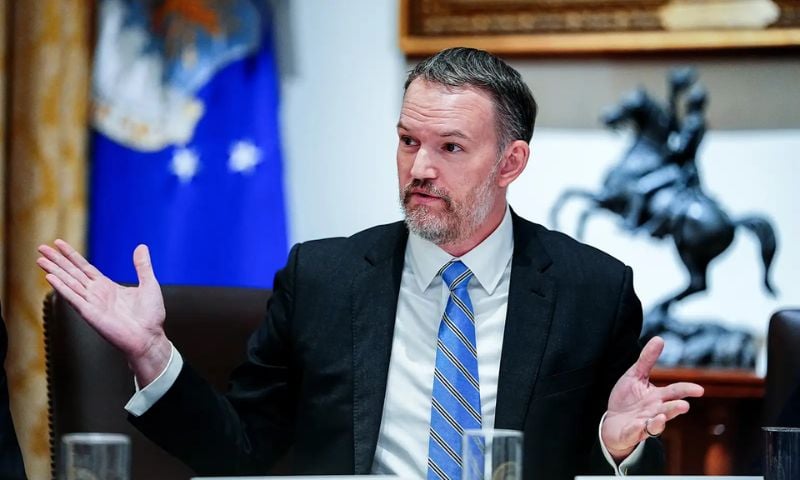
“The United States has had a forced labour import ban for nearly a century, and rigorously enforces it; it’s well past time for our trading partners to do the same,” US Trade Representative Jamieson Greer said in a statement.
The move comes after the US Supreme Court struck down a series of tariffs imposed under emergency authorities in February, prompting the Trump administration to adopt alternative legal mechanisms to maintain its trade policy. A temporary 10 per cent tariff introduced following the ruling expires on Friday.
Partners facing new tariffs
According to the USTR, the measures cover Algeria, Angola, Argentina, Australia, The Bahamas, Bahrain, Bangladesh, Brazil, Cambodia, Canada, Chile, China, Colombia, Costa Rica, the Dominican Republic, Ecuador, Egypt, El Salvador, the European Union, Guatemala, Guyana, Honduras, Hong Kong, India, Indonesia, Iraq, Israel, Japan, Jordan, Kazakhstan, Kuwait, Libya, Malaysia, Mexico, Morocco, New Zealand, Nicaragua, Nigeria, Norway, Oman, Pakistan, Peru, the Philippines, Qatar, Russia, Saudi Arabia, Singapore, South Africa, South Korea, Sri Lanka, Switzerland, Taiwan, Thailand, Trinidad and Tobago, Türkiye, the United Arab Emirates, the United Kingdom, Uruguay, Venezuela and Vietnam.
Under the new framework, economies that have implemented a ban on imports produced through forced labour, or committed to doing so, will face the lower 10 per cent tariff. These include Canada, the European Union, India and the United Kingdom.
ALSO READ: Lower US Tariffs on Japanese Autos Begin Under Bilateral Trade Pact
Meanwhile, China, Japan, South Korea and dozens of other economies have been assigned the higher 12.5 per cent rate. The United States said the distinction reflects differing levels of action taken by trading partners to restrict imports linked to forced labour.
However, several economies, including those of the European Union, Taiwan, Japan, South Korea, and Switzerland, will receive partial relief under previously negotiated trade arrangements with Washington.
Goods already covered by sector-specific tariffs, such as steel and aluminium, will not be affected by the new measures.
Certain energy products, fertilisers, and goods traded under the United States-Mexico-Canada Agreement (USMCA) are also exempt, according to US officials.
The announcement drew criticism from several affected countries. Japanese government spokesman Minoru Kihara said Tokyo regretted the decision. He argued that the higher tariff was imposed solely because Japan lacks a formal prohibition on imports made with forced labour.
Australia’s Trade Minister Don Farrell described the measures as “unjustified” and said they were inconsistent with Canberra’s free trade agreement with the United States.
The latest tariffs add to a broader shift towards protectionist trade policies under Trump’s administration. Washington is also investigating 16 economies over alleged excess industrial capacity, which could lead to additional tariffs in the coming months.
Trade experts said the measures strengthen the administration’s negotiating position and could remain in place throughout Trump’s term if they survive expected court challenges.
“The incoming tariffs are much more likely to stay for the duration of Trump’s term,” Josh Lipsky of the Atlantic Council told AFP, describing the development as a sign of a “much more protectionist world’s largest economy.”
The announcement follows recent US tariff actions against Brazil and Canada, underscoring Washington’s continued use of trade measures as a key foreign and economic policy.