
Key Points
- Asian shares recover after three-day decline
- Oil retreats from one-month highs
- Investors await major tech earnings
ISLAMABAD: Asian stock markets advanced on Tuesday as Pakistan-led renewed diplomatic efforts to ease tensions between the United States and Iran pushed oil prices lower, easing investors’ concerns about the inflationary impact of rising energy costs.
MSCI’s broadest index of Asia-Pacific shares outside Japan rose 0.25 per cent after three consecutive sessions of losses.
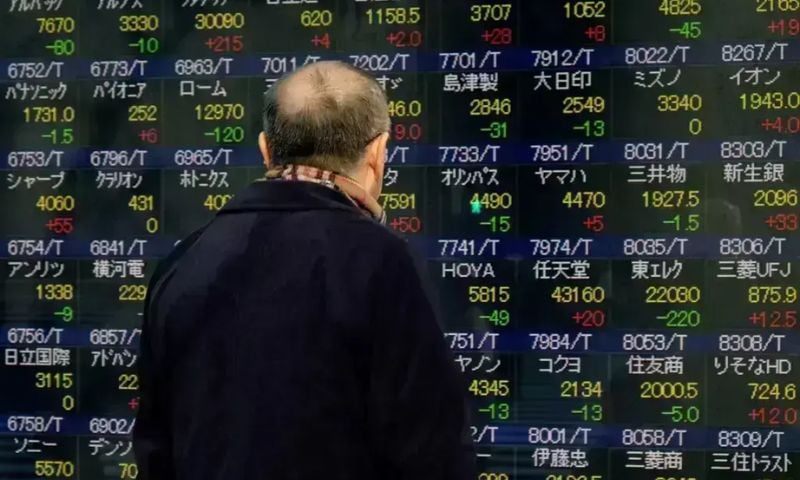
Japan’s Nikkei gained more than 1 per cent, while South Korea’s KOSPI surged nearly 3 per cent. The share market recovery was supported by improving risk appetite across regional markets.
US stock futures also edged higher ahead of a crucial earnings week for major technology companies.
Investor sentiment improved after reports that mediators had presented Tehran with a proposal for a 10-day ceasefire.
The mediations led by Pakistan were aimed at reviving diplomacy and reducing hostilities that have persisted since the war began on February 28. The prospect of renewed negotiations helped ease fears of further disruptions to global energy supplies, according to Metrobank Wealth Insights.
Statements from both the US and Iran, signalling continued indirect contacts, also reinforced investor sentiment. The US CENTCOM stated that the military has completed the current wave of strikes on Iran, strengthening the stock-recovery sentiment.
Brent crude futures fell 0.38 per cent to $88.88 per barrel in early trading after climbing to $91.42 a barrel in the previous session, their highest level since mid-June.
US West Texas Intermediate crude also eased, reflecting hopes that diplomacy could prevent a broader regional escalation.
The decline in oil prices came despite fresh concerns over regional security after Yemen’s Houthi movement announced plans for a naval blockade on Saudi Arabia. The development could further strain global energy markets and shipping routes.
ALSO READ: Asian Stocks Fall on US-Iran Impasse, AI Setbacks
Analysts said investors were focusing instead on the possibility that diplomatic channels could prevent a wider conflict.
Asian investors turn to earnings
Market participants are now turning their attention to corporate earnings, particularly from major technology firms, to gauge whether the artificial intelligence-driven rally in global equities can be sustained.

Recent results from semiconductor giants have generally been strong, but elevated valuations have increased the risk of market volatility if earnings fail to meet expectations, according to Reuters.
Meanwhile, the US dollar remained firm, and Treasury yields stayed elevated as investors continued to assess the potential inflationary effects of energy prices and the outlook for global interest rates.
As Asian stocks improved, the Japanese yen remained under pressure, keeping traders alert to the possibility of intervention by Tokyo authorities.
Although markets welcomed signs of diplomatic progress, analysts cautioned that the situation in the Middle East remains highly fluid.
Any breakdown in negotiations or renewed attacks could quickly reverse the decline in oil prices and renew pressure on global financial markets.