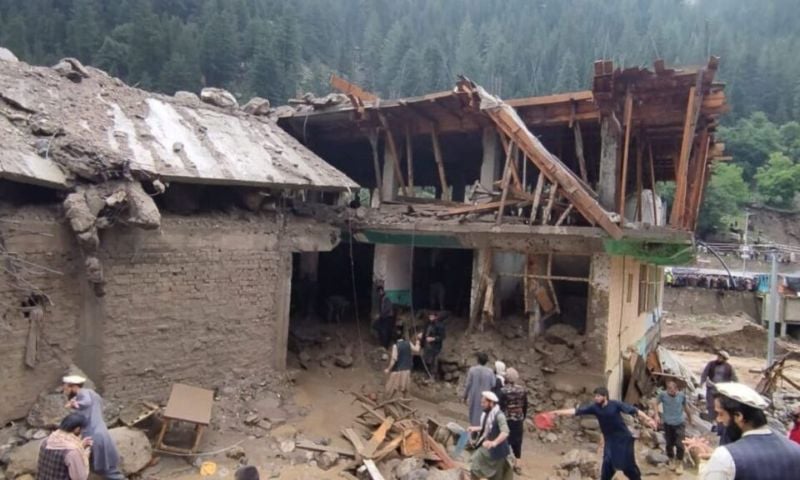



KABUL, Afghanistan: At least 20 people have been killed, more than 80 injured and over 100 remain missing after flash floods swept through Afghanistan’s eastern Nuristan province, Taliban regime officials said on Monday.
The Afghanistan National Disaster Management Authority (ANDMA) said the casualties were reported in the provincial capital, Parun, and other parts of Nuristan province.
The agency said the floods had caused severe human and financial losses and that efforts were under way to rescue the injured and recover the bodies of those killed.
Feraidon Samim, spokesperson for the Taliban regime’s governor of Nuristan, said more than 100 people, including the mayor of Parun and several government employees, remained missing following the flooding.
Afghanistan's National Disaster Management Authority (ANDMA) says that 20 people have been killed, more than 80 injured, and over 100 remain missing after severe flash floods struck Parun city, the capital of Nuristan province.
According to the authority, search and rescue… pic.twitter.com/nyjQNT4ZY6
— TOLOnews English (@TOLONewsEnglish) July 20, 2026
Earlier, Samim said nine bodies had been recovered, while both the governor’s office and ANDMA later confirmed that the death toll had risen to at least 20.
The remote mountainous province has been cut off in several areas, complicating rescue operations as authorities race to locate those missing.
Town devastated by floodwaters
Ashiqullah Safi, head of the Shpoul non-governmental organisation based in Parun, told AFP that the flooding had “completely destroyed the municipality”, including hotels and dozens of shops.
He said powerful floodwaters had left large boulders scattered across the town, while residents were searching for missing people without rescue equipment.
Afghanistan’s disaster management agency said the flooding had caused extensive damage to infrastructure and property in addition to the heavy loss of life.
Zabihullah Mujahid, chief spokesperson for the Taliban regime, also confirmed reports of fatalities and widespread property damage in Nuristan in a post on X.
Earlier this month, the head of Afghanistan’s environmental protection agency, Mawlavi Mati-ul-Haq Khalis, warned that flooding had become more frequent across the country.
Environmental problems “have severely affected the Afghan people and have contributed to a humanitarian crisis in the country”, Khalis said.
Scientists say extreme rainfall has become more frequent and more intense in many parts of the world because of human-induced climate change.
Warmer air holds more moisture, increasing the likelihood of heavier downpours and destructive flooding.