


Key Points
- Violent clashes reported after Delhi Police batton charged the protestors
- Protesters tried to reach parliament on first day of the monsoon session
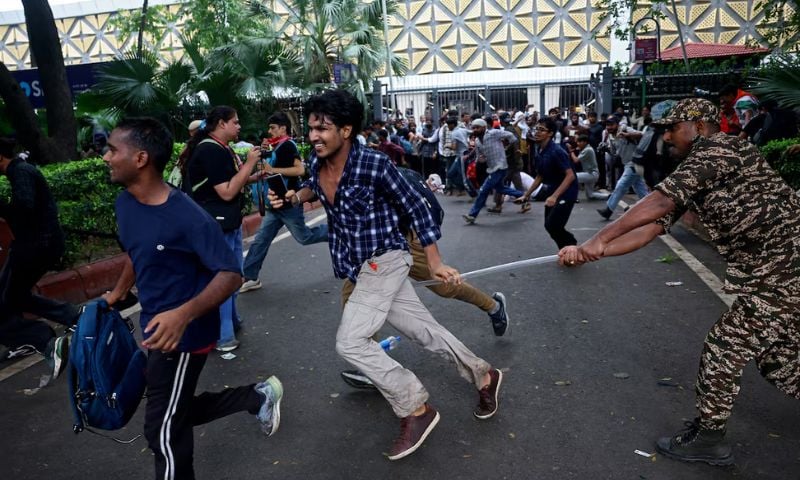
ISLAMABAD: Indian police fired tear gas and detained demonstrators in New Delhi on Monday after thousands of supporters of the youth-led Cockroach Janta Party (CJP) defied a ban on marching to Parliament.
The crackdown on marchers escalated a nationwide protest movement over examination paper leaks, youth unemployment and alleged corruption in India’s education system.
The protesters, known as the “Cockroach Movement,” are demanding the resignation of Education Minister Dharmendra Pradhan and Prime Minister Narendra Modi, accusing the government of failing to prevent repeated leaks of competitive examination papers.
Clashes erupted as marchers attempted to move towards Parliament on the opening day of the legislature’s monsoon session.
Police had sealed off parts of central New Delhi with barricades and deployed large numbers of security personnel around key government buildings after denying permission for the demonstration.
Police and ‘cockroaches’ clashes create chaotic scenes
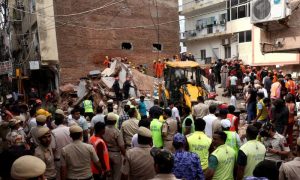
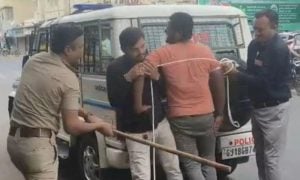
Witnesses reported chaotic scenes as security forces fired tear gas and carried out baton charges to disperse crowds seeking to breach police cordons. Several protesters were detained, although authorities did not immediately release an official arrest figure.
The confrontation marked the most serious escalation yet in a movement that has rapidly grown from an online campaign into one of the most significant youth-led protests of Modi’s third term.
Authorities had prohibited the march, citing security concerns around Parliament and other sensitive government installations. Organisers, however, insisted the demonstration would proceed, arguing that young people had exhausted other avenues to draw attention to their grievances.
ALSO READ: Indian Government Braces for Showdown Over ‘Cockroach’ Movement March
The latest unrest follows the hospitalisation of prominent activist and educator Sonam Wangchuk, who had been on a hunger strike for more than three weeks in support of the protesters. Wangchuk, 59, described the campaign as a struggle against injustice and fear, while supporters accused authorities of attempting to suppress dissent.
A Delhi court later ruled that officials acted within their authority when they transferred Wangchuk to a government hospital because of concerns over his deteriorating health.
From courtroom remark to national ‘cockroach’ movement
The Cockroach Movement traces its origins to a controversy in May 2026 when Chief Justice of India Surya Kant, during a court hearing, used the term “cockroaches” when he was criticising individuals who had allegedly entered professions using fake qualifications.
Although the remarks were not directed at students, many young Indians interpreted them as a slight against unemployed youth and job seekers.
The comments triggered widespread outrage on social media at a time when frustration over unemployment and examination scandals was already running high.
Activist Abhijeet Dipke subsequently launched the Cockroach Janta Party, deliberately adopting the term as a symbol of protest. Supporters transformed what they viewed as a derogatory label into a rallying cry against unemployment, corruption, examination paper leaks and broader dissatisfaction with the political establishment.
The movement gained momentum after a series of examination paper leaks disrupted the futures of millions of candidates preparing for highly competitive medical, university admission and government recruitment examinations.
Protesters argue that repeated breaches have undermined confidence in India’s education and recruitment systems and denied deserving candidates a fair opportunity to compete.
What began as a social media campaign quickly evolved into a nationwide movement. Organisers claim the campaign attracted more than 22 million followers on Instagram within days of its launch, helping mobilise students and young job seekers across the country.
Several opposition parties, farmer organisations and civil society groups have since expressed support for the campaign, broadening its appeal beyond its original student base.
Analysts say the demonstrations have become an important test of the Modi government’s ability to respond to growing youth frustration over jobs, educational opportunities and accountability.
Monday’s police crackdown is likely to intensify national attention on a movement that has emerged as one of the most visible expressions of youth discontent in India in recent years.