


KABUL: The Taliban police command in Afghanistan’s northeastern Badakhshan province has confirmed an overnight attack on Yaftali Sufla district, after local sources said opposition forces seized the district headquarters and took military equipment.
In a statement on Friday, the Taliban police command said district officials were on leave when “irresponsible individuals” attacked the headquarters. It said Taliban forces reached the area after the assault and launched a search operation.
The command said several people had been arrested in connection with the incident but did not identify the detainees. Local sources told Afghanistan International that several residents were detained on suspicion of involvement in the attack. Taliban activists also circulated images of detainees on social media.
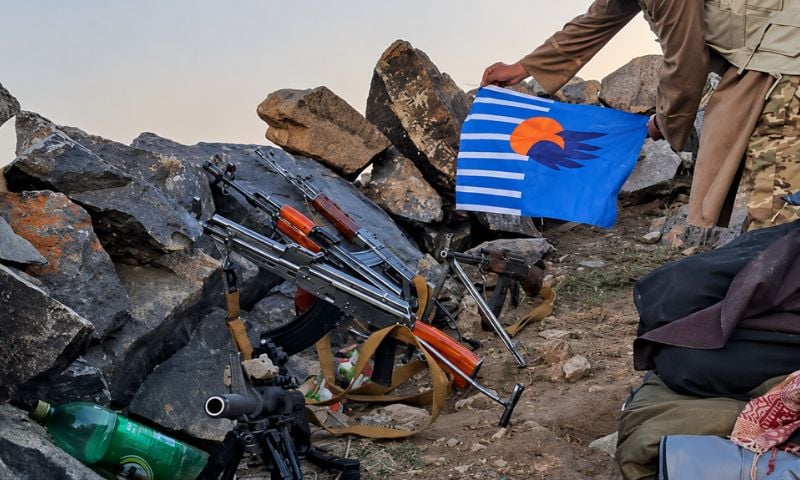
According to local sources, the attackers entered the district administration building, disarmed Taliban personnel, seized weapons, military equipment and government vehicles, and withdrew before Taliban reinforcements arrived from Faizabad, the provincial capital.
The newly emerged group Sepahiyan-e Mihan, or Patriotic Soldiers Front, carried out the attack and raised its flag over the district building.
Little is known about Sepahiyan-e Mihan. Local sources said its members include activists, former security personnel and residents of Badakhshan angered by Taliban rule. The group describes itself as an independent movement, though sources said it has contacts with former mujahideen commanders and political groups.
After the attack, Taliban forces launched house-to-house searches in Yaftali Sufla and detained civilians as well as some local Taliban members.
Some sources also said senior Taliban officials travelled from Kabul to Badakhshan to assess the security situation.
Badakhshan has increasingly become a centre of anti-Taliban armed activity, with the National Resistance Front and Afghanistan Freedom Front previously claiming attacks in the province.
The fall of Yaftali Sufla suggests growing pressure on Taliban control in Badakhshan and the possible emergence of new local resistance groups.