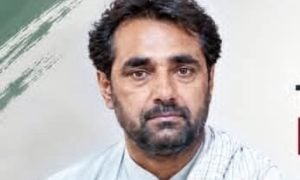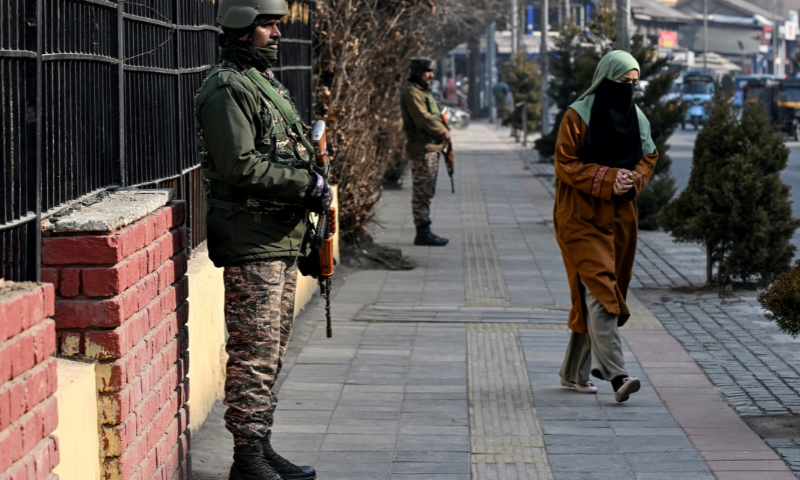
SRINAGAR: Nearly three decades after Abdul Rashid Wani disappeared while in military custody, a court has declared him dead, offering a rare legal acknowledgement of one family’s loss while highlighting the unresolved fate of thousands of people who went missing during the conflict in Indian Illegally Occupied Jammu and Kashmir (IIOJK).
Junaid Rashid was just five years old when his father vanished in July 1997. After years of legal proceedings and repeated efforts by the family to trace him, a court ordered the issuance of a death certificate, marking one of the first such rulings involving a person who disappeared during the conflict.
Court Recognises Death After Nearly Three Decades
The judgment cited a police investigation that identified the Indian army officer who had taken Wani into custody.
According to the ruling, Wani, a timber trader, was detained near his home in Srinagar while carrying cash intended to pay suppliers.
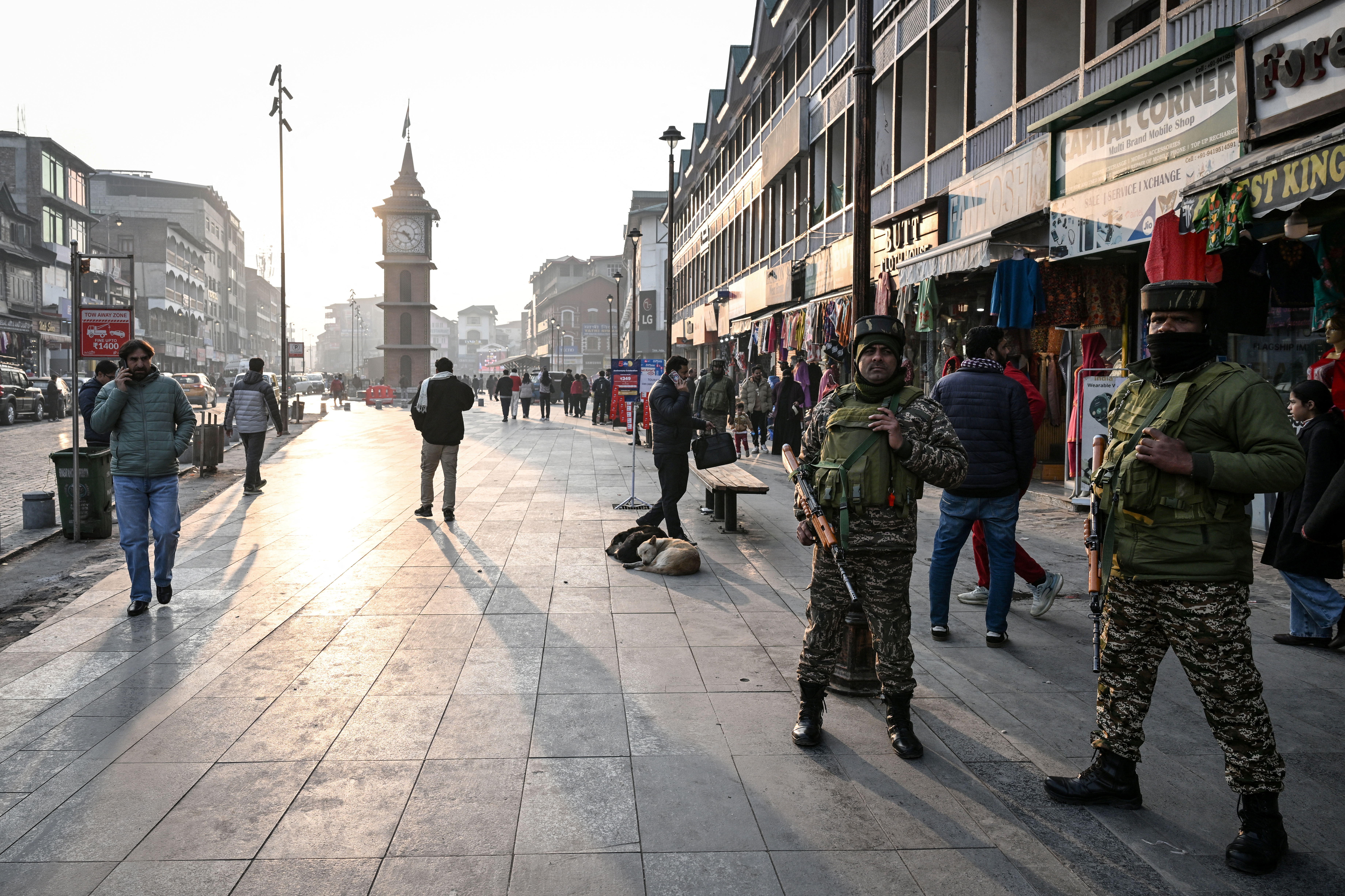
His wife and two children had been waiting for him to return so they could attend a wedding reception together.
“He never came back,” his son, Junaid Rashid, told AFP.
Citing the police inquiry, the court said the accused Indian army major had murdered Wani while he was in custody and disposed of his body.
The ruling records Wani’s date of death as the day he disappeared, but does not identify where his remains are located.
“The government has now, after 29 years, acknowledged in court that such an atrocity was done,” Rashid said.
In Indian Illegally Occupied Jammu and Kashmir, women whose husbands have disappeared but whose deaths have never been officially confirmed are commonly referred to as “half-widows.”
“If this had happened earlier, I think Kashmir would look different. Our lives would look different, and my mother’s health would be something else,” Rashid said.
Rights Groups Cite Thousands of Disappearances
Rights organisations say thousands of people had disappeared in Indian Illegally Occupied Jammu and Kashmir.
The Delhi-based People’s Union for Democratic Rights (PUDR) described Wani’s case as reflecting the broader human rights concerns arising from the conflict.
The Association of Parents of Disappeared Persons (APDP) estimates that as many as 8,000 people may have disappeared over the years. The group says some may have been abducted by militant organisations.
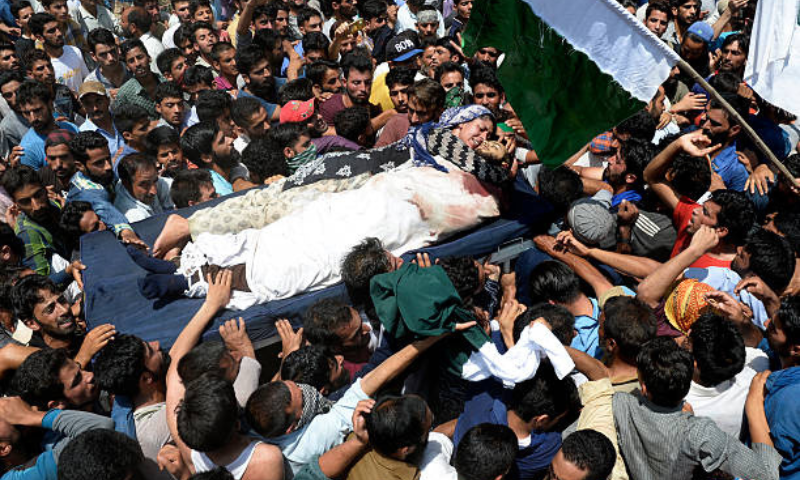
In 2009, the APDP documented what it said were around 2,700 unmarked graves in remote areas near the Line of Control.
The organisation cited residents who alleged that some of the graves contained unidentified bodies.
In Kupwara, residents showed AFP rows of graves marked only by rusting numbered metal signs.
One resident said villagers buried around 500 unidentified bodies between 1990 and 2000 after police brought them to the area.
“Later, we opened graves for relatives of missing Kashmiris,” he said, adding that some families identified the remains.
In 2011, the former Jammu and Kashmir State Human Rights Commission reported finding bodies at 38 sites identified by APDP and said official records contained identities for only 464 of the 2,730 bodies documented.
The commission said it was possible that many disappeared persons could be among those buried in unmarked graves. It also called for DNA testing, which has not been carried out.
The commission ceased functioning in 2019 after constitutional changes placed the region under direct administration by New Delhi.
Families Continue Search for Answers
Rashid said his family spent years searching for his father, even selling their home to finance the effort.
He said relatives were pressured to abandon the search and were privately told by army officers that “what has happened has happened.”
“I remember my grandmother telling a colonel at our home: ‘Just give me my son back,'” Rashid recalled.
The family continued pursuing the case through the courts after a police investigation identified the officer who allegedly ordered Wani’s detention.
“I was very young, but I still remember his face,” Rashid said.
Another family shared a similar experience.
In 2002, Jana Begum said Indian soldiers entered her home at midnight and took away her husband, Manzoor Ahmed Dar.
“It felt like a bird of prey snatched him from us,” she told AFP.
Despite protests and legal proceedings, the family says they never discovered what happened to him.
His daughter, Bilkees Manzoor, said Indian police officers later privately informed the family that he had died during interrogation, prompting them to perform symbolic funeral rites in 2016.
“I know my father is not in this world. The only justice possible is for them to tell us what exactly they did with my father and his body,” she said.
Three other families also described similar experiences to AFP but requested anonymity, saying they feared reprisals.
“Generations of our children will have to silently endure this pain and injustice,” said one elderly father whose son disappeared.
Accountability Remains Elusive
Families and lawyers say prospects for accountability remain limited.
Under Indian law, security personnel generally require prior government approval before they can be prosecuted in civilian courts for actions connected to official duties.
According to records cited by AFP, local authorities sought permission in at least 50 cases after police investigations found prima facie evidence of human rights violations, including enforced disappearances, but no approvals were granted.
India signed the International Convention for the Protection of All Persons from Enforced Disappearance in 2007, but has not ratified it.
Local police, the ministries of defence and home affairs, and the prime minister’s office did not respond to AFP requests for comment.
A senior lawyer representing families of the disappeared told AFP that “impunity is built into the system of governance in Kashmir.”
He also said restrictions introduced since 2019 had ended the monthly silent vigils once held by families in Srinagar to remember missing relatives.
“Denying even silent protests amounts to an assault on their memories,” he said.
For Rashid, the passage of time has not eased the loss.
“These things will go to the grave with us,” he said. “In the time to come, when we have children, they too will have to face what happened to us.”