ISLAMABAD: The International Cricket Council (ICC) announced on Wednesday a revamped format for the men’s 2027 one-day international World Cup that could lead to an additional fixture between arch-rivals India and Pakistan, but has drawn sharp criticism for limiting the exposure of Associate nations and creating what experts call an “utterly deranged” competition structure.
While next year’s edition in southern Africa remains a 14-team competition, the three lowest-ranked qualifiers will now take part in a preliminary round with just one of them progressing to a 12-strong main group stage.
The ICC has announced an exciting revamped format for the Men’s @cricketworldcup 2027 edition in South Africa, Zimbabwe and Namibia 🏆
More details ➡️ https://t.co/VxWr3PFpIX pic.twitter.com/RU1VnCbE9B
— ICC (@ICC) July 15, 2026
That will now feature just two pools of six, with a new ‘Super 7’ stage replacing the previous ‘Super 6’ round-robin.
Significantly, there will be no quarter-finals with the tournament denied the further jeopardy and interest that comes with an extra round of clear-cut knockout matches.
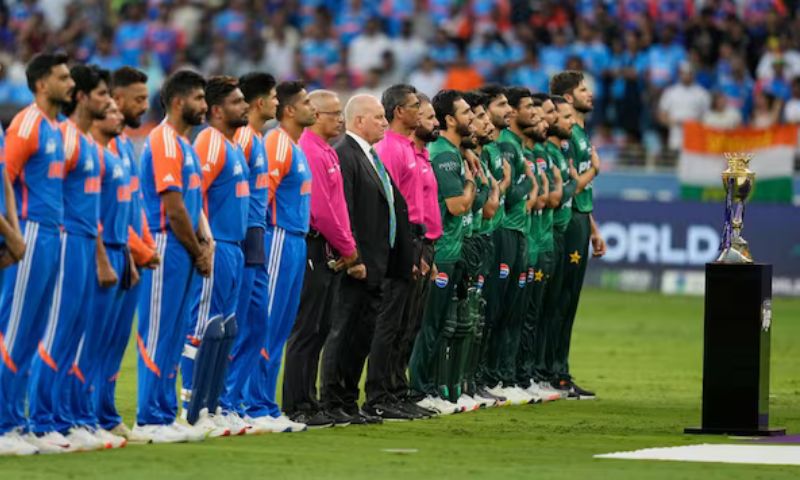
An additional team in the round-robin phase, however, increases the prospects of an extra match between India and Pakistan, the most lucrative fixture in world cricket.
Breaking || ICC Revamps Format For 2027 ODI WC
– 12 Teams To Complete In 2 Groups Of 6
– 7 Teams To Qualify To ‘Super 7’ Round
– 4 Teams From ‘Super 7’ Qualify To Semis
@karishmasingh22 shares more details with @HeenaGambhir pic.twitter.com/zDdHJeipAD— TIMES NOW (@TimesNow) July 15, 2026
India-Pakistan clashes: The commercial driver
The passion for cricket in the sub-continent, which in turn generates huge broadcast rights and commercial revenues for the ICC, makes a match between India and Pakistan the most lucrative in the sport.
But India and Pakistan no longer meet outside of ICC events, with political tensions between the bordering nations meaning they are effectively barred by their own governments from facing each other. The last bilateral series India played in Pakistan was in 2006 (Test and ODI series).
Notably, if India and Pakistan are drawn into the same group at the World Cup, they will likely face off again in the Super 7 round if things go to plan for both sides, where if they finish in the top four, there’s the possibility of them facing off in the semi-finals or the final as well.
Also Read: India to Play at Neutral Venue in 2028 Women’s T20 World Cup Hosted by Pakistan
What is the new ODI World Cup 2027 format?
What ICC called an ‘evolved competition format’ for next year’s World Cup in their press release, the bottom three of the 14 teams that qualify for the World Cup will face off in a round-robin ‘Super Series’ and the team placed at the top of the table will then move to ’round two’, which is effectively the group stage.
The 12 teams here will be divided into two groups of six, 30 matches will be played across the two groups, following which the top three sides from each group will move to the Super 7 round, where teams will face each other in a round-robin format. The seventh team in the Super 7 round will be the best fourth-placed team from the two groups.
The top-four teams at the end of the Super 7 round will then qualify for the semi-finals.
BREAKING: ICC Announces Major Revamp for 2027 Men’s ODI World Cup!🏏
Top 14 ranked teams will qualify for WC
• The bottom 3 teams will play a ‘Super Series’ :- the winner advances, while the other 2 are eliminated.
• The remaining 12 teams will be divided into 2 groups of 6.… pic.twitter.com/e63J23m7Qs
— Anamika 💊🩺 (@TheRubric_Medic) July 15, 2026
How does it limit associate team’ exposure?
As per the existing qualifying route, the top eight teams in the ICC men’s ODI rankings, plus co-hosts South Africa and Zimbabwe, will qualify directly for the World Cup, taking up 10 of the 14 spots. The remaining four spots will be filled up through the Cricket World Cup qualifiers, where two lowest-ranked full-member sides will also be in contention.
So effectively, the new format has limited the exposure that Associate teams, who will likely take spots 12 to 14, will get at the next ODI World Cup.
🚨 BREAKING: ICC has unveiled an “evolved” format for the 2027 Men’s ODI World Cup, saying it will bring greater context, competitiveness, and consequence to every match.The new structure
#CWC2027 #ODIWorldCup #ICC pic.twitter.com/x5qKdqjQJz
— 100rav X (@HereToTroll72) July 15, 2026
“An utterly deranged format’ – reaction pours in
The format change has been met with widespread condemnation from cricket journalists and experts.
“The ODI World Cup has been cut to 12 teams with a ridiculous play-in tri-series tacked on and an utterly deranged format. A travesty,” journalist Bertus de Jong, who first reported the story, wrote on X.
English journalist Matt Roller pointed out that the new format looked “very much like a way of cutting a 14-team World Cup to 12 teams by stealth,” while a journalist Ben Gardner felt that while the Associates lose their share of exposure, it was also a way to “manufacture two (or more) India-Pakistan fixtures. A total mess.”
Read Also: ICC Women’s World Cup: Pakistan-India Clash Shatters Digital Viewership Records
Another journalist Abhishek Mukherjee wondered what was the need to complicate the format, “and to do whatever it takes to humiliate the Associates. They are qualifying for the World Cup, so why do they have to qualify again?”
“Cricket fans, the ICC are laughing at your face,” wrote X user @_hypocaust, a foremost expert of the women’s game.
“Whoever thought up this World Cup format … must have been Super high,” added journalist Peter Della Penna.
The ICC Men’s @T20WorldCup 2028 will have a change in structure from the recent edition that will add to the thrill of what’s already a world-class and inclusive tournament!
More details 👉 https://t.co/qWK5Ylk0Nf pic.twitter.com/pYAcG6rd2t
— ICC (@ICC) July 15, 2026
ICC defends new structure
In a statement, the ICC insisted the new World Cup structure “creates greater context, competitiveness and consequence during the event.”
Another change approved at the ICC’s recent board meeting in Edinburgh will see the next men’s T20 World Cup in 2028 remain a 20-team competition, but with 10 sides qualifying from the group stage rather than eight.
The two best performing teams in the ‘Super 10’ will automatically secure a semi-final spot, with a new eliminator stage to decide their opponents.