


TEHRAN: Iran’s Islamic Revolutionary Guard Corps (IRGC) said on Wednesday that the Strait of Hormuz would remain closed until the United States ended what it described as its “acts of aggression,” while warning that other regional oil and gas export routes could also become targets.
The statement came as fighting between the United States and Iran, which resumed in late February, continued to disrupt energy supplies through the strategic waterway, a vital route for nearly one-fifth of global oil shipments.
According to Iranian state television IRIB, the IRGC said it had carried out attacks on US military facilities in Bahrain and Kuwait in retaliation for American strikes on Iranian territory.
“The enemy should know that now that its maritime raiders have blocked the Indian Ocean route for oil and gas exports to the world, it should also expect the closure of other oil and gas export routes that serve the interests of the United States and its allies,” the IRGC said in a statement.
It did not specify which additional routes could be targeted, but declared that “oil and gas exports from the region will either be available for everyone or for no one.”
Iranian military spokesman insisted the Strait of Hormuz would not reopen through what they described as “war, evil and American aggression.”
Brigadier General Mohammad Akraminia, spokesman for Iran’s armed forces, said respecting the rights of the Iranian people was the only path toward reopening the strategic waterway.
In a separate statement, the Guards said retaliatory military operations would continue and that the Strait of Hormuz would remain closed until Washington ended its military campaign against Iran.
US officials have repeatedly rejected Iran’s assertions that it can control navigation through the Strait of Hormuz, insisting that international shipping lanes remain open.
Trump Drops Proposed Transit Fee
Earlier on Tuesday, US President Donald Trump said he had abandoned a proposal to impose a 20 percent reimbursement fee on cargo transiting the Strait of Hormuz after Gulf states pledged to invest billions of dollars in the United States.
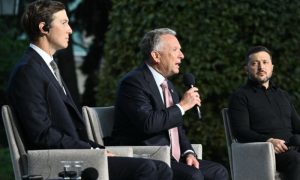
Speaking at the White House during a meeting with Iraqi Prime Minister Ali Ali-Zaidi, Trump said investment commitments from Gulf countries were preferable to charging vessels using one of the world’s busiest maritime corridors.
“I don’t like the concept of a fee, but at the same time, it’s not fair that we’re protecting this Strait for the entire world,” Trump said.
He said the United States had long shouldered the cost of securing the strategic waterway despite relying little on Gulf oil.
“The Gulf states are going to invest a tremendous amount of money into the United States, and that was very satisfactory to me. I actually think it’s much better,” Trump said, adding that “nobody should be able to charge a fee for the Strait.”
In a Truth Social post earlier on Tuesday, Trump announced that he had replaced the proposed transit fee with what he described as “massive” Gulf investment agreements that would support American manufacturing and jobs.
He also declared that the Strait of Hormuz was “open to ALL ship traffic except for Iran” and announced a renewed US naval blockade targeting vessels travelling to or from Iranian ports or carrying Iranian cargo.
Washington Blames Tehran for Escalation
Trump accused Iran of reigniting the conflict after the collapse of the Pakistan-brokered Islamabad Memorandum of Understanding (MoU), which had temporarily halted hostilities.
“I gave them a chance. I wanted to give them a chance at making a deal,” Trump said. “They shot first, and that was a big mistake.”
The United States resumed its naval blockade of Iranian ports on Tuesday, with US Central Command (CENTCOM) saying the move was part of efforts to increase pressure on Tehran following a third consecutive night of strikes against Iranian military targets.
Iranian state media reported explosions in several cities, including Bushehr, home to Iran’s only operational nuclear power plant.
Shipping Falls, Oil Prices Rise
Commercial traffic through the Strait of Hormuz remained sharply reduced, with MarineTraffic data showing only four vessels crossing the strategic waterway since Tuesday morning.
Brent crude rose 3.8 percent to $86.48 a barrel, while US West Texas Intermediate gained 3.1 percent to $80.57, reflecting renewed concerns over global energy supplies.
China Calls for Safe Navigation
China urged both Washington and Tehran to restore safe passage through the Strait of Hormuz.
“Restoring normal and safe passage through the strait as soon as possible is a shared aspiration of the international community,” Chinese foreign ministry spokesperson Lin Jian said.
Beijing said it would continue efforts to help de-escalate the crisis.
Regional Maritime Attacks
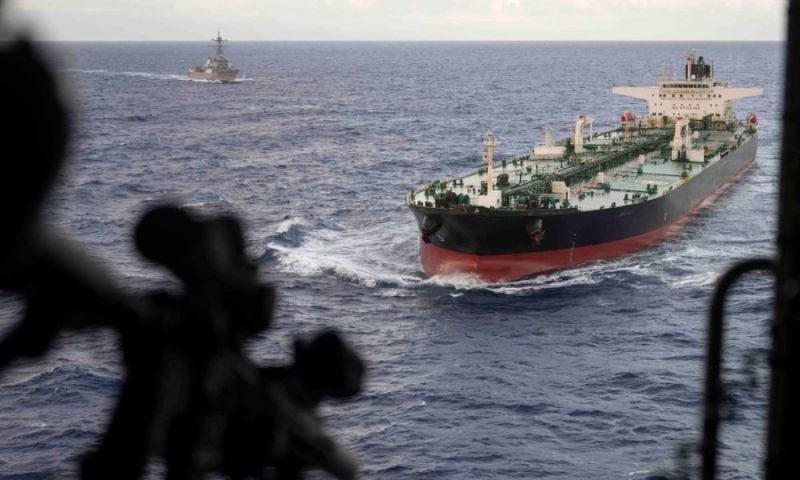
The deteriorating security environment has been underscored by a series of attacks on commercial shipping.
Norwegian shipping company Stolt-Nielsen said its chemical tanker Stolt Magnesium caught fire after an explosion caused by what it described as an unidentified external device while sailing off the coast of Oman.
Separately, two UAE crude oil tankers, Mombasa B and Al Bahyah, were struck by Iranian cruise missiles while transiting the Strait of Hormuz, according to UAE authorities.
The UAE Ministry of Defence said one Indian crew member was killed and eight others were injured. The ministry condemned the attack as a “blatant assault” and a serious violation of international law.
US Continues Military Operations
CENTCOM said US forces had completed a third consecutive night of operations targeting Iranian military facilities in Bushehr, Chah Bahar, Jask, Konarak, Abu Musa and Bandar Abbas.
The strikes targeted coastal defence systems, missile sites, drone facilities and maritime assets that Washington said had been used to threaten commercial shipping.
More than 50,000 US military personnel remain deployed across the Middle East, CENTCOM said, adding that American forces remained ready to respond to further escalation.
Trump said US forces were “hitting them very heavy” and reiterated that Washington intended to maintain its naval blockade directed solely at Iran.
Iran responded by warning that it would not allow the United States to interfere in the management of the Strait of Hormuz.