ISLAMABAD: Pakistan and the United States have made significant progress in negotiations on a reciprocal trade agreement following two days of talks in Washington, raising expectations of an early conclusion to a deal aimed at strengthening bilateral economic ties.
According to Pakistan’s Foreign Office, negotiations on the Pakistan–United States Agreement on Reciprocal Trade were held on 9 and 10 July in a constructive and cordial atmosphere, with both sides making notable advances towards resolving outstanding issues.
Foreign Office spokesperson Tahir Andrabi said the discussions helped narrow differences and build greater consensus, reflecting the commitment of both countries to finalise the agreement at the earliest opportunity.
Pakistan’s delegation was led by Commerce Secretary Jawad Paul, who described the negotiations as positive and welcomed the substantial progress achieved during the meetings.
The delegation also included Secretary for Overseas Pakistanis and Human Resource Development Nadeem Chaudhary, Joint Secretary (Tariff Policy) Mohammad Ashfaq and officials from the Ministry of Foreign Affairs, while representatives of other ministries participated virtually.
The talks centred on expanding bilateral trade, promoting investment, improving market access and strengthening commercial cooperation between the two countries. Both sides also explored ways to create a more favourable environment for trade and long-term economic engagement.
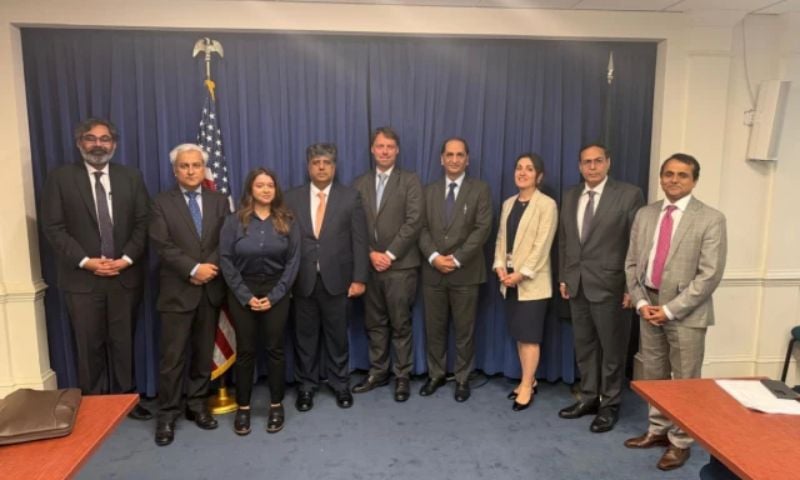
Photographs released after the meetings showed officials from Pakistan and the United States posing together, with the Pakistani delegation presenting a Pakistan-made football to American representatives, symbolising one of the country’s flagship export products.
The latest negotiations come as Islamabad and Washington seek to broaden economic cooperation beyond traditional trade. The United States remains Pakistan’s largest single-country export market, while recent engagements have also focused on investment opportunities, critical minerals and broader commercial partnerships.
Official US trade data indicate that total bilateral trade in goods and services between the two countries was valued at approximately $10.1 billion in 2024. Merchandise trade reached $8.7 billion in 2025, including $3.3 billion in US exports to Pakistan and $5.4 billion in imports from Pakistan.
Business leaders in Pakistan have welcomed the momentum in the negotiations, expressing optimism that a reciprocal trade agreement could improve access to the lucrative US market for Pakistani exporters.
Lahore Chamber of Commerce and Industry President Faheem Ur Rehman Saigol said the agreement could particularly benefit key export sectors such as textiles, garments, surgical instruments, sports goods and information technology services.
He stressed that Pakistan should use its positive diplomatic engagement and strategic importance to secure stronger economic outcomes, including increased US investment and the removal of non-tariff barriers affecting Pakistani exports.
The negotiations also take place against the backdrop of changing US trade policies. Earlier this year, Washington proposed a 29 per cent tariff on Pakistani goods before reducing it to 19 per cent following discussions with Pakistani officials.
Subsequently, the US Supreme Court ruled that the International Emergency Economic Powers Act did not authorise the President to impose broad tariffs under emergency powers. The administration later invoked Section 122 of the Trade Act of 1974, introducing a temporary global tariff of 10 per cent for up to 150 days.
Pakistan is also responding to a Section 301 investigation by the Office of the United States Trade Representative concerning alleged forced labour-related trade practices. Islamabad has submitted detailed responses to US authorities, including an additional submission ahead of the latest round of negotiations.
The outcome of the Washington talks is being viewed as an encouraging step towards a broader trade partnership that could enhance market access, boost exports, attract investment and strengthen long-term economic cooperation between Pakistan and the United States.