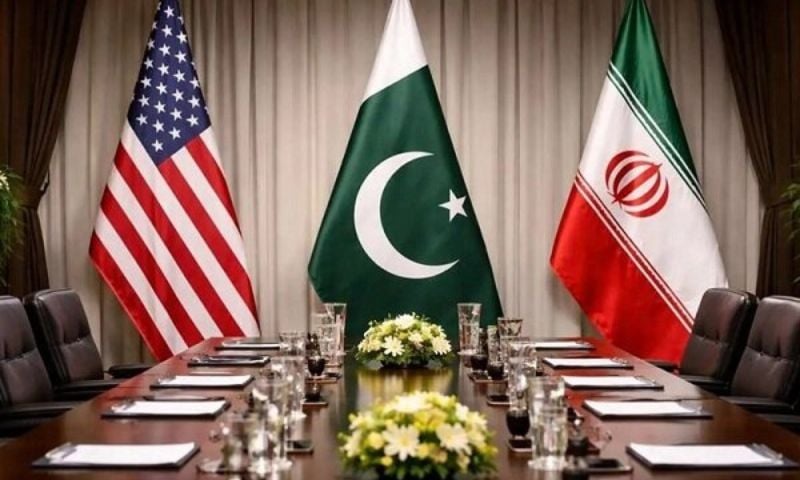
TEHRAN, Iran: Mediator Pakistan has intensified diplomatic efforts to de-escalate renewed military escalation between the United States and Iran and bring both sides back to negotiations under the Islamabad Memorandum of Understanding (MoU) framework to permanently end the conflict.
The diplomatic initiative comes after a fresh exchange of military strikes between Washington and Tehran following an Iranian missile attack on commercial vessels in the Strait of Hormuz.
The Islamabad MoU was signed on June 18 by US President Donald Trump, Iranian President Masoud Pezeshkian and Prime Minister Shehbaz Sharif after Pakistan brokered a ceasefire between Washington and Tehran.
Under the Islamabad MoU, the US and Iran committed to halt military operations, reopen the Strait of Hormuz to commercial shipping and negotiate a comprehensive agreement covering Iran’s nuclear programme, US sanctions and a permanent ceasefire within 60 days.
Pakistan’s Chief of Defence Forces and Chief of Army Staff Field Marshal Syed Asim Munir held a telephone conversation with Iranian Foreign Minister Abbas Araghchi on Thursday evening, Iran’s state-run IRNA news agency reported.
During the telephone conversation, Field Marshal Munir and Araghchi discussed the latest regional developments and Pakistan-mediated Islamabad Memorandum of Understanding (MoU) between the US and Iran, according to the IRNA news agency.
1/2
FM @araghchi held a phone call with Pakistan’s Chief of Army Staff, Field Marshal Asim Munir, to discuss the latest regional developments. He condemned the U.S. military attacks on #Iran as clear violations of the UN Charter and the Islamabad Memorandum. #Pakistan pic.twitter.com/1iNlcuhQ7g— Government of the Islamic Republic of Iran (@Iran_GOV) July 9, 2026
Meanwhile, Anadolu agency reported, citing official sources, that Pakistan and Qatar have made fresh contacts with the US and Iran to halt further military strikes and return to negotiations “as per agreement”.
“Pakistan, together with Qatar, is in touch with Washington and Tehran to persuade the two sides to end hostilities and return to negotiations as per the agreement,” Anadolu quoted a source close to the mediation process.
“What is happening right now is not unexpected as the issues between the two sides are chronic and highly complex,” the source said as quoted by Anadolu.
“However, Pakistan is confident that the ongoing situation will not escalate into a full-fledged war,” the source said, adding: “Both sides fully understand that a full-scale war is not in their interest.”
US, Iran trade strikes
On Thursday, the US and Iran traded fresh military strikes for a second consecutive day, with Tehran launching missile and drone attacks on US military bases in Bahrain, Jordan and Kuwait after Washington carried out another wave of strikes on Iranian military targets.
The latest exchange comes less than 48 hours after the US launched major strikes on Iranian military infrastructure in response to attacks on commercial shipping in the Strait of Hormuz.
The US Central Command said they had struck approximately 90 military targets, including missile and drone storage as well as military logistics sites along Iran’s coastline.
On Wednesday, President Donald Trump declared that the June 17 ceasefire was “over”, but later signalled he remained open to diplomacy, saying Iran was seeking renewed negotiations.
Iranian state media reported explosions in Sirik and the strategic port city of Bandar Abbas, while warplanes were heard over Kish Island. Further explosions were reported in Konarak and Chabahar, with parts of the affected areas losing electricity, according to the official IRNA news agency.
Pakistan urges US and Iran to exercise restraint
Pakistan urged the US and Iran on Wednesday to exercise restraint and uphold the Islamabad MoU, saying that a renewed conflict is in no one’s interest.
“Pakistan urges all sides to uphold their respective commitments under the Islamabad Memorandum of Understanding (MoU),” the foreign office said in a statement, which also called on “all parties to exercise restraint.”
“Pakistan expresses its deep concern at the escalation in tensions in the region. A renewed conflict is in no one’s interest,” the foreign office stated.
“Pakistan calls on all parties to exercise restraint and refrain from any actions that may further undermine regional peace and stability. There is no alternative to continued engagement, dialogue and diplomacy to achieve the shared goal of peace in the region,” the foreign office added.
Pakistan urged all sides to uphold their respective commitments under the Islamabad MoU, which remains an enduring foundation for understanding, mutual respect and shared prosperity for the region and beyond.
“Pakistan remains ready to continue playing its role in this regard,” the foreign office said.
Islamabad MoU framework
The Islamabad MoU was signed on June 18 by US President Donald Trump, Iranian President Masoud Pezeshkian and Prime Minister Shehbaz Sharif after Pakistan brokered a ceasefire between Washington and Tehran.
Under the Islamabad MoU, the US and Iran committed to halt military operations, reopen the Strait of Hormuz to commercial shipping and negotiate a comprehensive agreement covering Iran’s nuclear programme, US sanctions and a permanent ceasefire within 60 days.
Pakistan and Qatar subsequently co-mediated the first round of high-level negotiations in Lucerne, Switzerland, on June 21.
The talks were attended by US Vice President JD Vance and Iranian Parliament Speaker Mohammad Bagher Ghalibaf.
The next round of negotiations is intended to advance the Islamabad MoU framework. The technical talks were delayed because of the state funeral ceremonies for Iran’s late Supreme Leader, Ayatollah Ali Khamenei.
The planned meeting follows indirect technical discussions held in Doha earlier this week.
Pakistan eyes US-Iran peace deal in two months
Last week, Pakistan’s Prime Minister Shehbaz Sharif expressed optimism that the US and Iran could reach a lasting peace agreement within the next two months.
PM Sharif said technical-level negotiations between the US and Iran were progressing under the Pakistan-brokered Islamabad MoU between Washington and Tehran.
In an interview with TRT World during his official visit to Istanbul, Prime Minister Sharif said Pakistan would continue to facilitate the peace process after helping mediate the ceasefire agreement signed between Washington and Tehran last month.
“We hope and pray to Allah Almighty that long-lasting peace will come in place, Inshallah, in the next two months or so,” the prime minister said.
Prime Minister Sharif acknowledged that mediation between the United States and Iran had been a difficult and complicated task. “While it was a very noble undertaking, at the same time it was a very difficult and complicated task.”
PM Sharif said Pakistan had maintained an honest and balanced approach while engaging Washington and Tehran throughout the negotiations.
The prime minister also thanked Turkiye, Saudi Arabia, Qatar and Egypt for supporting the diplomatic initiative for regional peace. “Without their support, it wouldn’t have been possible,” he said.
Prime Minister Sharif noted that the Islamabad Memorandum of Understanding had now been signed and technical discussions had begun following the high-level negotiations in Switzerland.
Pakistan continues diplomatic efforts
Pakistan is the principal mediator between the US and Iran after it secured a ceasefire on April 08 and hosted the highest level of talks between the two nations on April 12 and 13 in Islamabad.
Pakistan, which brokered the ceasefire and has continued to mediate between Washington and Tehran, has urged all parties to honour the agreement.
Pakistan’s Deputy Prime Minister and Foreign Minister Ishaq Dar last week stressed the need for all parties to the Middle East conflict to uphold the ceasefire agreement.
On June 18, Prime Minister Shehbaz Sharif, President Donald Trump and Iranian President Masoud Pezeshkian signed the Islamabad Memorandum of Understanding to end hostilities and launch further negotiations.
On June 21, Pakistan and Qatar mediated the high-level US-Iran talks in Switzerland.
The first round of Pakistan and Qatar mediated US-Iran talks, led by US Vice President JD Vance and Iran’s Parliament Speaker Mohammad Baqer Ghalibaf, was held in Switzerland a week ago, and Washington waived sanctions on Tehran.
After the talks, Pakistan and Qatar announced significant progress in diplomatic efforts between the US and Iran following the conclusion of the first round of high-level talks in Switzerland.