CARACAS, Venezuela: Nearly 6.8 million people could be affected by the twin earthquakes that struck Venezuela this week, the United Nations said on Saturday, as international rescue teams continued searching for survivors and the death toll climbed to more than 900.
The International Organization for Migration (IOM), the UN migration agency, said analysis of population and damage data indicated that up to 6.76 million people may have been affected by the powerful earthquakes that struck the country on June 24.
The estimate includes up to two million people in the capital, Caracas, and highlights the potentially vast humanitarian impact of the disaster, the agency said.
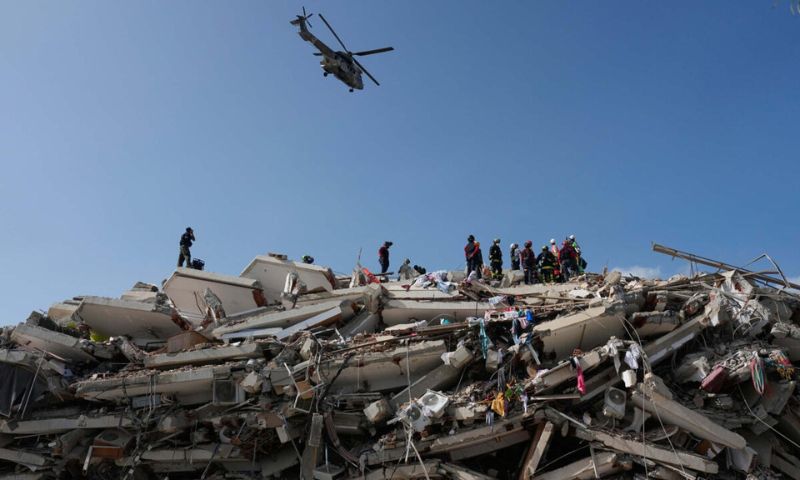
The earthquakes, measuring magnitudes 7.2 and 7.5, devastated parts of northern Venezuela on Wednesday. Entire buildings collapsed in the coastal city of Catia La Mar and across La Guaira state, north of Caracas.
The national death toll has reached at least 920, while thousands remain trapped or missing beneath the rubble, according to Venezuelan authorities and UN officials.
UN emergency relief chief Tom Fletcher told AFP on Friday that more than 50,000 people remained missing.
UN warns of humanitarian crisis
The IOM said preliminary satellite mapping conducted with Microsoft’s AI for Good Lab found that 31.5 percent of buildings in Catia La Mar had sustained damage.
The agency said the assessments were helping humanitarian workers identify the worst-hit communities and prioritise life-saving assistance while field assessments continued.
“The first hours and days after a disaster are decisive. They shape everything that follows,” IOM Director General Amy Pope said in a statement.
Pope said emergency relief supplies that had been pre-positioned in Caracas were being deployed while the agency worked with the Venezuelan government and humanitarian partners to provide emergency shelter, essential supplies and protection services.
Warning that displacement would continue to rise in a country already facing a humanitarian crisis before the earthquakes, Pope urged the international community to act swiftly.
She said families who had lost everything urgently required shelter, clean water, sanitation, healthcare and protection support.
The IOM appealed for increased international assistance, saying timely humanitarian aid would save lives, ease suffering and help communities begin the long recovery process.
International rescue effort
The UN’s Global Disaster Alert and Coordination System said at least 20 international urban search-and-rescue teams had already been deployed to Venezuela.
The teams include nine classified as heavy, eight as medium and three as light. They come from countries including the United States, Switzerland, France, Britain, Spain, Germany, Italy, the Netherlands, Turkiye, Qatar, Jordan, Chile, Colombia, Ecuador, Lithuania and the Czech Republic.
The UN said another 32 rescue teams were mobilising, bringing the expected total to 52 teams comprising more than 2,265 rescuers and 140 search dogs.
According to Venezuelan officials, more than 1,600 foreign rescue personnel had arrived aboard 17 flights by Saturday, with another 25 flights expected over the next 24 hours.
Foreign Ministry official Oliver Blanco thanked the international community for its solidarity, saying the assistance reflected global support during a period of uncertainty for Venezuela.
Govt focuses on rescue operations
Acting President Delcy Rodríguez said the government’s top priority remained rescuing survivors trapped beneath collapsed buildings.
She said electricity had been restored to around 60 percent of La Guaira state and authorities expected further progress once a damaged transmission tower was repaired.
Rodríguez said 14,000 military and police personnel had been deployed across La Guaira to maintain security and implement public health measures.
She also thanked countries providing international assistance and said rescue teams from ten more countries were expected to arrive.
“The most important task and our priority is the rescue of people who are still alive,” she said during a televised address, expressing hope that more survivors would be found.
Authorities have also tightened access to La Guaira after closing the main road linking the state with Caracas to ensure emergency vehicles could move freely.
Missing persons and infrastructure damage
The United States Geological Survey estimated that fatalities from the earthquakes could eventually exceed 10,000, potentially making the disaster one of Latin America’s deadliest in the past century.
The UN estimated direct economic losses at approximately US$6.7 billion.
Power outages continue near the epicentre around Morón and parts of La Guaira, although electricity has gradually been restored elsewhere.
Aid workers warned that continuing aftershocks were complicating rescue operations and increasing risks for emergency responders.
Loyce Pace, the Red Cross’ director for the Americas, told CNN that persistent tremors had forced rescue teams to exercise extreme caution when entering damaged buildings.
“There have been rolling tremors every time we’re on the phone with my team down there,” she said, adding that many residents remained afraid to return to their homes because of concerns over structural safety.
Pace said temporary shelters were being established, but it would take time before everyone could be accommodated.
She added that many Red Cross volunteers had themselves lost homes or had family members missing, yet had immediately joined the relief effort despite the emotional toll.