


ISLAMABAD: As the Taliban approaches its fifth year in power, June 2026 has witnessed a marked escalation in its overall pattern of repression and state-enforced control across Afghanistan. Observers describe an increasingly aggressive posture by the regime, reflected in a growing wave of coercive measures targeting dissent and civil liberties.
According to Afghan news outlet Afghanistan International, the Taliban have turned Afghanistan into a vast prison for women and girls over the past five years. The report says Taliban policies continue to threaten the dignity, safety, and future of Afghan women and girls.…
— Sabih Ul Hussnain (@SabihUlHussnain) June 20, 2026
Global reports point to a violent crackdown on women-led protests in Herat, alongside the regime’s fifth public execution since taking control in 2021, underscoring what critics characterise as a deepening reliance on intimidation and force to maintain authority.
The situation has further escalated following a controversial marriage decree that UN experts say could effectively sanction child marriage and trap women in abusive relationships. These developments have triggered widespread condemnation from the international community, raising renewed concerns over human rights conditions in the country.
Herat crackdown: Taliban forces open fire on peaceful protesters
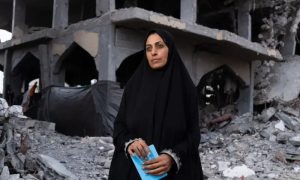
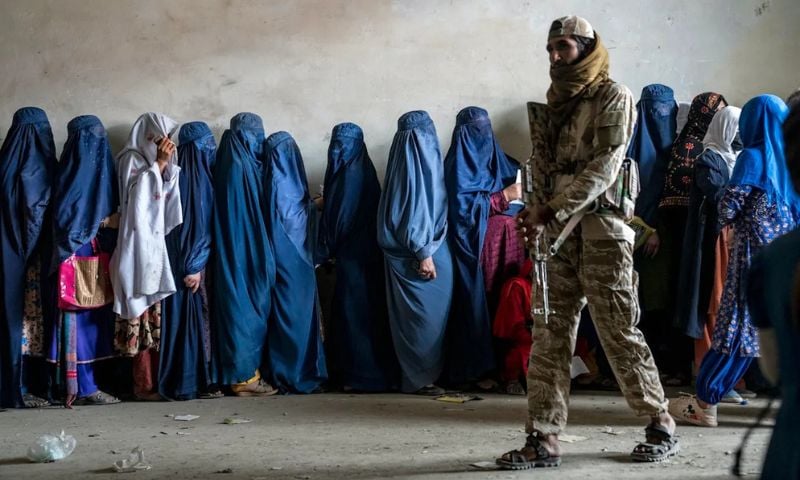
In one of the most violent confrontations since the Taliban regained control, security forces opened fire on demonstrators in Herat on June 9. The violence followed the arrest of at least 30 women by the morality police over the preceding weekend for alleged violations of the mandatory dress code.
The protest, a rare display of public dissent in Taliban-controlled Afghanistan, drew approximately 100 to 150 people, including both men and women, who gathered in the Hazara-populated Jabr-eil district chanting for education, work, and freedom. The Taliban responded with lethal force.
In Jebrail, Herat, the Taliban’s morality police publicly humiliated and assaulted a young man over his clothing. This comes while the informal ambassador of the Taliban, @realZalmayMK, in the U.S. is deceiving the world by claiming that the Taliban have changed. pic.twitter.com/j7qMcmCfuR
— Ahmad Sharifzad (@AhmadSharifzad) April 29, 2026
UN confirms fatalities and injuries
UN human rights experts confirmed at least two fatalities, including a 12-year-old boy struck by security forces’ gunfire, while more than 20 others sustained injuries from bullets and beatings. A local pharmacist reported treating multiple gunshot wounds, and a nearby clinic turned away injured protesters out of fear of Taliban reprisals.
UN Women expressed deep concern, stating that the arrests have intensified fear and anxiety among women and girls throughout Afghanistan. The independent UN experts noted that while some protesters threw stones, such actions did not justify the use of lethal force.
The Taliban dismissed reports of arrests as unfounded and defended the operation, asserting that wearing the hijab is a divine obligation they are duty-bound to enforce. Herat police officials characterised the demonstrators as rioters and warned that individual freedoms must be exercised within the boundaries of Shariah law.
Georgette Gagnon, the UN’s deputy special representative in Afghanistan, cautioned that the detention of women carries significant stigma, potentially exposing them to further violence and isolation within their families and communities even after release.
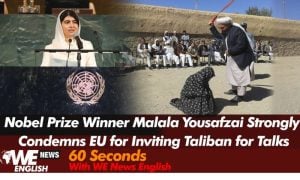
A teacher was whipped by Taliban terrorists because “he dared do teach Afghan girls.”
women are:
❌Banned from education/school
❌ Forced to wear Niqab
❌Not allowed outside without male guardian
❌Banned from public places
❌Prohibited from working. pic.twitter.com/6NLTbgGeqw— Azat (@AzatAlsalim) June 23, 2026
Public execution and floggings continue
In a stark display of state-sanctioned violence, the Taliban carried out its fifth public execution since 2021, shooting convicted murderer Nazar Mohammad five times in a stadium in Shibirghan, Jawzjan province, before thousands of spectators, including children. The execution received approval from Afghanistan’s highest courts and Taliban Supreme Leader Mullah Haibatullah Akhundzada.
Earlier in June, two additional men were publicly executed in Ghazni province under similar circumstances. Meanwhile, two individuals convicted of adultery received 35 lashes each in Balkh province, and two others were flogged with 30 lashes each in Laghman province for alleged immoral acts.
UN Special Rapporteur Richard Bennett has consistently condemned such punishments as inhuman, cruel, and contrary to international law. The UN has repeatedly urged the Taliban to cease public executions, lashings, and stonings.
New marriage decree licenses child marriage, UN experts warn
A decree issued by the Taliban’s Ministry of Justice in April 2026 concerning spousal separation has drawn sharp criticism from UN human rights experts, who warn it will both enable child marriage and prevent women from leaving abusive relationships.
The decree appears to undermine a December 2021 directive that required consent from an adult woman for marriage. Several provisions now permit a child to seek separation upon reaching puberty, indicating a failure to protect children from being married in the first place. This leaves girls vulnerable to years of physical, psychological, sexual, and economic harm before they can seek relief.
While women are banned from education, the male-only universities aren’t looking that good either.
Under T@liban, the glorification of militancy is underway through stage dramas.
This is on top of a new curriculum that already pushes radical ideologies to brainwash the innocent… pic.twitter.com/itEFIJcYaC
— MD Umair Khan (@MDUmairKh) June 11, 2026
Discriminatory provisions undermine women’s rights
The decree lists various grounds for separation, including incompatibility, disappearance, obstinacy, and religious differences, none of which are clearly defined. Proving domestic violence is extremely difficult, especially given another decree that permits physical discipline of wives by husbands.
UN experts stated that while the decree may superficially appear to protect women and girls by establishing national guidelines, in practice its provisions are undermined by fundamentally discriminatory treatment of women and girls. They called on the Taliban to reverse these discriminatory measures.
In Afghanistan, the Taliban government has banned most women from working and severely restricts their ability to earn or manage money independently. As a result, many widows, unmarried women, and those without male guardians are left with few options for survival and must often… pic.twitter.com/yf8GcGzYu0
— ceepee (@ceepee07) June 23, 2026
Women’s entrepreneurship: A diminishing hope
Despite systematic repression, Afghan women have increasingly turned to entrepreneurship as one of the few remaining paths to economic survival. Over 10,000 Afghan women now hold business licenses, a tenfold increase over the past five years, with an estimated 120,000 more working without licenses, according to the Afghanistan Chamber of Commerce and Industry and the World Bank.
However, this economic activity masks shrinking opportunities. Women who once aspired to become lawyers, engineers, or university professors have been channeled into carpet weaving, cosmetics, or vocational training, barred from government employment and most non-profit work. They also cannot operate beauty salons, study midwifery or nursing, or communicate with male clients, suppliers, or banking officials.
As of 2024, less than 7 percent of Afghan women were employed, according to the UN Development Programme. The June arrests of women business owners by the morality police have further heightened fears.
“The only remaining hope for women in Afghanistan is business,” said Behnaz Saljughi, a representative for female business owners in Herat.
Taliban have legalised the beating of wives as long as no bones are broken (halki phulki maar), as it is mentioned in Sharia Law and preached by most leading scholars. pic.twitter.com/6j8kKeGVki
— MD Umair Khan (@MDUmairKh) June 13, 2026
International community responds with condemnation
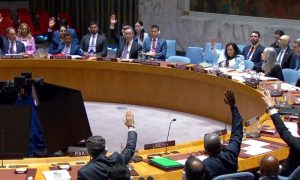
The international community has responded with growing alarm. The UN Security Council adopted a resolution on June 16 demanding the Taliban reverse restrictions on women and extending UNAMA’s mandate, amid mounting evidence that the regime is intensifying rather than moderating its oppression.
UN experts emphasised that as the de facto authority in Afghanistan, the Taliban must comply with the international human rights treaties to which Afghanistan is a party. They stressed that equality, peaceful assembly, freedom of expression and movement, and protection from arbitrary detention are fundamental rights essential to restoring public confidence and preventing further deterioration.
Analysts: Repression born of insecurity
Mohammad Osman Tariq, a religious scholar and deputy head of the Afghan Ulama Research Council, told DW that the latest measures suggest anxiety within the Taliban system. He noted that the regime is tightening control because it views dissent as a threat to its rule and existence, and understands that ultimately, a regime of oppression will collapse.
Rights activist Shinkai Karokhail observed that the Taliban’s repression stems from its failure to govern, making women an easy and soft target against whom they can use force to silence opposition.
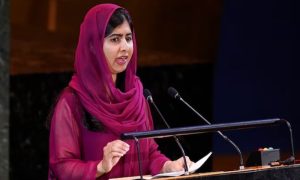
“ Europe must not legitimise a regime responsible for one of the worst human rights crises in the world. Any engagement with the Taliban must begin and end with respect for the rights of Afghan women and girls.”-@Malala #RecogniseGenderApartheidIn🇦🇫#ACrimeAgainstHumanity https://t.co/skCxTscIQi
— Ziauddin Yousafzai (@ZiauddinY) June 22, 2026
Many countries and international blocs have consistently responded to the Taliban’s rule in Afghanistan with concern, non-recognition, and calls for policy change, especially regarding human rights, women’s rights, and humanitarian access.
United Nations (UN): The UN has repeatedly criticised restrictions on women and girls, especially bans on education and employment, and has called for inclusive governance and respect for human rights.
The Security Council and humanitarian agencies continue to urge unimpeded aid access and warn about Afghanistan’s worsening humanitarian crisis.
United States: The U.S. does not recognise the Taliban government and has imposed sanctions on key leaders. It continues to condition any major normalisation on human rights improvements, particularly for women and minorities, while also funding humanitarian assistance through international agencies.
European Union (EU): The EU maintains a policy of non-recognition while providing large-scale humanitarian aid. It has condemned restrictions on women’s rights and emphasised that political engagement is tied to progress on human rights and inclusive governance.
United Kingdom: The UK similarly does not recognise the Taliban and has taken a critical stance, focusing on humanitarian support, refugee protection, and sanctions against individuals linked to repression and rights abuses.
Regional countries (Pakistan, China, Iran, Russia, Central Asia): These countries have taken more pragmatic approaches. While none have formally recognized the Taliban government, they maintain diplomatic contact. Their priorities are regional stability, border security, trade, and counterterrorism. China and Russia have engaged more directly on economic and security issues, while Pakistan and Iran focus heavily on border management, refugees, and security concerns.
A deepening humanitarian crisis
As the Taliban approaches five years in power, the human toll continues to mount. Approximately 21.9 million people in Afghanistan require humanitarian assistance in 2026, while 17.4 million face acute food insecurity.
The regime’s restrictions have crippled aid operations, with at least 20 Afghan humanitarian workers linked to the UN arrested in June alone, some for wearing beards deemed too short.
The people of Afghanistan, Besmillah Taban, a former senior Afghan police official, wrote in The Diplomat, are asking the world: how long and to what extent must the Taliban continue internal repression and support for terrorist groups before the international community recognizes the real scale of the threat?