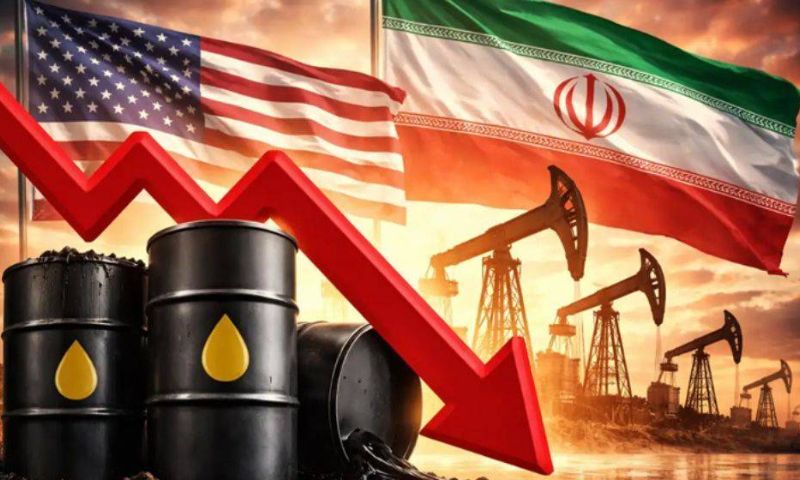
ISLAMABAD: Oil prices at the global market extended losses on Monday after a Pakistan- and Qatar-mediated joint statement confirmed a 60-day roadmap between the United States and Iran, raising expectations that Iranian crude could gradually return to global markets, adding to global supply.
Brent crude moved further lower in early trading as the market extended a recent downtrend driven by easing geopolitical risk premiums and growing speculation that sanctions relief or export arrangements could allow Iranian oil to re-enter supply chains.
The joint statement outlines a structured diplomatic process to reach a comprehensive agreement within 60 days, along with measures to reduce regional tensions and strengthen maritime security in the Strait of Hormuz, a key global oil transit route.
🔊PR No: 1️⃣5️⃣1️⃣/2️⃣0️⃣2️⃣6️⃣
Joint Statement by the State of Qatar and the Islamic Republic of Pakistan Regarding the Conclusion of Lake Lucerne Summit, First High-Level Committee Meeting with Participation of the United States of America and the Islamic Republic of Iran pic.twitter.com/2G3PAf7LVY
— Ministry of Foreign Affairs – Pakistan (@ForeignOfficePk) June 22, 2026
Market sentiment has shifted decisively from immediate geopolitical risk concerns to medium-term supply expectations, with analysts saying the prospect of additional Iranian barrels has become the dominant bearish factor.
Earlier volatility in oil markets was driven by competing geopolitical signals, including threats of escalation from U.S. President Donald Trump and unverified reports of disruptions in Gulf shipping lanes.
Those developments briefly lifted prices before being reversed by diplomatic progress.
Traders said the latest decline reflects a reassessment of the global supply outlook, with expectations that Iranian crude could return to the market, adding pressure to an already adequately supplied system.
Shipping through the Strait of Hormuz has not seen a confirmed sustained closure, although flows remain sensitive to political developments and market sentiment.
Analysts said oil is now increasingly trading on medium-term fundamentals tied to diplomacy and potential supply expansion, rather than immediate conflict risk.
For import-dependent economies such as Pakistan, lower crude prices offer short-term relief for inflation and external account pressures. However, officials remain cautious given the volatility of geopolitically driven energy markets.