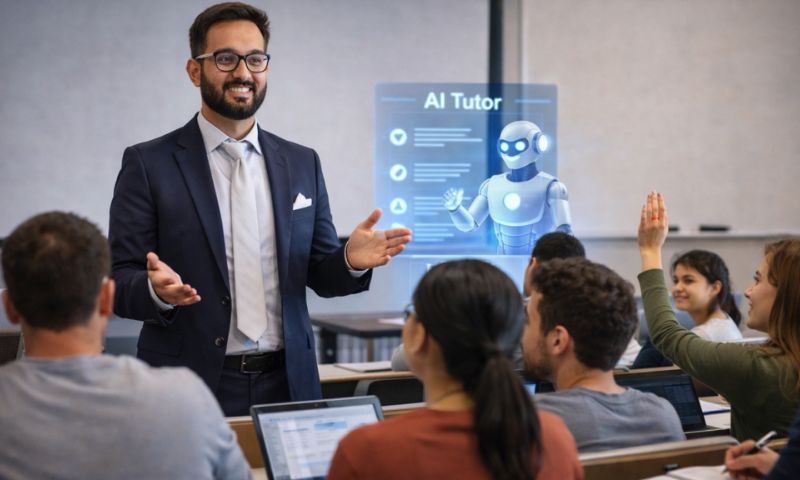



ISLAMABAD: In a sweeping move to reshape the country’s higher education landscape, Pakistan has become one of the first nations in South Asia to mandate artificial intelligence literacy for every university student, regardless of their field of study.
The Higher Education Commission (HEC) has approved a new policy requiring all public and private universities to offer a compulsory three-credit-hour course titled “Introduction to Artificial Intelligence” for students enrolled in undergraduate and postgraduate programmes nationwide.
The directive, which takes effect from the upcoming academic year, signals a decisive shift toward embedding emerging technologies into the core of Pakistan’s education system.
…in areas such as Artificial Intelligence, Cybersecurity, Cloud Computing, and Data Science.
Based on the NSCT findings, HEC has issued an advisory to universities and accreditation bodies and will integrate competency and employability assessments into…
(4/5)
— HEC Pakistan (@hecpkofficial) June 17, 2026
A bold step toward digital readiness
The decision, finalised during a consultative meeting of vice-chancellors, reflects the government’s recognition that AI literacy is no longer a niche specialisation but an essential competency for the modern workforce.
By ensuring that every graduate, whether studying medicine, law, engineering, or the humanities, gains foundational knowledge in machine learning, data-driven technologies, and ethical AI practices, Pakistan aims to build a generation of professionals equipped to thrive in an increasingly automated world.
HEC officials described the initiative as a “game-changer” for the country’s digital future, emphasising that the curriculum will cover core AI principles, practical applications across industries, and critical discussions around data privacy, algorithmic bias, and social responsibility.
Participated in a meeting chaired by Honourable Prime Minister Mian Shehbaz Sharif (@CMShehbaz) on strengthening higher education in Information Technology and aligning university education with the evolving demands of the global digital economy.
The discussion focused on… pic.twitter.com/gy0fYHHyfw
— Niaz Ahmad Akhtar (@DrNiazAhmadSI) June 10, 2026
Rolling out across the country
Universities have been directed to integrate the AI course into their curricula immediately, with a phased rollout planned across various academic disciplines. To streamline implementation, the Information Technology University has developed three model course modules, which were approved during the 45th HEC meeting and have already been circulated to public-sector institutions for adoption.
A separate notification has been issued specifically to public universities in Punjab, expediting the course’s incorporation into their academic offerings.
Education officials have stressed that the initiative is part of a broader modernisation drive aimed at raising higher education standards and strengthening Pakistan’s position in the global technology landscape.
وزیرِاعظم محمد شہباز شریف کی زیر صدارت منعقدہ اجلاس میں انفارمیشن ٹیکنالوجی کے شعبے میں اعلیٰ تعلیم کو عالمی مارکیٹ کی ضروریات کے مطابق ہم آہنگ کرنے پر غور کیا گیا۔
اجلاس میں آئی ٹی تعلیم کے معیار میں بہتری، ابھرتی ہوئی ٹیکنالوجیز جیسے مصنوعی ذہانت، ڈیٹا سائنس اور روبوٹکس میں… pic.twitter.com/71JuyyM6C2
— Niaz Ahmad Akhtar (@DrNiazAhmadSI) June 10, 2026
Building a future-ready workforce
Beyond classroom learning, the mandate is expected to spark greater student interest in emerging technologies and lay the foundation for a skilled talent pool capable of driving innovation across sectors. The move aligns with other ongoing national efforts, including faculty upskilling programmes and public-private partnerships designed to accelerate Pakistan’s digital transformation.
“By making AI education compulsory, we are not just teaching a subject, we are changing mindsets,” a senior HEC official said. “We are preparing our youth to become creators of technology, not just consumers.”
With this policy, Pakistan joins a growing list of nations prioritising AI literacy at the tertiary level, positioning itself to compete in the digital economy while ensuring that its graduates remain relevant in a future defined by rapid technological change.