ISLAMABAD: Japan has extended grant aid worth 350 million Japanese Yen ($2.4 million) for the Human Resource Development Scholarship (JDS) Programme FY 2026, enabling Pakistani government officers to pursue advanced degrees at leading Japanese universities as part of Tokyo’s long-term commitment to strengthening Pakistan’s administrative and policy-making capacities.
Pakistan and Japan signed a JPY 350M ($2.2M) grant agreement for the Human Resource Development Scholarship (JDS) Program 2026 at the Ministry of Economic Affairs, boosting human resource development and bilateral cooperation. @JapaninPak @jica_direct @jica_direct_
1/4 pic.twitter.com/txshVYdUdH— Ministry of Economic Affairs (@eadgop) August 11, 2026
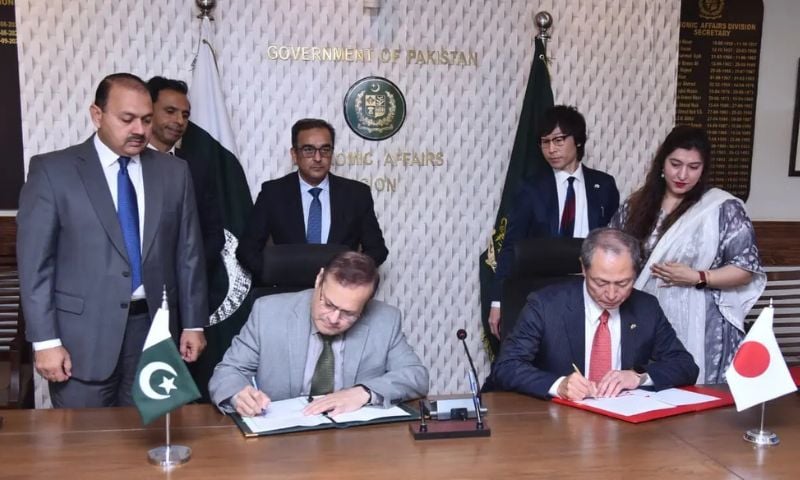
Formal signing ceremony
The agreement was formalised during a signing ceremony in Islamabad, where Notes Verbale were exchanged between H.E. Mr. AKAMATSU Shuichi, Ambassador of Japan to Pakistan, and Muhammad Humair Karim Kidwai, Secretary of the Ministry of Economic Affairs.
A separate Grant Agreement outlining the project’s implementation details for Fiscal Year 2026 was signed by Shinozaki Yusuke, Chief Representative of the Japan International Cooperation Agency (JICA) Pakistan Office, and Miran Mohiyuddin Soomro, Senior Joint Secretary of the Ministry of Economic Affairs.
Building administrative capacity through higher education
Launched in 2018, the JDS Programme is designed to enhance the administrative capabilities of the Government of Pakistan by offering highly capable civil servants the opportunity to pursue Master’s and Ph.D. degrees in Japan.
Investing in people is investing in the future.
Today, Amb Akamatsu signed a JPY 350 million grant for the JDS Program, supporting Pakistani government officials to pursue advanced degrees in Japan, nurturing Pakistan’s future leaders and strengthening Japan-Pakistan friendship. pic.twitter.com/5nBgC1zgxw
— Embassy of Japan in Pakistan (@JapaninPak) August 11, 2026
Selected officers are those involved in planning and implementing social and economic development policies, ensuring that the knowledge gained directly translates into improved governance and policy outcomes.
Beyond academic training, the initiative fosters mutual understanding and strengthens the enduring friendship between Japan and Pakistan by nurturing future leaders who serve as bridges between the two nations.
Over 100 officers dispatched, 80 scholars returned
Since its inception, JICA has dispatched more than 100 Pakistani government officers to Japan under the program. Over 80 scholars have successfully completed their studies and returned to Pakistan, applying their enhanced expertise across key sectors to contribute to the country’s development.
Japanese Envoy: “Investing in People is the Most Sustainable Investment”
H.E. Akamatsu Shuichi, Ambassador of Japan to Pakistan, stated, “At its core, this program is built on a simple but powerful belief, that investing in people is the most sustainable investment a nation can make. When we support a young civil servant to pursue a Master’s or doctoral degree at a leading Japanese university, we are not simply funding an academic qualification. We are helping to shape a future leader, someone who will return to Pakistan with new knowledge, new perspectives, and a deepened understanding of Japan, its people, its culture, and its values.’’
It is, he continued, these human bridges, built one scholar at a time, that sustain and strengthen the longstanding friendship between our two nations. Japan deeply values its relationship with Pakistan, and the JDS Programme is one of the most personal and enduring ways we invest in that relationship.
Read Also: Japanese and Pakistani Lawmakers Stress Deeper Economic Ties
JICA chief highlights contribution to sustainable development
Shinozaki Yusuke, Chief Representative of JICA Pakistan Office, added:
“I sincerely hope that JICA’s cooperation through this project will support the Government of Pakistan to enhance institutional capacity, thereby contributing to Pakistan’s sustainable development. The third phase aims to continue strengthening the capacities of Pakistani government officials and further deepen the longstanding partnership between Japan and Pakistan.
Read Also: Pakistan, Japan Ink Agreement to Bolster HRD Scholarship Programme
This initiative indirectly meets one of the priority area objectives of JICA’s country assistance policy, which is balanced and stable regional development by supporting human resource development, he concluded.