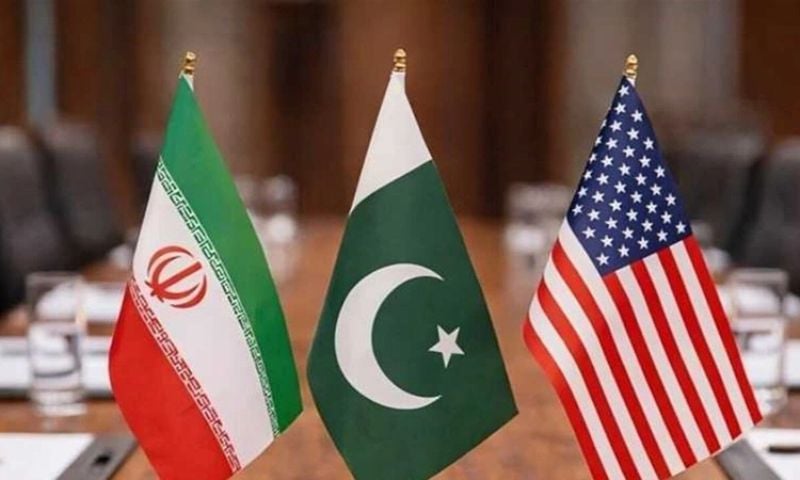
ISLAMABAD: The United States and Iran are scheduled to sign a memorandum of understanding in Switzerland on Friday aimed at formalising a ceasefire and launching negotiations on a broader settlement.
The framework agreement would pave the way for the reopening of the Strait of Hormuz, begin the lifting of restrictions on Iranian ports and open a 60-day negotiating process covering Iran’s nuclear programme, sanctions relief and wider regional issues.
Here is how the deal is set to work and what happens next.
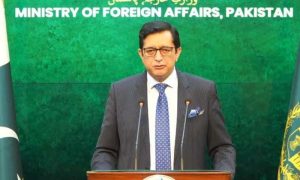
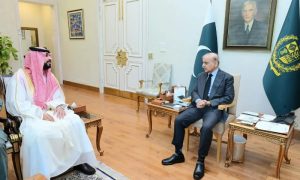
Pakistan’s Prime Minister Shehbaz Sharif said both sides had declared an immediate and permanent end to all military operations.
All sides have said the memorandum of understanding on ending the war will be signed in Switzerland on Friday. Iran’s Deputy Foreign Minister Kazem Gharibabadi said the memorandum would then be published.
Iran and the United States have both said the Strait of Hormuz would start to reopen and the US blockade on Iranian ports would begin to lift as soon as the memorandum is signed.
Both sides have also said negotiations on more difficult areas of dispute — notably Iran’s nuclear programme and US sanctions on Iran — will be conducted over the following 60 days.
Strait of Hormuz and Blockade of Iranian Ports
US President Donald Trump said the Strait of Hormuz would be reopened on Friday and that he had ordered the lifting of the blockade on Iranian ports.
A senior Iranian official said the strait would be reopened “to all commercial vessels” once the memorandum was signed.
Iran’s semi-official Fars news agency reported that, under the memorandum, marine traffic through the strait would be regulated by Iran in coordination with Oman.
On Wednesday, Iranian oil tankers exited the zone in the Gulf blockaded by the US Navy, the TankerTrackers website said, calling it the country’s “first crude oil exports in two months”.
The site — which monitors oil shipments and storage — later added that a third NITC tanker had “exited the blockade line with 1 million barrels of Iranian crude oil”.
Iran’s Nuclear Programme
Both sides have said that Iran agrees it will neither produce nor acquire nuclear weapons — a commitment Tehran has repeatedly stated for decades.
The senior Iranian official said that, pending a final agreement, Iran would freeze its nuclear activity, refraining from further uranium enrichment or the expansion of nuclear facilities.
The official also said the United States had agreed that Iran could dilute its stockpile of highly enriched uranium inside Iran under a future comprehensive agreement.
Trump said on Saturday there was no urgency to extract Iran’s stockpile of nuclear material and that the United States would retrieve it “when all is calm”.
He also said there would be a strong inspections regime for Iran under any future deal, although he did not provide details.
US Senator Lindsey Graham said any final agreement on Iran’s nuclear programme would have to be reviewed and approved by Congress.
Sanctions and Financial Impact
The senior Iranian official said the United States had agreed not to impose any new sanctions on Iran until a final agreement is reached.
The official added that Washington would waive oil sanctions on Iran for a specified period and that, following a final agreement, all US and United Nations sanctions would be lifted according to an agreed timetable.
The senior Iranian official also said the United States had agreed to release $25 billion in frozen Iranian assets, including through direct cash transfers, cooperation among regional countries and financial credit lines.
According to the official, Washington, in coordination with its regional allies, would prepare a reconstruction and development plan for Iran to be negotiated and agreed with Tehran within 60 days.
Trump, however, said Iran would not be provided with cash, although sanctions could potentially be lifted.
Lebanon
Prime Minister Shehbaz Sharif said the immediate and permanent end of military operations would include Lebanon.
The Secretariat of Iran’s Supreme National Security Council said military operations would stop permanently on Monday night, including in Lebanon.
Iranian Foreign Minister Abbas Araqchi said there must be a complete halt to Israeli attacks against Lebanon and that the United States bears responsibility for implementing the framework deal.
Israeli Defence Minister Israel Katz said the Israeli military would remain in security zones it has captured in Lebanon, Syria and Gaza, adding that Prime Minister Benjamin Netanyahu had made this clear to Trump.
Before the memorandum was announced, Trump said he would bring peace to the region, including Lebanon.
He said there should be no more Israeli attacks on Lebanon and no more attacks by the Iran-backed Lebanese group Hezbollah on Israel.
What Happens Next?
The memorandum is scheduled to be signed in Switzerland on Friday and published shortly afterwards.
Its immediate effects would include the reopening of the Strait of Hormuz, the beginning of the lifting of the US blockade on Iranian ports, and the continuation of the ceasefire announced by both sides.
Negotiators would then enter 60 days of talks aimed at resolving outstanding disputes over Iran’s nuclear programme, sanctions relief and broader regional issues.
The success of those negotiations will determine whether the current framework can evolve into a comprehensive and lasting settlement between Washington and Tehran.