ISLAMABAD: Pakistan’s poverty rate has increased to 28.9 percent, meaning nearly 29 out of every 100 Pakistanis now live below the national poverty line.
According to the Economic Survey of Pakistan released on Thursday, poverty has risen significantly from 21.9 percent in 2018-19, reflecting the impact of prolonged inflationary pressures, slowing economic activity, and declining household purchasing power.
“Pakistan’s poverty declined over the long term, from 50.4% in 2005-06 to 21.9% in 2018-19, before rising to 28.9% in 2024-25,” the Economic Survey stated.
It added that the pro-poor expenditure reached Rs 4.66 trillion during July-March FY 2026, compared to Rs 4.25 trillion last year, while social security and welfare increased to Rs 822.21 billion.
The Benazir Income Support Programme remains the largest welfare initiative. It received Rs 722.49 billion in allocation, with significant funds disbursed during the year.
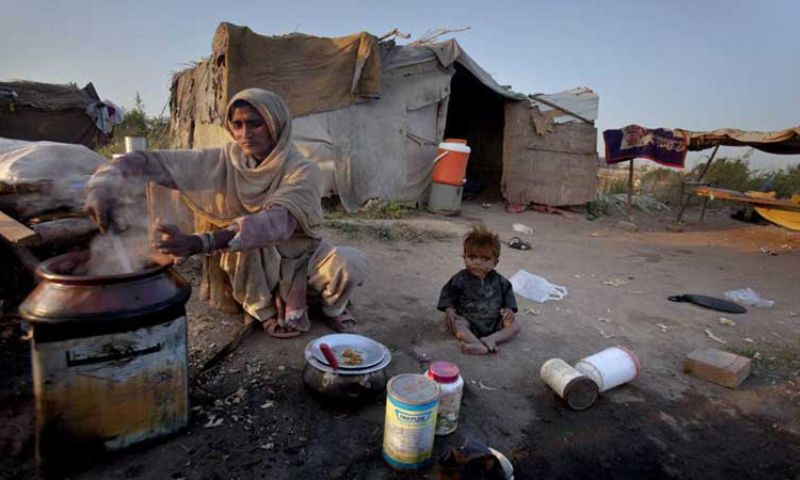
Poverty remains considerably higher in rural areas, where the rate stands at 36.2 percent, compared to 17.4 percent in urban centres, highlighting persistent disparities in income and access to opportunities.
Among the provinces, Balochistan recorded the highest poverty rate at 47 percent, followed by Khyber Pakhtunkhwa at 35.3 percent and Sindh at 32.6 percent. Punjab reported the lowest poverty incidence at 23.3 percent.
The survey noted that rising prices, economic shocks and declining real incomes have pushed millions of households into poverty in recent years. It also pointed to widening inequality across the country, indicating that the benefits of economic growth have not been evenly distributed.
According to the report, the poverty assessment is based on a household’s ability to meet minimum essential expenditure requirements, including food and other basic needs.
The findings underscore the challenges facing policymakers as they seek to balance economic stabilisation with efforts to reduce poverty, create jobs and improve living standards for vulnerable segments of the population.
Economists say the latest poverty figures suggest the benefits of stabilisation have yet to reach a large segment of the population, particularly in rural areas and among low-income households.