ISLAMABAD: Pakistan’s National Economic Council (NEC) has approved the Annual Development Programme (ADP) for the upcoming financial year, along with key economic targets.
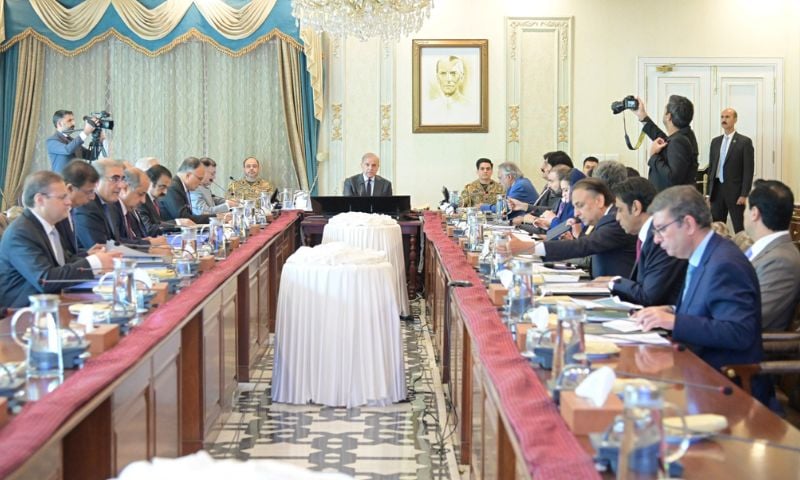
The NEC session, chaired by Prime Minister Shehbaz Sharif, was held on Wednesday to review the development programme for the financial year 2026–27.
Briefing the meeting on budget proposals and overall macroeconomic indicators, Minister for Planning Ahsan Iqbal said the NEC had approved a Rs3.66 trillion national development budget and set a 4% GDP growth target for the next fiscal year.
Prime Minister Muhammad Shehbaz Sharif chairs a meeting of the National Economic Council in Islamabad on 10 June 2026. pic.twitter.com/8HEVE4ulxZ
— Prime Minister’s Office (@PakPMO) June 10, 2026
Participants were briefed on proposed development priorities and macroeconomic targets for the next fiscal year. The council also deliberated on the distribution of development funds between the federal government and the provinces.
The federal development allocation has been set at Rs1 trillion, while provincial development spending stands at Rs2.21 trillion, with an additional Rs451 billion earmarked for federal enterprises, Iqbal informed the meeting.
The council also approved a proposal from the Planning Ministry recommending that National Economic Council (NEC) meetings be held on a quarterly basis to ensure more regular review of development priorities and economic performance.
اسلام آباد: 10 جون 2026۔
وزیراعظم محمد شہباز شریف نے قومی اقتصادی کونسل (NEC) کے اجلاس کی صدارت کی. وزیراعظم کا مشکل معاشی حالات میں وفاقی حکومت سے مثالی تعاون پر چاروں وزرائے اعلیٰ سے اظہار تشکر.
اجلاس سے گفتگو کرتے ہوئے وزیرِ اعظم نے کہا کہ وفاقی اکائیوں کے درمیان اسی یکجہتی… pic.twitter.com/b9QtFSyNUG
— Prime Minister’s Office (@PakPMO) June 10, 2026
The minister noted that the Public Sector Development Programme (PSDP) had declined significantly, falling from 2.6% of GDP in 2018 to just 0.6% at present. He stressed that Pakistan now required what he described as a “development emergency” to accelerate economic growth and address long-term structural challenges.
Addressing the National Economic Council (NEC) meeting, the prime minister said that the federal government had taken decisions in Pakistan’s best interest through teamwork, adding that the economy faced major challenges but achieved macroeconomic stability.
“We made decisions in the best interest of Pakistan as a team,” he told the meeting.
Highlighting the challenges to Pakistan’s economic stability, PM Shehbaz said that the regional situation had caused oil prices to rise sharply, with the government providing Rs128 billion in relief to the public in fuel prices.
The prime minister recalled that queues were seen at petrol stations in several countries around the world, but timely measures ensured fuel remained available to consumers in Pakistan.
The prime minister acknowledged the full cooperation extended by provincial governments in addressing ongoing economic challenges, noting that the federal government had been engaged in consultations with the provinces for several weeks ahead of the upcoming budget.
He said discussions also focused on measures to generate additional revenue, emphasising that optimal resource mobilisation remains a key priority for the government.
Prime Minister Shehbaz Sharif stated that Pakistan had continued to adhere to the International Monetary Fund (IMF) programme despite multiple challenges. “We have tried to meet the expectations of the people,” he said, adding that recent progress had been achieved through collective effort and coordination.
The prime minister further affirmed that ensuring adequate resources for defence in the upcoming budget remains a priority, noting that additional allocations are necessary to address the growing threat of terrorism.